Dermatologist Recommended Skin Care Routine for Your 50s

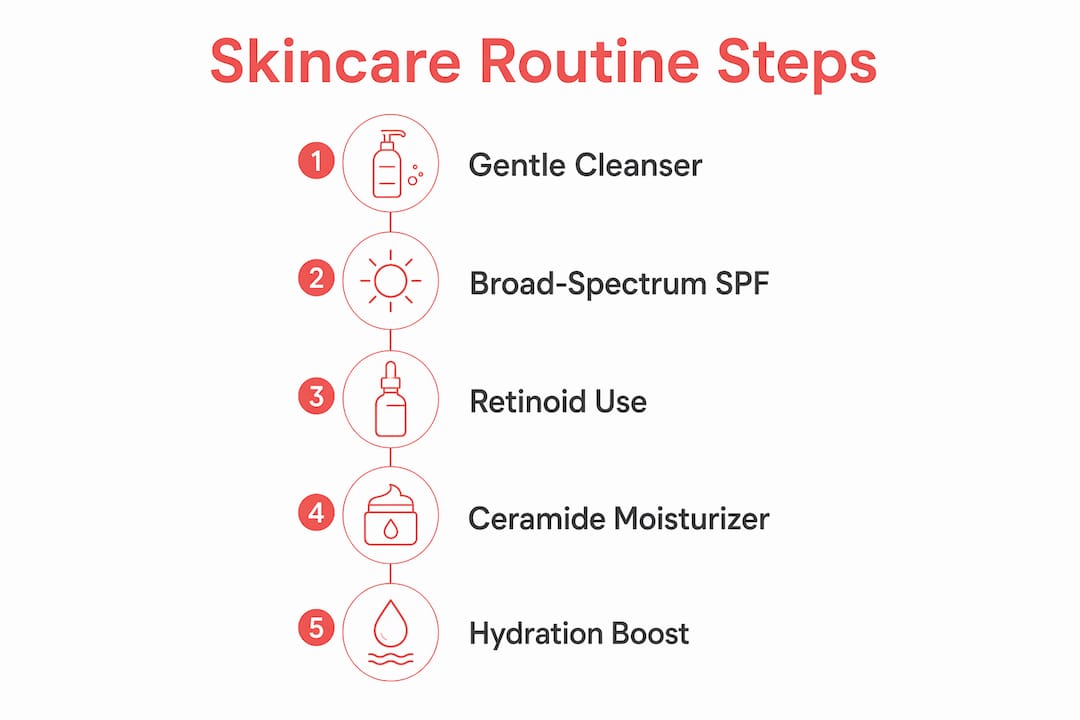
A dermatologist recommended skin care routine for your 50s centers on four clinically validated pillars: gentle cleansing, daily broad-spectrum SPF 30+, slow-introduction retinoids, and ceramide-rich moisturization. This is not about adding more products. It is about choosing the right ones and using them correctly. Vitamin C in the morning adds antioxidant protection and supports collagen. The goal at this skin stage is precision and restoration, not complexity. Your skin in your 50s needs barrier repair and consistent protection far more than it needs aggressive actives.
What are the essential steps in a dermatologist recommended skin care routine for the 50s?
The four foundational pillars for skin in the 50s are a gentle cleanser, daily SPF 30+, a nightly retinoid, and a ceramide-rich moisturizer. Each step serves a specific biological purpose. Skipping any one of them creates a gap that no serum or treatment can fill.
Morning routine
-
Gentle, pH-balanced cleanser. Skin pH rises after 45, and traditional soaps disrupt the barrier further. Use a non-stripping, pH-balanced cleanser every morning. If your skin is very dry, a simple rinse with water is acceptable on mornings after a thorough nighttime cleanse.
-
Vitamin C serum. Apply a stable vitamin C serum after cleansing. Consistency with vitamin C matters more than switching between products. It brightens, protects against environmental damage, and supports collagen production. L-ascorbic acid at 10–15% concentration is the most studied form.
-
Moisturizer. A ceramide-rich formula applied while skin is still slightly damp locks in hydration. Keep this step brief and effective.
-
Broad-spectrum SPF 30+. Sunscreen is the single most evidence-backed anti-aging step available without a prescription. Apply it every morning, year-round, regardless of weather or plans to stay indoors near windows.
Pro Tip: Apply your SPF as the final step in your morning routine, after moisturizer has fully absorbed. Reapply every two hours if you spend time outdoors.
Evening routine
-
Gentle cleanser. Cleanse thoroughly at night to remove sunscreen, pollution, and makeup without stripping the barrier.
-
Retinoid (1–2 nights per week to start). Begin with a low-strength retinol or prescription tretinoin on non-consecutive nights. Use the moisturizer sandwich technique: apply moisturizer first, then the retinoid, then another layer of moisturizer on top.
-
Ceramide-rich moisturizer. Finish with a moisturizer that contains ceramides, cholesterol, and fatty acids. This combination mirrors the skin’s natural lipid structure and actively repairs the barrier overnight.
How does aging skin in the 50s affect product choice and routine adjustments?
Skin biology changes significantly after 50, and those changes directly determine which products work and which cause harm. Understanding the physiology helps you make better choices.
- Collagen and cell turnover slow down. Collagen production drops and skin renewal takes longer. This is why dullness, fine lines, and uneven texture become more pronounced.
- The barrier thins and becomes more sensitive. Postmenopausal skin loses estrogen, which reduces ceramide production and weakens the protective barrier. A daily ceramide-rich moisturizer becomes the most effective anti-aging step you can take.
- Skin pH rises. After 45, skin pH increases, making it more prone to dryness and irritation. Harsh cleansers and toners with alcohol accelerate this damage.
- Multiple actives cause more harm than good. Layering acids, retinoids, and exfoliants on thinning skin leads to sustained irritation that many people mistake for sensitivity. The skin is not suddenly fragile. It is overloaded.
- Richer formulas become necessary. Hyaluronic acid and squalane add hydration without heaviness. Heavy night creams, however, can worsen postmenopausal hot flashes and flushing. Lighter hydrating serums layered under a breathable barrier cream offer the best balance.
“Experts emphasize shifting skincare in the 50s from controlling skin functions to restoring barrier health and hydration. Replenishing lost lipids and reducing irritation are the priorities, not adding more actives.”
This shift in philosophy is the most important mindset change for anyone building a skincare routine for aging skin over 50. Restoration, not intervention, drives results.
What are the best dermatologist-recommended ingredients for skin in the 50s?
The right ingredients make the difference between a routine that works and one that irritates. Each ingredient below has a specific, evidence-backed role.
| Ingredient | Primary benefit | Best time to use |
|---|---|---|
| Vitamin C (L-ascorbic acid) | Antioxidant protection, brightening, collagen support | Morning |
| Retinoids (retinol, tretinoin) | Gold standard for anti-aging, collagen stimulation | Evening |
| Ceramides and cholesterol | Barrier restoration, hydration retention | Morning and evening |
| Niacinamide | Anti-inflammatory, tone evening, barrier support | Morning or evening |
| Hyaluronic acid | Surface and mid-level hydration | Morning and evening |
| Squalane | Lightweight moisture, barrier sealing | Evening |
Retinoids are the most studied anti-aging ingredient available. Topical tretinoin is the gold standard for treating photoaging, with systematic reviews confirming improved clinical signs of aging. Because skin in the 50s is thinner and drier, application method matters as much as the product itself.
Niacinamide pairs well with almost every other ingredient and reduces the redness that retinoids can cause. It also supports ceramide synthesis, which makes it a natural complement to barrier repair. Use it in the morning or on evenings when you skip the retinoid.
Avoid aggressive exfoliating acids like glycolic acid at high concentrations and physical scrubs. These remove the outer layer of skin faster than a compromised barrier can recover. Simplicity and precision consistently outperform complex regimens for skin in the 50s.
Pro Tip: If you want to use niacinamide and vitamin C together, apply vitamin C first and let it absorb fully before layering niacinamide. This prevents any potential interaction and keeps both ingredients effective.
How to effectively introduce and layer retinoids in a skincare routine for mature skin over 50?
Retinoids deliver real results, but only when introduced correctly. Rushing the process causes irritation that sets your routine back by weeks.
Step-by-step introduction protocol
-
Start on non-consecutive nights. Use your retinoid one to two nights per week for the first four weeks. Monday and Thursday work well. This gives skin time to recover between applications.
-
Apply the moisturizer sandwich. The moisturizer sandwich technique applies a layer of moisturizer before the retinoid and another layer after. This buffers the retinoid’s contact with skin and significantly reduces inflammation without eliminating efficacy.
-
Use a pea-sized amount. More product does not mean faster results. A pea-sized amount covers the entire face. Applying more increases irritation without adding benefit.
-
Increase frequency slowly. After four weeks with no significant irritation, move to three nights per week. After another four weeks, you can assess whether nightly use is appropriate for your skin.
-
Protect with SPF every morning. Retinoids increase photosensitivity. Daily SPF 30+ is non-negotiable while using any retinoid. This is not optional.
Signs you need to adjust
- Persistent redness lasting more than 48 hours after application
- Peeling or flaking that does not resolve with added moisturizer
- Stinging or burning during application
- Skin that feels tight and uncomfortable throughout the day
When any of these occur, drop back to once per week and increase moisturizer use. Add a dedicated hydration night using only hyaluronic acid and squalane, with no actives. This gives the barrier time to recover before you reintroduce the retinoid.
The buffering order and timing of retinoid application is the single most underused technique in mature skincare routines. Most people apply retinoids directly to dry, clean skin and then wonder why they experience irritation. The sandwich method changes that outcome reliably.
Key Takeaways
A dermatologist recommended skin care routine for your 50s works best when it prioritizes barrier restoration, consistent SPF, and carefully introduced retinoids over a complex stack of actives.
| Point | Details |
|---|---|
| Four core pillars | Gentle cleanser, SPF 30+, retinoid, and ceramide moisturizer form the non-negotiable foundation. |
| Retinoid introduction | Start one to two nights per week using the moisturizer sandwich technique to minimize irritation. |
| Barrier restoration | Ceramides, cholesterol, and squalane repair the thinning postmenopausal barrier more effectively than actives. |
| Simplicity wins | Fewer actives with consistent application outperform complex routines for skin in the 50s. |
| SPF is non-negotiable | Daily broad-spectrum SPF 30+ is the most evidence-backed anti-aging step available without a prescription. |
What I’ve learned from watching people overcomplicate their 50s skincare
The most common mistake I see is adding products to solve problems that fewer products would fix. Someone experiences dryness after starting a retinoid, so they add a glycolic acid toner to address texture, then a rich night cream to counter the dryness, then a vitamin A booster to speed results. Within three weeks, their skin is inflamed, and they conclude that retinoids “don’t work for them.”
The real issue is overload. Overloading aging skin with actives creates sustained irritation that is routinely mistaken for sensitivity. The skin is not broken. The routine is.
What actually works is boring by beauty industry standards: one cleanser, one vitamin C serum, one retinoid used carefully, one ceramide moisturizer, and daily SPF. That is the whole routine. Stick with it for 12 weeks before evaluating results. Skin in the 50s responds to consistency, not novelty.
Professional treatments like energy-based devices and microneedling address deep structural aging that topical products cannot reach. They work best when layered on top of a healthy, well-maintained barrier. A strong daily routine is the foundation. Professional treatments are the complement, not the replacement.
Managed expectations matter too. Topical skincare improves texture, hydration, tone, and surface lines. It does not reverse deep structural volume loss or lift significantly sagging tissue. Knowing what your routine can and cannot do helps you stay consistent with it.
— Customer
Sonedaskincare’s VividLift: collagen support beyond topical reach
Your daily routine handles the surface. The VividLift™ 2-in-1 HIFU+Sono device from Sonedaskincare works at a structural level that serums and creams cannot access.

The VividLift uses High-Intensity Focused Ultrasound (HIFU) and advanced sonophoresis to stimulate collagen production and improve skin firmness at home. In-home HIFU devices provide collagen stimulation that topical products cannot achieve, making them a clinically sound complement to a dermatologist-backed daily routine. Sonedaskincare reports a 175% increase in skin hydration and a 100% user satisfaction rate. The device is clinically tested by the Korea Institute of Dermatological Sciences. If you are ready to add structural collagen support to your routine, the VividLift device is designed for exactly that purpose.
FAQ
What is the most important step in a skincare routine for aging skin over 50?
Daily broad-spectrum SPF 30+ is the single most evidence-backed anti-aging step available without a prescription. Consistent sunscreen use prevents further photoaging and protects the compromised barrier.
When should I start using retinoids in my 50s routine?
Start retinoids as soon as your barrier is stable and hydrated, beginning one to two nights per week. Use the moisturizer sandwich technique to buffer irritation and increase frequency only after four weeks of tolerance.
Are ceramides really necessary for skin in the 50s?
Ceramides are necessary. Postmenopausal skin loses estrogen, which directly reduces ceramide production and weakens the barrier. A daily ceramide-rich moisturizer is the most effective barrier repair step for skin over 50.
Can I use vitamin C and retinoids in the same routine?
Use vitamin C in the morning and retinoids at night. Applying them at separate times of day avoids potential interaction and lets each ingredient work at its most effective.
How long does it take to see results from a mature skincare routine?
Expect visible improvements in hydration and texture within four to six weeks. Retinoid benefits for fine lines and collagen typically require 12 weeks of consistent use before meaningful changes appear.