

Posted by Soneda Skincare Team
on August 08, 2026

For the first 24–48 hours after HIFU, keep it simple: gentle cleansing with lukewarm water, no heat or heavy exercise, and SPF 30+ every morning. These three steps protect the collagen-remodeling process that makes your results last.
Your clinic’s specific protocol takes priority over any general guide. Keep your follow-up appointment details handy and don’t hesitate to call if something feels off.
Key Takeaways
Proper HIFU aftercare in the first 24–48 hours, followed by consistent SPF and gradual reintroduction of actives, gives your collagen remodeling the best conditions to deliver visible, lasting results.
| Point | Details |
|---|---|
| First 48 hours are critical | Gentle cleansing, no heat or heavy exercise, and SPF 30+ protect the treatment response. |
| Results develop over months | Visible tightening peaks at 3–6 months; tissue remodeling remains active up to ~12 months. |
| Reintroduce actives gradually | Wait at least 7 days before retinoids or acids; patch test before full-face application. |
| Red flags need prompt attention | Blistering, worsening pain, fever, or spreading redness require a call to your clinic. |
| Sonedaskincare for maintenance | The VividLift™ at-home HIFU device supports collagen maintenance between clinic visits, with provider clearance. |
Table of Contents
- What does your skin look and feel like right after HIFU?
- HIFU aftercare for the first 24–48 hours: what to do and avoid
- What to do during days 3–7 after treatment
- How long until you see results, and what maintenance looks like
- Your quick-reference do’s and don’ts checklist
- Which skincare products are safe to use after HIFU?
- How to manage discomfort and common side effects
- When should you contact your provider after HIFU?
- In-clinic HIFU vs. at-home devices: how aftercare differs
- What good HIFU aftercare actually comes down to
- Maintain your results at home with Sonedaskincare
- Sources
What does your skin look and feel like right after HIFU?
UCSF confirms that most cosmetic HIFU patients go home the same day with only mild, short-lived redness or swelling. That’s the norm, not the exception.
Here’s what you’ll typically notice in the first few hours:
- Mild redness or flushing over the treated area, similar to a light sunburn
- Warmth or tingling in the skin, which usually fades within a few hours
- Slight tightness or puffiness, especially along the jawline or cheeks
- Temporary tenderness when touching the treated zones
- Occasional tingling or numbness, which can linger for a day or two
Most of these sensations resolve within 24–48 hours. Swelling, if present, tends to peak in the first day and gradually settles.
Pro Tip: Take a photo of your face in consistent lighting immediately after treatment. Use the same angle and light source at 2 weeks, 6 weeks, and 3 months. Side-by-side comparisons are far more reliable than memory.
HIFU aftercare for the first 24–48 hours: what to do and avoid
The first two days set the tone for your recovery. Treated skin is temporarily sensitized, and the ultrasound energy is still doing its work beneath the surface.
Do:
- Cleanse gently with a mild, non-foaming cleanser and lukewarm (not hot) water
- Pat skin dry with a clean, soft cloth — never rub
- Apply a fragrance-free moisturizer to keep the barrier supported
- Sleep on your back with your head slightly elevated to reduce swelling
- Drink plenty of water to support tissue recovery
Don’t:
- Use hot water in the shower or on your face
- Apply makeup for at least 12–24 hours, or until your provider clears it
- Exercise vigorously or do anything that causes heavy sweating
- Apply retinoids, AHAs, BHAs, or any exfoliating actives
- Touch or massage the treated area
On face washing: Pure Tone Aesthetics and Maldon Skin Clinic both align on waiting until the skin feels settled before cleansing, typically within a few hours post-treatment when cleared by your provider. Use lukewarm water and a gentle cleanser, and keep the routine minimal.
Always follow your provider’s device- or protocol-specific instructions. General guidance is a starting point. Your clinic’s discharge sheet is the final word.
What to do during days 3–7 after treatment
By day three, most redness and warmth have resolved. This is when you can cautiously reintroduce normal routines, but the skin still needs care.
Days 3–4:
- Return to your normal gentle cleansing routine
- Continue fragrance-free moisturizer twice daily
- Light walking is fine; skip high-intensity cardio and anything that causes flushing
- Avoid saunas, steam rooms, and hot baths
Days 5–7:
- Light makeup is generally acceptable if the skin surface feels fully settled
- Continue daily SPF 30+ without exception
- Gentle facial massage is usually still off the table; check with your provider before reintroducing
- Hold off on retinoids and acids for at least the full first week
Most mild side effects, including tingling, minor swelling, and surface sensitivity, resolve within this window. Santé Clinics notes that most people experience minimal downtime and that mild effects typically clear within days.
Watch for anything that worsens rather than improves. Increasing redness, spreading warmth, or new pain after day three is not part of normal recovery. Contact your clinic promptly if symptoms escalate instead of fading.
How long until you see results, and what maintenance looks like
HIFU results don’t appear overnight. The treatment works by triggering a controlled thermal response that stimulates collagen production deep in the skin, and that process takes time.
Here’s the realistic timeline:
| Phase | Timeframe | What’s happening |
|---|---|---|
| Immediate effect | Day 1–3 | Mild tightening from tissue response; some initial lift visible |
| Early remodeling | Weeks 2–6 | Collagen synthesis begins; subtle improvements in firmness |
| Peak results | 3–6 months | Maximum visible tightening and lifting as new collagen matures |
| Longevity | Up to ~12 months | Tissue remodeling remains active; results gradually taper |
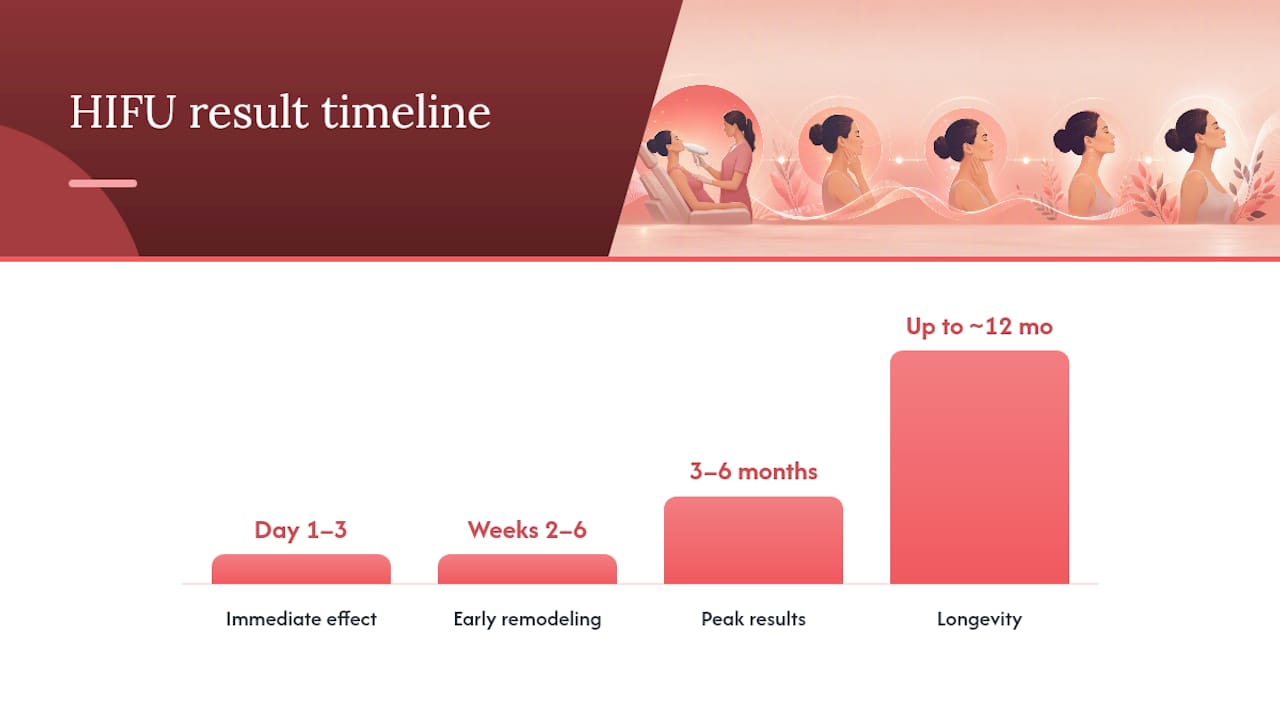
Lucia Medical Aesthetics confirms that treatment effects can continue developing for 3–6 months, with tissue remodeling active up to around 12 months. Maldon Skin Clinic echoes this, noting touch-ups are sometimes recommended at 3–12 months depending on individual goals.
Long-term maintenance habits that protect your investment:
- Daily SPF 30+ year-round, no exceptions
- Consistent hydration, both topical and internal
- Avoid smoking and excess alcohol, which accelerate collagen breakdown
- Prioritize sleep; skin repairs itself during rest
- Reintroduce retinoids and targeted actives gradually after the first week, then maintain them as part of your routine
Track progress with photos on a consistent schedule: at 6 weeks, 3 months, and 6 months.
Your quick-reference do’s and don’ts checklist
Save this or print it. It covers the full recovery window at a glance.
Hygiene:
- ✅ Cleanse with lukewarm water and a gentle cleanser
- ✅ Pat dry, never rub
- ❌ No hot water on the face for at least 48 hours
Heat and sweat:
- ✅ Cool or room-temperature environments are fine
- ❌ No saunas, steam rooms, or hot baths for 48–72 hours
- ❌ No intense exercise or activities that cause heavy sweating for 48 hours
Skincare products:
- ✅ Fragrance-free moisturizer, applied gently
- ✅ SPF 30+ daily from day one
- ❌ No retinoids, AHAs, BHAs, or physical exfoliants for at least 7 days
- ❌ No new or untested products on treated skin
Activity:
- ✅ Light walking after 48 hours
- ❌ No high-intensity cardio, facial massage, or heavy lifting for the first 48 hours
Sun exposure:
- ✅ Broad-spectrum SPF 30+ every day, reapplied if outdoors
- ❌ No direct sun exposure without protection; avoid tanning beds
Pro Tip: Store your clinic’s contact number and your follow-up appointment date in your phone right now. If a symptom concerns you at 11 PM, you’ll want that number without searching.
Your provider’s instructions override every item on this list. This checklist is a general reference, not a clinical prescription.
Which skincare products are safe to use after HIFU?
Product choice matters more in the first week than at almost any other point in your skincare routine. Treated skin is temporarily more permeable and reactive.
Phase 1 (Days 1–7): Keep it minimal
- Cleanser: Non-foaming, fragrance-free, pH-balanced. Look for formulas marketed for sensitive or post-procedure skin.
- Moisturizer: Fragrance-free, with barrier-supporting ingredients like ceramides, hyaluronic acid, or niacinamide.
- SPF: Broad-spectrum SPF 30 or higher, every morning. Medical News Today recommends SPF 30+ as a non-negotiable post-HIFU step.
- Application: Always pat products in gently. No rubbing, no tugging.
Reintroduction timeline for common actives:
Before applying any reintroduced active to the full face, do a small patch test on a less-sensitive area first. If you notice stinging, flushing, or irritation, wait another few days.
How to manage discomfort and common side effects
Most post-HIFU discomfort is mild and short-lived. Knowing what’s normal and what to do about it keeps the recovery straightforward.
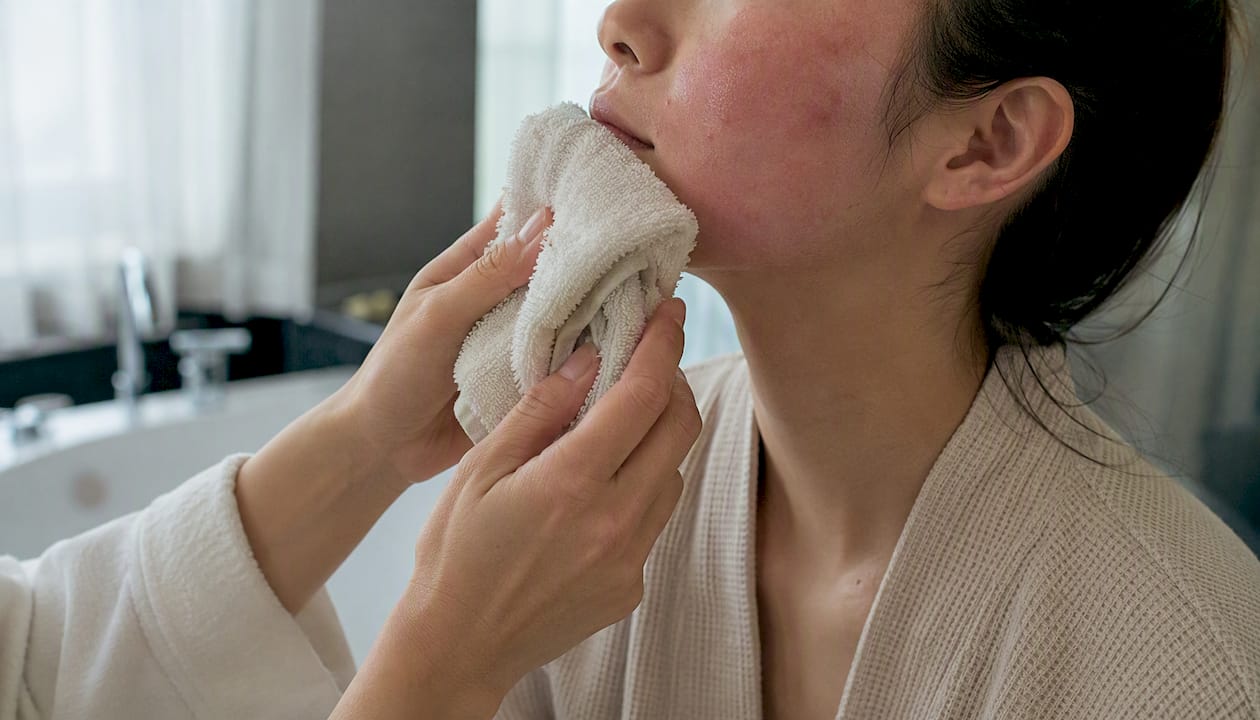
For mild redness and warmth: A cool (not ice-cold) compress applied gently to the area for 10–15 minutes can ease warmth and reduce visible flushing. Avoid direct ice contact with treated skin.
For minor swelling: Sleep with your head elevated on an extra pillow for the first night or two. Staying well-hydrated helps the body process the mild inflammatory response.
For tenderness or aching: Over-the-counter analgesics such as acetaminophen (Tylenol) may help, but check with your provider before taking any pain reliever, especially NSAIDs like ibuprofen, which can affect healing in some protocols.
Normal side effects and typical duration:
- Redness or warmth: hours to 2 days
- Minor swelling: 1–3 days
- Tingling or numbness: up to a few days, occasionally longer in small patches
- Skin sensitivity: up to 1 week
Pro Tip: Avoid applying ice directly to treated skin. Wrap a cold pack in a clean cloth and hold it gently against the area rather than pressing hard.
Red flags that go beyond normal:
- Blistering or open skin
- Severe or worsening pain after day two
- Spreading redness that extends beyond the treated zone
- Fever or signs of infection (pus, unusual warmth, swelling that grows)
- Sudden or prolonged loss of sensation
Any of these warrants a call to your clinic, not a wait-and-see approach.
When should you contact your provider after HIFU?
Most people recover without complications. But knowing exactly when to pick up the phone protects you from letting a manageable issue become a serious one.
Call your clinic if you notice:
- Blistering, open wounds, or skin breakdown at the treatment site
- Severe pain that worsens after the first 48 hours rather than improving
- Spreading redness or warmth beyond the treated area
- Fever above 100.4°F
- Signs of infection: pus, unusual odor, or rapidly increasing swelling
- Prolonged numbness or loss of muscle movement lasting more than a few days
When you call, have this information ready:
- The date and time of your treatment
- The name of the device or protocol used (ask your clinic if you’re unsure)
- A time-stamped photo of the area in question, taken in good lighting
- A description of when the symptom started and whether it’s getting better or worse
- Any products you’ve applied since treatment
For most concerns, a phone triage call with your clinic is the right first step. Your provider can assess whether an in-person visit is needed or whether the symptom is within the expected range. Mayo Clinic notes that HIFU is minimally invasive with minimal downtime for most cosmetic patients, but follow-up with your provider remains the standard of care.
In-clinic HIFU vs. at-home devices: how aftercare differs
Not all HIFU is the same. Professional in-clinic HIFU operates at higher energy levels than consumer at-home devices, and the aftercare expectations reflect that difference.
In-clinic professional HIFU:
- Higher intensity, deeper tissue penetration, often targeting the SMAS layer
- Performed by a trained clinician with calibrated equipment
- More likely to produce noticeable immediate redness, swelling, or tenderness
- Requires strict adherence to clinic discharge instructions
- Scheduled follow-up appointments are standard; Brigham and Women’s materials illustrate how clinical HIFU protocols involve structured monitoring and follow-up care
- Avoid strong actives and heat for 48–72 hours minimum
At-home HIFU devices:
- Lower energy output, designed for consumer safety and repeated use
- No clinician present; you follow the device manual
- Side effects are typically milder: slight warmth, temporary redness, minor sensitivity
- Still warrants pausing strong actives if you feel any sensitivity after a session
- Hydration and gentle products remain the right approach post-session
Pro Tip: If you recently had an in-clinic HIFU procedure, consult your treating provider before using any at-home HIFU device. The timing matters. Your provider can confirm when your skin has recovered enough to safely resume home device use.
At-home devices like the Sonedaskincare VividLift™ are designed for regular maintenance use, not as a substitute for clinical treatment. The protocols differ, and so does the recovery expectation.
What good HIFU aftercare actually comes down to
The guidance in this article reflects what clinics and medical centers consistently agree on: protect the treated area in the first 48 hours, support your skin’s barrier, and give collagen remodeling the time it needs. The readers who see the best results aren’t the ones who do the most after treatment. They’re the ones who do the least wrong. Skipping the sauna, staying out of the sun, and keeping products simple in week one matters more than any premium serum you could add. Follow your provider’s instructions first, use this guide as a reference, and trust the process. Sonedaskincare’s approach to at-home HIFU is built on the same principle: clinically informed, conservative protocols that respect how skin actually heals.
Maintain your results at home with Sonedaskincare
Clinic HIFU delivers a powerful foundation. Keeping those results going between visits is where an at-home device earns its place.
The Sonedaskincare VividLift™ 2-in-1 HIFU+Sono device brings professional-grade Korean HIFU and sonophoresis technology into your daily routine, clinically shown to increase skin hydration by 175%. It’s designed for regular maintenance use, not as a replacement for clinical treatment. It’s built for people who want real results without the recurring clinic cost.
Before using any at-home HIFU device after an in-clinic procedure, consult your treating provider to confirm your skin has fully recovered.
Why VividLift™ fits your post-HIFU maintenance plan:
- Combines HIFU, sonophoresis, EMS toning, and LED therapy in one device
- 100% money-back guarantee and a 100% user satisfaction rate
- Flexible payment plan options available
- Ships directly to your door
Explore the VividLift™ and get started with a protocol designed around how your skin actually heals.
This article is general information, not a substitute for advice from a qualified doctor. Consult a qualified healthcare professional about your own circumstances before acting on anything here.
Sources
These sources informed the guidance in this article. Your treating provider’s instructions take precedence over all of them.
- High-intensity focused ultrasound (HIFU) — Mayo Clinic
- High-intensity focused ultrasound (HIFU) — UCSF Radiology
- HIFU patient brochure — Brigham and Women’s Hospital
- HIFU facial — Medical News Today
- HIFU Aftercare — Lucia Medical Aesthetics
- Aftercare guide for HIFU skin tightening — Maldon Skin Clinic


