Soneda's VividLift: At Home HIFU That Lifts a Double Chin in 8 Weeks

Yes, at-home HIFU for double chin concerns works for many people with mild-to-moderate submental fullness, but it isn’t instant and it isn’t automatic. Results depend on using the right technique, sticking with a consistent session schedule, and keeping expectations realistic. Soneda’s VividLift™ 2-in-1 HIFU+Sono is built around that reality, backed by documented hydration and satisfaction data rather than vague promises.
TL;DR:
- At-home HIFU is most effective for adults over 30 with early skin laxity and modest submental fullness, but it requires correct technique and consistency.
- Results typically appear between four and twelve weeks after treatment, with most maintaining outcomes through monthly touch-ups.
- Proper gel application, steady movement, and avoiding bony areas are crucial for safe, effective sessions and minimizing side effects.
- The device should have documented clinical evidence, clear instructions, safety features, and strong customer support to ensure reliable performance.
- Success depends on technique and schedule rather than raw power, with research emphasizing consistent use and careful gel application over device specifications.
Table of Contents
- How Does HIFU Work On A Double Chin?
- Who Is A Good Candidate For At-Home HIFU?
- How Do You Use An At-Home HIFU Device Safely?
- What Are The Safety Risks And Side Effects?
- When Will You See Results, And How Long Do They Last?
- What Should You Look For When Choosing A Device?
- What Evidence Backs Soneda’s Approach?
- What Actually Matters Here (And What Doesn’t)
- Ready To Start Your At-Home HIFU Routine?
- Sources
How Does HIFU Work On A Double Chin?
High-Intensity Focused Ultrasound sends sound energy through the skin’s surface without damaging it, then concentrates that energy at a specific depth underneath. At the right depth, the heat triggers two things at once: it stimulates fibroblasts to produce new collagen, and it can disrupt small pockets of submental fat that your lymphatic system clears out over the following weeks. Neither happens overnight. Collagen remodeling is a slow biological process, which is why HIFU results build gradually instead of showing up the next morning.
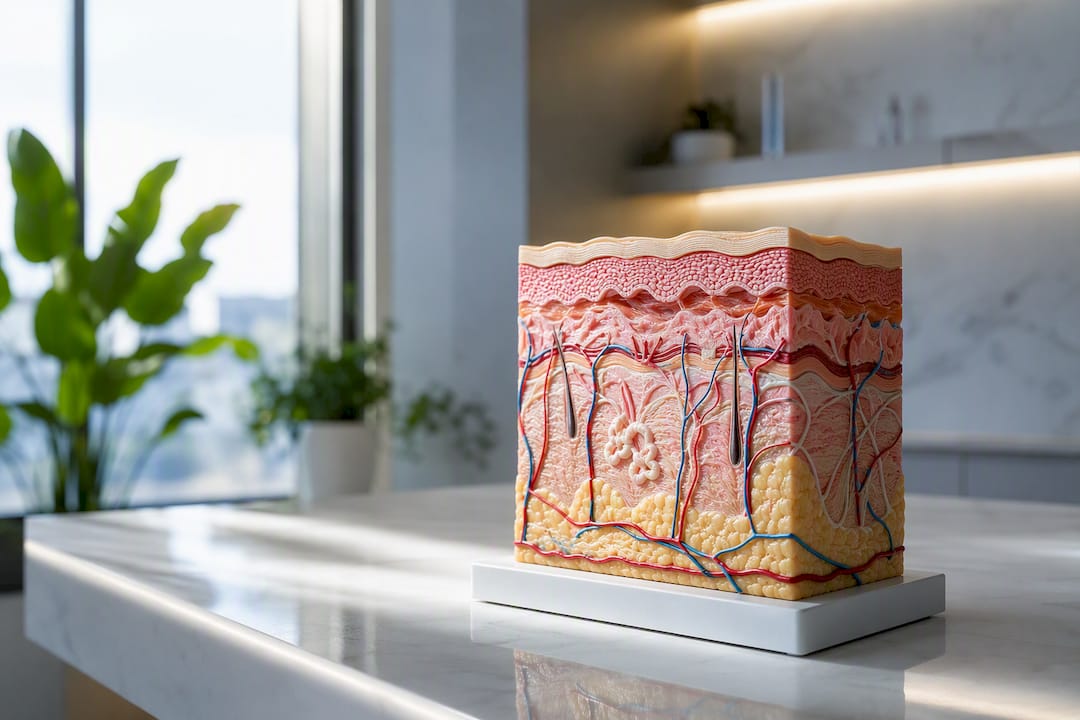
Depth control is what separates a well-designed device from a risky one. Clinical machines used in medical offices often reach several millimeters into the SMAS layer, the same structural layer addressed in surgical facelifts, and HIFU has held FDA clearance for specific facial lifting and wrinkle indications for over a decade. At-home devices are engineered to work at shallower depths and lower energy per pulse, trading some intensity for a much wider safety margin you can manage yourself.
That safety trade-off shows up in the research, too. A PubMed Central review of HIFU for aesthetic use describes it as a promising, generally safe noninvasive option for skin tightening when the technique is correct and the candidate is appropriate. Two things determine whether that promise holds for your submental area:
- The device delivers consistent, controlled energy rather than unpredictable pulses.
- You apply the technique correctly every single session, since HIFU is far more technique-dependent than something like a topical serum.
Pro Tip: Consistency matters more than intensity. A moderate-energy device used correctly every week will outperform a high-energy device used carelessly once a month.
Who Is A Good Candidate For At-Home HIFU?
At-home HIFU tends to work best on a specific profile: adults over 30 with early to moderate skin laxity under the chin and a modest, not extensive, amount of submental fat. If your double chin is mostly loose skin with some fullness, rather than a large volume of fat, you’re in the sweet spot for a device like VividLift™.
If you’re dealing with significant fat volume or advanced skin laxity, an at-home device alone will likely underdeliver. That’s when a conversation with a dermatologist or med-spa provider about clinic-based options makes more sense. Resources like these clinician-facing tips on candidate selection walk through how professionals assess laxity and expectations before recommending any skin-tightening approach.
Before you start, rule out these contraindications:
- Pregnancy
- Implanted electronic devices like pacemakers
- Active skin infections, cystic acne, or open wounds in the treatment area
- Recent facial procedures (fillers, peels, laser resurfacing) in the same zone
Check our guide to who’s suited for jawline HIFU if you’re still unsure where you fall.
How Do You Use An At-Home HIFU Device Safely?
Technique determines almost everything about your results, and most disappointing outcomes trace back to one overlooked step: not enough gel.
- Cleanse and inspect. Wash your face and neck thoroughly, and check the area for any cuts, breakouts, or irritation before you begin.
- Apply a generous, continuous layer of conductive gel. This is the single biggest factor in how effectively ultrasound energy transmits into your skin. Skimping on gel is the most common reason sessions feel uncomfortable or produce weak results.
- Start at the lowest intensity setting if you’re new to the device, and work your way up only after your skin has adjusted over a few sessions.
- Move in a steady, planned pattern across the jawline and submental area, working in a grid or consistent linear passes. Never linger on one spot; pausing concentrates energy and raises your risk of discomfort.
- Avoid bony areas and the thyroid. Stay on soft tissue and steer clear of the jawbone, cheekbones, and the front of the neck over the thyroid gland.
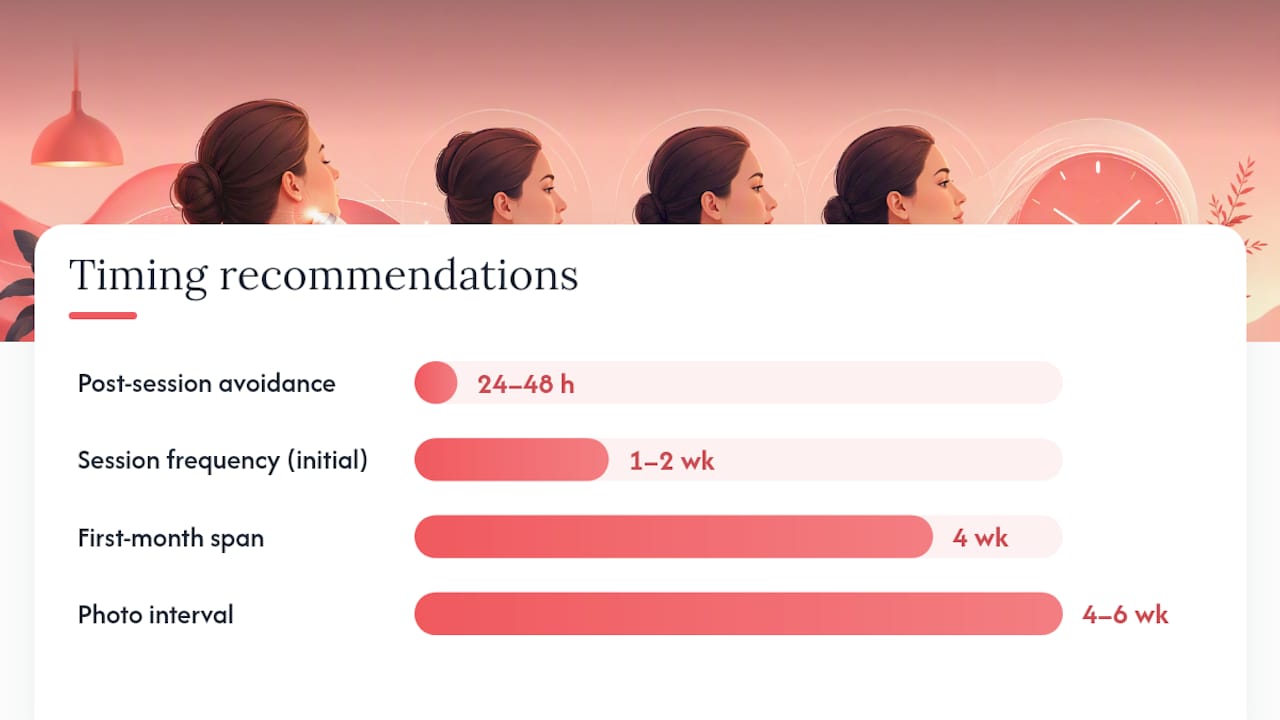
- Keep initial sessions to the device’s recommended length, typically once weekly to every other week for the first month or so.
Afterward, hydrate the skin, avoid direct sun and heat (saunas, hot showers) for 24 to 48 hours, and watch for anything beyond mild, short-lived redness.
Pro Tip: Photograph your submental area from the same angle, distance, and lighting every 4 to 6 weeks. Day-to-day changes are too subtle to notice, but a month-over-month comparison usually isn’t.
For a full walkthrough of session sequencing, see Sequence 2: Lifting and Sculpting with HIFU.
What Are The Safety Risks And Side Effects?
Most people experience only mild, temporary effects: redness, slight swelling, or a tingling or warm sensation during and immediately after a session. These typically resolve within a few hours to a day. A systematic review of HIFU aesthetic studies found adverse events occur in under 5% of cases and are overwhelmingly transient, like erythema or mild swelling, when the technique is followed correctly.
Contact a healthcare provider if you notice persistent pain lasting more than a couple of days, numbness that doesn’t fade, or any blistering. Those aren’t typical outcomes and warrant medical attention rather than waiting it out.
Absolute contraindications include:
- Pregnancy
- Pacemakers or other implanted electronic devices
- Active infections or open wounds in the treatment zone
- Any facial procedure performed over the same area within the past several weeks
Review our full breakdown of expected side effects for at-home devices before your first session.
When Will You See Results, And How Long Do They Last?
Visible change typically starts between 4 and 12 weeks after your first session, as collagen remodels and your lymphatic system clears disrupted fat cells. This isn’t a same-day effect, and anyone promising one isn’t describing how HIFU actually works.
- One clinical study cited by Healthline found 94% of participants reported visible lifting at the three-month mark, with improvement persisting at six months for many.
- After an initial course, most people maintain results with monthly touch-up sessions rather than weekly ones.
- Track progress with consistent photos every 4 to 6 weeks rather than daily observation, which tends to hide gradual change.
What Should You Look For When Choosing A Device?
Not every at-home HIFU device deserves a spot on your bathroom counter. Look for a few concrete signals before you buy:
- Documented clinical evidence, not just marketing copy, behind the device’s claims.
- Clear, specific instructions for gel application, energy settings, and session length.
- Jawline-appropriate energy settings designed for facial and submental use rather than borrowed from body-contouring tools.
- Built-in safety limits that prevent overuse or excessive energy delivery.
- Real warranty and customer support, since you’ll want help if something goes wrong.
- Transparent user-satisfaction data, ideally from a real user base rather than a handful of curated reviews.
Red flags run the other direction: vague “clinically proven” claims with no data attached, no real emphasis on gel or technique, promises of overnight results, or a company that’s hard to reach if you have a question.
Soneda’s VividLift™ 2-in-1 HIFU+Sono was designed around these exact criteria, pairing HIFU with sonophoresis for hydration support. You can see the full mechanism breakdown here.
What Evidence Backs Soneda’s Approach?
Soneda Skincare builds professional-grade Korean beauty devices specifically for effective at-home use, and the VividLift™ 2-in-1 HIFU+Sono reflects that focus: HIFU for lifting paired with sonophoresis for deeper product absorption and hydration.
The clinical numbers behind it are specific rather than vague. Soneda reports strong user satisfaction alongside clinical results showing a significant increase in skin hydration, the kind of measurable outcome that separates a real device from a marketing claim. If you want to see the exact usage sequences behind those results, the getting-started resources walk through each step.
What Actually Matters Here (And What Doesn’t)
Most advice on double-chin treatments obsesses over device specs: megahertz, joules, pulse counts. That’s the wrong starting point. The research consistently points to technique, not raw power, as the deciding factor between a device that works and one that sits in a drawer after two tries.
The conventional wisdom oversells speed and undersells consistency. A device that promises visible change in a week is setting you up for disappointment, because collagen remodeling simply doesn’t move that fast, no matter what the packaging says. What the reader should prioritize first isn’t the strongest device on the market. It’s the one you’ll actually use correctly, every week, for the length of an initial course.
Gel application deserves far more attention than it gets. It’s the unglamorous variable that decides whether your energy reaches the target depth or just sits uncomfortably on your skin’s surface. Get that right, follow a realistic schedule, and mild-to-moderate submental fullness responds. Skip it, and even the best-engineered device underperforms.
— Customer
Ready To Start Your At-Home HIFU Routine?
If you’ve made it this far, you already know what separates a device that delivers from one that doesn’t: documented clinical results, clear technique guidance, and real safety limits. VividLift™ 2-in-1 HIFU+Sono checks each of those boxes with a 100% user satisfaction rate and a 175% hydration increase behind it, not just a spec sheet.
You can preorder VividLift directly, or browse the open-box option if you want a lower entry price on the same technology. Either way, follow the prep, gel, and motion guidance covered above from your very first session. That’s what determines whether your jawline actually shows a difference in eight weeks or you’re left wondering why nothing changed.