7–10 Day Start, Then Monthly HIFU Maintenance for Your Face; Device Tested

Use an at-home HIFU device roughly once a week to 10 days for an initial course of several sessions, then shift to maintenance treatments about every month to six weeks. That cadence balances collagen stimulation with skin recovery time. Stop immediately if you notice severe irritation, skip HIFU during pregnancy, and wait the recommended interval after Botox or filler injections before your next session.
TL;DR:
- Initial HIFU treatments should be spaced about 7 to 10 days apart, with a longer interval of 10 days recommended for sensitive or reactive skin.
- Maintenance sessions are best scheduled every four to six weeks to sustain collagen remodeling without risking over-treatment.
- Avoid treatment if pregnant, dealing with active skin infections, severe inflammatory conditions, or shortly after recent chemical peels or injectables like Botox and fillers.
- Observe for adverse reactions such as blistering, numbness, or burns post-treatment, and consult a dermatologist if these occur.
- Follow proper prep, application, and aftercare routines, including thorough cleansing, gentle hydration, sun protection, and avoiding heat exposure for 48 hours after sessions.
Table of Contents
- Building Your HIFU Frequency Schedule: Initial Course vs. Maintenance
- What Are the Safety Limits for At-Home HIFU?
- How Do You Run a Safe HIFU Session at Home?
- How Long Until You See HIFU Results?
- What Should Aftercare Look Like?
- What Evidence Supports This HIFU Schedule?
- What Do Experienced At-Home Users Get Right (and Wrong)?
- Ready to Start Your At-Home HIFU Routine?
- Sources
Building Your HIFU Frequency Schedule: Initial Course vs. Maintenance
The 7 to 10 day gap between initial sessions isn’t arbitrary. Collagen remodeling happens in layers, and your skin needs that window to process the thermal signal from one session before it gets another. Space sessions too close together and you risk cumulative heat stress without added benefit. Space them too far apart and you lose the compounding effect that makes at-home HIFU work over weeks instead of one dramatic appointment.
Two common schedules cover most skin types:
- A conservative plan with multiple sessions spaced about 10 days apart, better for thinner or reactive skin.
- A standard plan with fewer sessions spaced about a week apart, suited to normal, resilient skin with no history of sensitivity.
If your skin flushes for more than a few hours after a session, or you notice tightness that lingers past 48 hours, extend your interval by a few days rather than pushing through on schedule. Sensitive skin often does better on the 10-day rhythm at a lower intensity setting for the first two or three sessions before ramping up.
Stop the course and consult a doctor if any of these happen:
- You become pregnant during the course.
- You develop an active skin infection, cold sore, or open lesion in the treatment area.
- You experience pain that doesn’t fade within a day, rather than the expected mild warmth or tightness.
Once you complete your initial course, drop to about one session per month to six weeks. That maintenance rhythm keeps collagen turnover active without over-treating skin that’s already responded.
What Are the Safety Limits for At-Home HIFU?
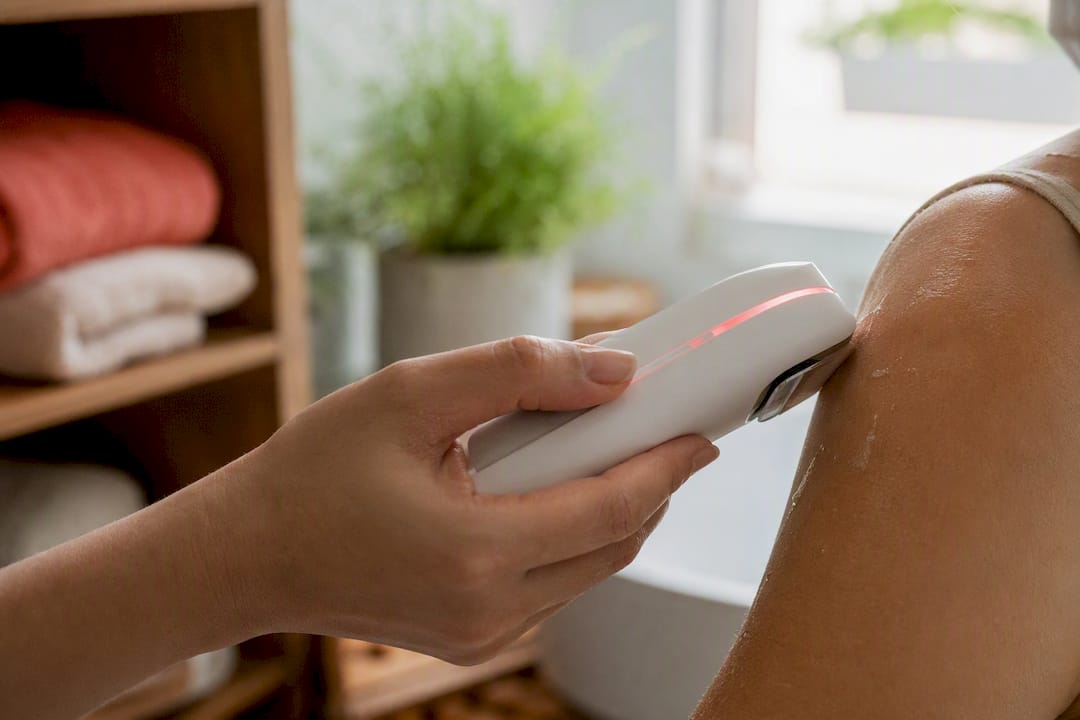
Certain conditions rule out home HIFU entirely, at least for now. Avoid treatment if you’re pregnant, have an active skin infection, are dealing with a severe inflammatory condition like cystic acne or rosacea flare, or had a chemical peel in the past two weeks.
Timing around injectables matters as much as skin condition. Wait around a month after Botox and several months after dermal fillers before running a HIFU session over treated areas. Ultrasound energy can disrupt filler material or interfere with how Botox settles into muscle tissue.
Why the wait is longer for professional-depth treatments: Clinical HIFU that targets the SMAS layer at 4.5 millimeters deep needs repeat sessions spaced at least six months apart to avoid lipoatrophy, a loss of fat volume from repeated deep heating. At-home devices work at shallower depths and lower energy, which is exactly why their safe interval is measured in days and weeks instead of months. That difference is not a technicality. It’s the entire reason home devices can be used more frequently in the first place.
Red flags to watch for after any session: blistering, numbness lasting more than a few hours, or visible burns. Any of these warrant a call to a dermatologist, not a wait-and-see approach. For a fuller rundown of what’s normal versus concerning, see our guide on HIFU side effects.
How Do You Run a Safe HIFU Session at Home?
Preparation matters as much as the treatment itself. Follow this sequence every time:
- Cleanse thoroughly. Remove all makeup, sunscreen, and oil before starting.
- Skip exfoliation for a week prior. Retinoids and exfoliating acids should be paused 48 to 72 hours before treatment to reduce sensitivity.
- Apply conductive gel generously. Proper gel coverage is what lets ultrasound energy transmit into skin instead of dissipating at the surface.
- Check your cartridge and start at the lowest intensity. Increase gradually across sessions as your skin builds tolerance.
- Keep the device moving at all times. Never hold it still on one spot. Follow your device’s shot-count guidance for each facial zone rather than guessing.
- Cool the skin afterward. A gentle cold compress calms redness within minutes.
- Hydrate and avoid heat for 48 hours. No saunas, hot yoga, or long hot showers immediately after.
Pro Tip: Treat your jawline and cheeks in overlapping passes rather than isolated spots. Overlapping strokes distribute energy evenly and lower your risk of missed or over-treated patches.
How Long Until You See HIFU Results?
Most people notice the first visible change around 8 to 12 weeks into consistent treatment, as collagen remodeling accumulates rather than appearing overnight. Full results build over 2 to 3 months, then continue refining with maintenance sessions.
Track progress with:
- Photos taken every 2 to 4 weeks, same lighting, same angle.
- Firmness checks along the jawline and cheeks.
- Hydration and texture, since skin often looks smoother before it looks visibly lifted.
Age, baseline collagen density, sun exposure, and sleep habits all affect how long results last. Someone in their 30s with good sun habits often maintains results longer between sessions than someone in their 50s with more sun damage.
What Should Aftercare Look Like?
Aftercare determines whether your results hold. Right after a session:
- Cleanse gently. No scrubbing, no active acids for 48 to 72 hours.
- Apply hydrating serums with hyaluronic acid or peptides to support the skin barrier while it recovers.
- Wear sunscreen daily. UV exposure undoes collagen gains faster than almost anything else.
- Prioritize sleep, water intake, and protein-rich meals, since collagen remodeling draws on your body’s overall recovery capacity.
For a detailed hour-by-hour aftercare breakdown, check our HIFU aftercare guide.
What Evidence Supports This HIFU Schedule?
Soneda designed the VividLift™ 2-in-1 HIFU+Sono device around the cadence outlined here, and its own testing backs it up: users reported a 175% increase in skin hydration alongside a 100% satisfaction rate among participants.
That said, no schedule replaces your device’s own instructions. Cartridge life, intensity caps, and shot counts vary by model, so:
- Always check your specific cartridge’s rated shot count before starting a session.
- Replace cartridges per the manufacturer’s guidance rather than stretching one past its intended lifespan; see the VividLift replacement cartridge page for specs.
- Treat this article as a general framework, and your device manual as the final word on settings.
What Do Experienced At-Home Users Get Right (and Wrong)?
The best results come from restraint, not intensity. Start low, even if the highest setting feels tempting on day one. Photograph your progress every two weeks instead of trusting memory. Never double up sessions to “catch up” after missing one. That instinct causes more irritation than benefit.
If you’re on any Botox or filler schedule, talk to your injector before adding HIFU into the mix. Timing conflicts are avoidable, but only if you ask first.
— Customer
Ready to Start Your At-Home HIFU Routine?
VividLift™ was built for exactly the protocol covered in this article: a 2-in-1 HIFU and Sono device designed for gradual, cumulative sessions rather than one-off deep treatments, which means you get professional-style lifting without the recovery downtime or per-visit cost of a spa. You can begin at the lowest intensity and follow the same 7 to 10 day initial rhythm and monthly maintenance schedule outlined above, right from your own bathroom counter.

Check availability on the VividLift preorder page, and read through the cartridge and intensity guidance before your first session so your schedule matches what your specific device is rated for.
This article is general information, not a substitute for advice from a qualified doctor. Consult a qualified healthcare professional about your own circumstances before acting on anything here.
Sources
- Complications and Risks of High-Intensity Focused Ultrasound (HIFU) in Esthetic Procedures: A Review
- How to Use a HIFU Device at Home | Lux Skins® Pakistan – The Lux Skins
- HIFU lifting at home. Safe handling with Medicube High Focus Shot