Can Light Therapy Actually Fade Hyperpigmentation?

Yes, but the answer depends on which wavelength you use and what kind of dark spot you’re treating. Photobiomodulation, better known as LED or PBM light therapy, can meaningfully improve post-inflammatory hyperpigmentation and sun spots, and it can work as a supporting treatment for melasma when other approaches fall short. The results tend to be real but modest, and they hinge entirely on wavelength and dose.
The strongest clinical support points to three ranges: amber and yellow light around 585 to 590 nanometers, green light near 505 nanometers for surface-level pigment, and red or near-infrared light between 630 and 830+ nanometers as a supporting treatment. One pilot study on 590 nm LED therapy found meaningful melasma improvement in a small group of patients after eight weekly sessions.
One thing matters more than wavelength choice: if you have a darker skin tone (Fitzpatrick IV through VI), talk to a dermatologist before starting any visible-light LED protocol. Visible light can trigger persistent, hard-to-reverse pigmentation in melanin-rich skin, and getting professional input before you start protects you from months of setback.
- Amber/yellow (585 to 590 nm): best pilot data for melasma
- Green (~505 nm): best for superficial dark spots
- Red/near-infrared (630 to 830+ nm): supports skin repair, used alongside pigment-targeted wavelengths
- Blue light: generally avoided for pigmentation, since it can stimulate melanin production in melasma-prone skin
Key Takeaways
Hyperpigmentation light therapy works best as a wavelength-matched, dose-controlled adjunct, not a standalone cure, and darker skin tones need dermatologist input before starting.
| Point | Details |
|---|---|
| Match wavelength to pigment type | Use green (~505 nm) for surface spots, amber (585-590 nm) for melasma. |
| Respect the dose-response curve | Low and moderate doses of the same wavelength can produce opposite effects on melanin. |
| Screen for phototype risk | Fitzpatrick IV-VI skin should consult a dermatologist before visible-light LED sessions. |
| Set a 6-to-12-week timeline | Pigment fading is slower than redness reduction; judge results at 6 to 12 weeks. |
| Consider a multi-wavelength device | Soneda’s Sculpt2 and VividLift combine LED wavelengths with sonophoresis for at-home adjunct use. |
Table of Contents
- How Light Therapy Affects Pigment-Producing Cells
- Which Wavelength Should You Prioritize for Your Dark Spots
- What Do Clinical Trials Actually Show?
- Who Should Try It and Who Should See a Dermatologist First
- Building a Safe At-Home Light Therapy Routine
- How Long Until You See Results?
- Where Soneda’s Multi-Wavelength Devices Fit In
- A Practical Adjunct Worth Adding to Your Routine
- Frequently Asked Questions
- Sources
How Light Therapy Affects Pigment-Producing Cells
Light therapy doesn’t bleach skin the way a chemical peel strips away layers. It works at the cellular level, and the mechanism explains why some wavelengths help pigmentation while others make it worse.
Photons from red and near-infrared light get absorbed by cytochrome c oxidase, an enzyme sitting inside your cell’s mitochondria. That absorption kicks off a chain of signaling that can turn certain genes up or down, including MITF and tyrosinase, the two biggest drivers of melanin production. Depending on the wavelength and the dose delivered, this signaling cascade either encourages melanocytes to produce more pigment or tells them to slow down.
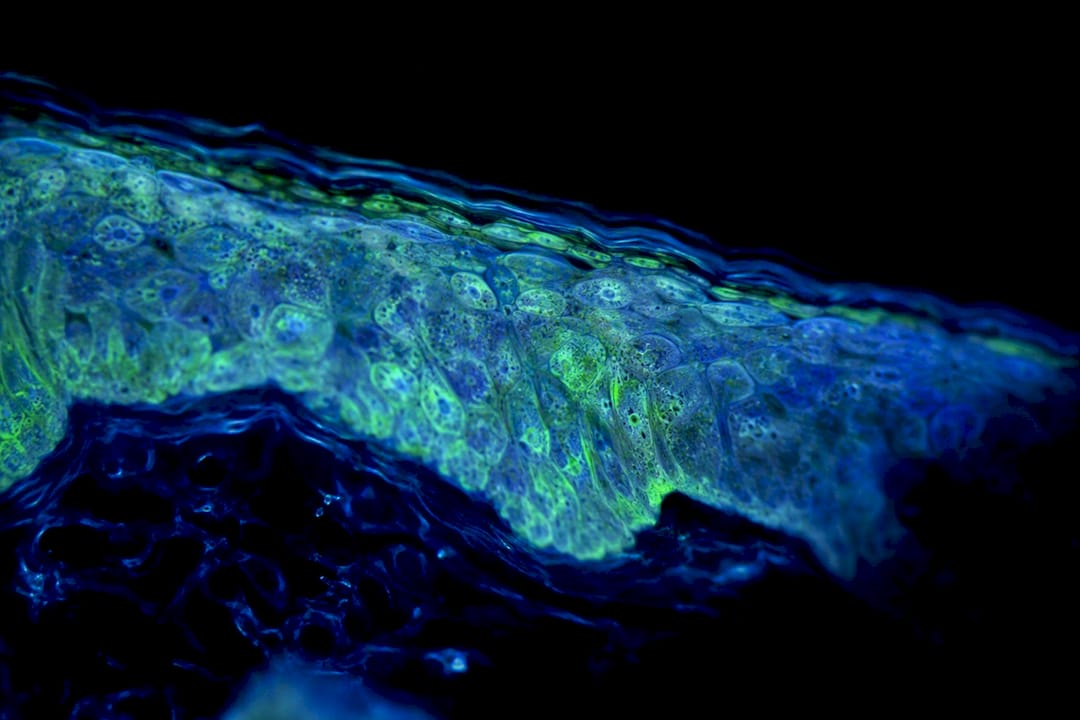
Some wavelengths do more than talk to melanocytes directly. Amber light in particular appears to act on vascular signals like VEGF, a growth factor tied to the blood vessel changes seen in melasma. Suppressing that vascular activity may explain why amber light shows melasma-specific effects that go beyond simple pigment fading, since melasma often involves abnormal blood vessel activity feeding the pigment problem.
Dose is where this gets counterintuitive. Dermatology researchers borrow a concept called the Arndt-Schulz principle: a low dose of light can stimulate a biological process, while a moderate or higher dose of the exact same wavelength can inhibit it. Applied to melanogenesis, this means the “right” fluence for reducing pigment isn’t automatically higher. It’s specific. Too little light does nothing; too much light, or the wrong wavelength, can turn a treatment meant to fade spots into one that darkens them.
Pro Tip: Don’t assume more sessions or a higher power setting speeds up results. With pigment cells, hitting the correct dose window matters more than pushing intensity.
Which Wavelength Should You Prioritize for Your Dark Spots
Not every dark spot responds to the same light. Matching wavelength to pigment type is the single biggest factor in whether a light therapy protocol actually helps.
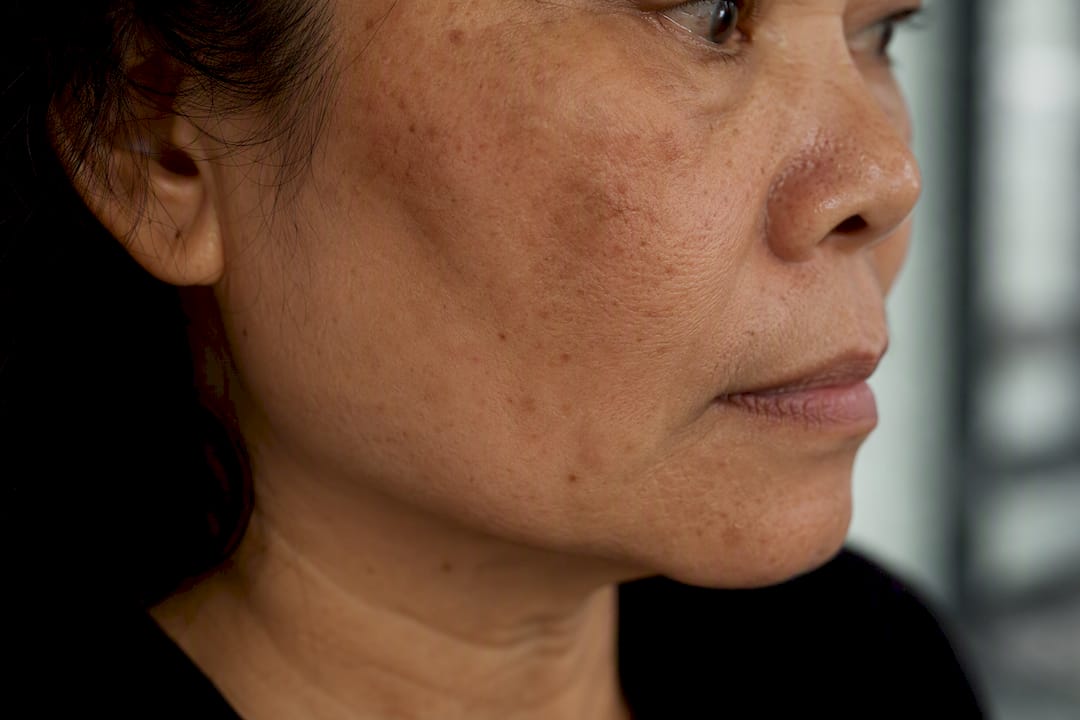
Green light near 505 nanometers has human-intervention data showing reductions in melanin index and spot counts for shallow, surface-level pigmentation, the kind left behind by old acne marks or years of sun exposure. It appears to work partly by suppressing tyrosinase activity, the enzyme that converts tyrosine into melanin.
Amber and yellow light in the 585 to 590 nanometer range has the most encouraging pilot data specifically for melasma, a condition that’s notoriously resistant to most over-the-counter treatments. Beyond its effect on pigment cells, amber light’s anti-angiogenic action on melasma’s vascular component gives it a mechanistic edge that pure pigment-focused wavelengths lack.
Red and near-infrared light, spanning roughly 630 to 830 nanometers and beyond, plays a different role. The evidence here leans toward dermal repair, collagen support, and calming inflammation rather than direct depigmentation. Harvard Health’s review of red light therapy notes it stimulates mitochondrial activity to reduce inflammation, which makes it a useful adjunct alongside a pigment-targeting wavelength rather than a standalone fix.
Blue light is the wavelength to skip if pigment is your goal. It tends to increase melanogenesis in melasma-prone skin, the opposite of what you want.
| Wavelength range | Primary use case | Evidence strength |
|---|---|---|
| Green (~505 nm) | Superficial dark spots, sun spots | Small human-intervention trials |
| Amber/yellow (585-590 nm) | Melasma, vascular-linked pigment | Pilot clinical studies |
| Red/NIR (630-830+ nm) | Dermal repair, adjunct support | Broader safety and mechanism data |
| Blue | Avoid for pigment treatment | Associated with worsened melasma |
- Superficial spots respond best to green light protocols
- Melasma has the most supportive pilot data with amber/yellow
- Red/NIR works best paired with a pigment-specific wavelength and not alone
What Do Clinical Trials Actually Show?
The evidence for hyperpigmentation light therapy is real, but it comes almost entirely from small trials, and that context matters before you set your expectations.
The most cited melasma study followed just ten patients through eight weekly sessions of 590 nm light at 20 J/cm², and reported a mean MASI score improvement of roughly 23%, with no serious adverse events. MASI, the Melasma Area and Severity Index, is the standard tool dermatologists use to score how much surface area is affected and how dark the pigment appears.
Red-light evidence carries a different kind of weight. The American Academy of Dermatology notes that in one reported study, over 90% of participants noticed improvements, including smoother skin and lightened dark spots, after eight LED red-light sessions. That’s a strong participant-reported figure, though “noticed improvement” is a softer metric than a validated dermatology score like MASI.
For post-inflammatory hyperpigmentation specifically, some trials on 830 nm LED have shown reductions in melanin index and erythema index compared to untreated skin, supporting the idea that infrared wavelengths help calm inflammation-driven pigment.
An integrative review of PBM for melasma pulled together nine relevant studies and landed on a measured verdict: red light at 630 nm, amber at 585 to 590 nm, and infrared at 830 to 850 nm, delivered at exposures between roughly 1 and 20 J/cm², can modulate the pathways behind melanin production. But the review is explicit that evidence quality is still limited, protocols vary widely between studies, and the field needs larger, better-designed randomized controlled trials before anyone can call these wavelengths a proven melasma treatment.
- MASI, melanin index, and erythema index are the three outcome measures you’ll see repeated across studies
- Sample sizes in most pigmentation PBM trials run in the single or low double digits
- Dosing protocols vary enough between studies that comparing results directly is difficult
- “Promising but not definitive” is the accurate summary of where the science stands right now
Who Should Try It and Who Should See a Dermatologist First
Light therapy isn’t a one-size-fits-all pigment fix, and knowing where you fall on the risk spectrum before you buy a device or book a session saves you time and frustration.
- You’re likely a good candidate if you have post-inflammatory hyperpigmentation from acne, general sun spots, or you’re looking for a maintenance step after another pigment treatment has already done the heavy lifting.
- You should be more cautious if you have melasma with a visible vascular or red undertone, since that combination responds less predictably and needs closer monitoring.
- You need a dermatologist’s input first if you have a darker phototype (Fitzpatrick IV through VI), since visible light can trigger prolonged hyperpigmentation in melanin-rich skin that’s much harder to reverse than it was to create.
- You should pause and ask your doctor if you’re on any photosensitizing medication, including certain antibiotics, retinoids, or acne treatments, since these can amplify how your skin reacts to light exposure.
A partner resource on skin type categories and treatment suitability is worth a read if you’re unsure where your skin phototype falls before starting any light-based regimen.
Pro Tip: Take a baseline photo in consistent lighting before your first session, then repeat weekly. It’s the easiest way to catch early darkening before it becomes a bigger problem, and your notes will help a dermatologist troubleshoot faster if something looks off.
Practical safety habits matter as much as wavelength selection. Patch test on a small area first, increase your dose gradually rather than jumping to a maximum setting, and stop immediately if you notice pigmentation getting darker rather than lighter. Our guide on LED therapy for melasma walks through how to spot early warning signs before they become a setback.
Building a Safe At-Home Light Therapy Routine
Clinical-grade LED systems and consumer devices are not the same tool wearing different packaging. Professional systems deliver higher irradiance and fluence in a shorter session, while at-home devices generally operate at lower power, which means they need more frequent or longer use to approach comparable cumulative dosing.
That difference doesn’t make at-home devices useless. It means expectations and protocols need to match the tool. Published trial protocols for pigmentation range broadly, with radiant exposures anywhere from roughly 1 J/cm² up to 60 J/cm² depending on the wavelength and whether the goal is stimulation or inhibition. Your specific device’s manual, not a generic trial protocol, should set your actual session parameters, and a dermatologist’s guidance matters more than either when you’re dealing with melasma or a higher-risk phototype.
Layering light therapy with topicals takes some sequencing. Many practitioners apply serums after a light session rather than before, since some LED treatments can enhance product absorption into freshly stimulated skin. Broad-spectrum sunscreen isn’t optional here; it’s the single habit that determines whether your results hold or reverse. For melasma specifically, look for sunscreen formulated to address visible light as well as UV, since visible light itself is a documented trigger for melasma-related pigment.
A conservative starting plan looks like this:
- Patch test a small area for 48 hours before your first full session
- Start with two to three short sessions per week at the low end of your device’s fluence range
- Hold that routine for four to eight weeks before evaluating results with photos
- Adjust frequency or intensity only with a plateau or a clinician’s input, not impatience
- Never skip sunscreen the day of or after a session
- Never increase dose and frequency at the same time; change one variable at a time
- Always stop and reassess if pigment darkens instead of fading
Pro Tip: If you’re combining light therapy with a topical like Ovaco Timeslip serum, apply it after your session rather than before, so the light isn’t filtered through a heavy layer of product.
How Long Until You See Results?
Patience matters more with pigment than with almost any other skin concern light therapy addresses. Redness and inflammation often calm down within the first couple of weeks, but actual pigment fading is slower and typically needs six to twelve weeks of consistent sessions before you see a measurable change.
- Weeks 1 to 2: reduced redness and calmer overall skin tone
- Weeks 6 to 12: gradual fading of dark spots or melasma patches, if the wavelength and dose match your skin
- Beyond 12 weeks: results tend to plateau, and maintenance sessions plus strict sun protection are what keep pigment from creeping back
- Any point: if pigmentation worsens rather than improves, stop and consult a dermatologist before continuing
Melasma in particular has a well-earned reputation for relapse. Sun exposure, hormonal shifts, and heat can all bring it back even after a successful round of treatment, which is exactly why photoprotection isn’t a footnote here. It’s half the treatment.
Where Soneda’s Multi-Wavelength Devices Fit In
Soneda’s approach to LED reflects the same wavelength-specific thinking covered throughout this guide, built into an at-home format rather than a clinic visit. The Sculpt2 EMS facial toning device combines multiple LED wavelengths with infrared, letting you pair a pigment-focused wavelength with the dermal-repair benefits of red and near-infrared light in a single device.
- Multi-wavelength delivery means you’re not limited to a single color of light per session
- Infrared inclusion supports the repair side of the equation, not just pigment
- These remain adjunctive tools, not replacements for dermatologist care in melasma or darker phototypes
If you’re evaluating whether an at-home device can realistically deliver clinical-grade results, our breakdown of how at-home light therapy devices perform covers that comparison directly.
A Practical Adjunct Worth Adding to Your Routine
If you already know you’re a reasonable candidate, either because you’re managing acne marks, sun spots, or you’re maintaining results after a professional treatment, an at-home multi-wavelength device gives you a way to keep working on pigment between appointments or without one at all. Where a single-purpose red light mask only addresses inflammation and repair, Soneda’s devices combine multiple wavelengths with sonophoresis and HIFU in one system, so you’re not managing three separate tools for tone, texture, and firmness.

The VividLift 2-in-1 HIFU+Sono device pairs LED wavelength technology with sonophoresis, which improves how well your topical actives, including pigment-targeting serums, actually absorb into skin rather than sitting on the surface. That combination matters if you’re layering a brightening serum with light therapy, since better absorption means the product you’re using is doing more of the work it’s designed for. If melasma or a darker phototype is part of your situation, pair any at-home routine with a dermatologist’s guidance rather than going it alone. Ready to see how it fits your routine? Preorder VividLift and start building a light therapy routine that’s actually built for your skin’s response, not a generic protocol.
The Case for Cautious Optimism, Not Miracle Claims
The data on hyperpigmentation light therapy is genuinely encouraging, but only if you resist the urge to treat it as a cure. Amber light’s melasma results and green light’s dark-spot data are real, backed by measured outcomes, not marketing copy. The honest caveat is that every supportive study is small. Treat light therapy as a smart, evidence-backed layer in your routine, paired with sunscreen and, for melasma or darker skin tones, a dermatologist’s judgment.
Frequently Asked Questions
Does red light help melasma? Red light mainly supports dermal repair and calms inflammation rather than directly fading melasma pigment. It works best paired with amber or yellow light, which has stronger pilot evidence for melasma specifically.
Does green light help pigmentation or dark spots? Yes, human-intervention studies on green light around 505 nanometers show reductions in melanin index and spot counts, making it one of the better-supported wavelengths for superficial dark spots and sun damage.
Is LED therapy safe for all skin tones? Not without precautions. People with Fitzpatrick IV to VI skin face a higher risk of visible-light-induced pigmentation that can persist longer than the original spot, so a dermatologist consult before starting is the safer path.
How often should you use light therapy for hyperpigmentation? Most study protocols use two to three sessions per week for six to eight weeks minimum, though exact frequency depends on your device’s fluence and the wavelength targeted.
Can at-home LED devices work as well as professional treatments? At-home devices typically deliver lower irradiance than professional systems, which means slower, more gradual results rather than equivalent outcomes in fewer sessions.
This article is general information, not a substitute for advice from a qualified doctor. Consult a qualified healthcare professional about your own circumstances before acting on anything here.
Sources
- Is red light therapy right for your skin? — American Academy of Dermatology
- 590 nm LED irradiation improved erythema through inhibiting angiogenesis and ameliorated pigmentation in melasma — PMC
- Red light therapy for skin care — Harvard Health