LED Therapy for Wrinkles: Evidence-Based Guide

Red and near-infrared LED photobiomodulation can measurably reduce the appearance of fine lines and improve skin texture when you use the right wavelengths, sufficient irradiance, and a consistent protocol. That’s the short answer, backed by randomized controlled trials and systematic reviews. The FDA has cleared specific red-light devices for home use, and clinical evidence confirms that in-office systems deliver higher power and faster results, while at-home devices produce subtler, gradual improvements with regular use.
- Who benefits most from at-home LED: Adults with mild-to-moderate fine lines who want a low-risk, non-invasive maintenance tool between professional treatments.
- Who should prioritize in-office care: Anyone with deep wrinkles, significant photoaging, or complex skin concerns that warrant a board-certified dermatologist’s evaluation.
- Key limitation: Results are not permanent. Consistent, ongoing use is required to maintain improvement.
Clinical bottom line: Systematic review evidence supports measurable improvement in photoaging signs with red/NIR LED, but exposure parameters and device validation vary widely across consumer products.
Key Takeaways
Red and near-infrared LED photobiomodulation produces clinically meaningful improvement in fine lines and skin texture when used with the right wavelengths, sufficient irradiance, and a consistent protocol of at least 8–12 weeks.
| Point | Details |
|---|---|
| Wavelength and irradiance are non-negotiable | Only devices that state specific nm values and mW/cm² can be evaluated for therapeutic dose. |
| Results require consistency | Improvement builds over 8–12 weeks of regular use; results decline when treatment stops. |
| At-home devices are lower power | Consumer devices produce subtler, gradual results compared to in-office clinical systems. |
| Safety screening matters | Photosensitizing medications, active malignancy, and certain light-sensitive conditions require medical clearance before use. |
| Sonedaskincare VividLift | Combines HIFU, sonophoresis, and multi-wavelength LED for a multi-modal at-home protocol targeting multiple layers of skin aging. |
Primary sources and further reading
- Cleveland Clinic: LED Light Therapy — How It Works, Colors, Benefits & Risks — Comprehensive clinical overview of LED mechanisms, colors, and in-office vs. at-home distinctions.
- Forum Dermatologicum: Koperdowska systematic review on LED photobiomodulation — Peer-reviewed systematic review covering RCT evidence, mechanisms, and consumer device limitations.
- UCLA Health: 5 health benefits of red light therapy — Medical center summary of FDA-cleared devices and clinical use cases.
- American Academy of Dermatology: Red light therapy safety guidance — Dermatologist guidance on appropriate use, contraindications, and when to consult a professional.
- FDA 510(k) clearances database — The authoritative source to verify whether a specific device has been cleared for a given indication.
- PubMed: 2025 RCT on multi-wavelength LED for photoaging — Randomized controlled trial reporting improved photoaging markers with combined yellow, red, and infrared wavelengths.
This article is general information, not a substitute for advice from a qualified doctor. Consult a qualified healthcare professional about your own circumstances before acting on anything here.
Table of Contents
- How LED therapy for wrinkles actually works on skin
- What clinical trials actually show about fine lines and wrinkles
- In-office LED vs. at-home devices: what the power gap means for you
- How to choose a safe at-home LED device
- How to use LED safely and effectively at home
- Risks, side effects, and who should avoid LED therapy
- Combining LED with other treatments
- Where Sonedaskincare’s VividLift fits in the treatment spectrum
- Sources
How LED therapy for wrinkles actually works on skin
LED photobiomodulation (PBM) is the use of specific, non-thermal light wavelengths to trigger biological responses in skin cells. Unlike lasers, LED devices don’t ablate or heat tissue. Instead, photons at precise wavelengths are absorbed by chromophores in mitochondria, particularly cytochrome c oxidase, which then stimulates ATP production, reduces oxidative stress, and activates collagen-signaling pathways.
Why wavelength determines everything:
- Red light (approximately 630–680 nm): Penetrates the epidermis and upper dermis. Primarily targets fibroblasts to stimulate collagen and elastin synthesis. Best supported for fine-line reduction and surface texture improvement.
- Near-infrared (NIR, approximately 700–900+ nm): Penetrates deeper into the dermis and subcutaneous tissue. Supports deeper collagen remodeling, reduces inflammation, and may improve skin laxity over time.
- Yellow/amber (approximately 570–590 nm): Emerging evidence suggests benefits for pigmentation, redness, and photoaging markers when combined with red and NIR.
Penetration depth scales with wavelength. Red light reaches roughly 1–2 mm into skin, affecting the dermis where collagen lives. NIR can reach 5 mm or more, making it relevant for deeper structural support.
The two technical variables that determine whether a device actually works are wavelength (must be in a clinically studied range) and irradiance (power density, measured in mW/cm²). Without sufficient irradiance, photons don’t reach target tissue in meaningful quantities, and no biological response follows. Device marketing that emphasizes color or LED count without stating irradiance is a red flag.
What clinical trials actually show about fine lines and wrinkles
The evidence base for red and NIR LED is stronger than most people expect, and more limited than most marketing implies. A systematic review published in Forum Dermatologicum found consistent improvement in signs of photoaging, including fine-wrinkle reduction and improved elasticity, across randomized controlled trials, while noting that exposure parameters and consumer device validation vary considerably between studies.
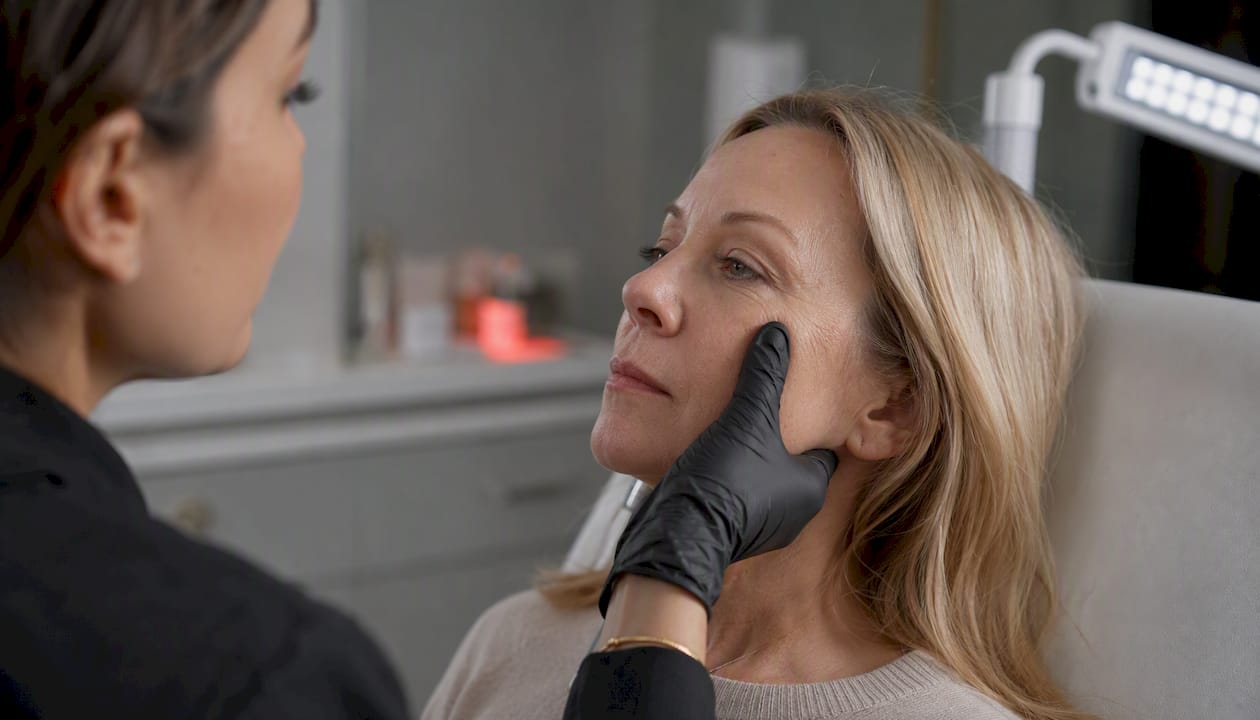
A 2025 randomized controlled trial published on PubMed found that combining yellow wavelengths (570–590 nm) with red and infrared improved multiple photoaging markers, including reduced pore appearance, wrinkle depth, skin texture, and brown spots. Multi-wavelength approaches are increasingly supported by trial data.
What the evidence consistently shows:
- Measurable improvement in fine lines and skin texture after 8–12 weeks of regular treatment
- Improved skin elasticity and collagen density on histological assessment in several trials
- Better outcomes with higher irradiance and more frequent sessions within safe limits
- Gradual, cumulative results rather than dramatic single-session changes
What the evidence does not show:
- Elimination of deep wrinkles or significant skin laxity
- Permanent results after stopping treatment
- Consistent, independently validated performance across consumer-grade devices
The durability problem: Most trials show that results decline within weeks to months after stopping regular treatment. LED photobiomodulation supports ongoing collagen synthesis; it doesn’t create a permanent structural change. Think of it as a maintenance therapy, not a one-time fix.
Realistic expectation: UCLA Health clinical reporting confirms that FDA-cleared red-light devices have shown measurable improvement in skin quality after several months of consistent use — not after a handful of sessions.
In-office LED vs. at-home devices: what the power gap means for you
The single most important difference between a clinical LED system and a consumer device is irradiance. Professional systems used in dermatology offices and medical spas deliver significantly higher power densities than the devices cleared for home use. That gap translates directly into speed and magnitude of results.
Clinical systems:
- Higher irradiance, often covering the full face or body in a single panel
- Clinician oversight allows combination with microneedling, peels, or HIFU in the same session
- Faster, more pronounced changes, often visible within 4–6 weeks of a structured course
- Cost per session is higher, but fewer sessions may be needed to reach a visible threshold
At-home devices:
- Lower irradiance, designed for safe self-use without supervision
- Require longer treatment courses (8–12 weeks minimum) to reach comparable cumulative dose
- Gradual, subtle improvements that build over months of consistent use
- Lower per-session cost; suitable for ongoing maintenance between professional treatments
The Cleveland Clinic notes that in-office devices deliver higher strengths than at-home devices, which typically yield subtler improvements. That’s not a reason to dismiss at-home LED. It’s a reason to set accurate expectations and choose a device with clearly stated, clinically relevant specs.
Practical differences worth knowing:
- Flexible silicone masks that contour the face deliver better effective dose than rigid masks that sit away from the skin, because distance from the source directly reduces irradiance at the skin surface
- Clinic treatments include professional assessment of your skin type, contraindications, and progress
- At-home devices work best as consistent maintenance tools, not as replacements for clinical care
Pro Tip: Book at least one in-office consultation before committing to an at-home device. A board-certified dermatologist can assess your baseline, identify contraindications, and recommend whether a home device is appropriate for your specific wrinkle pattern and skin type.
How to choose a safe at-home LED device
The consumer LED market is saturated with products that prioritize aesthetics and marketing language over clinical substance. Reporting from The Guardian and dermatologist commentary consistently warn that marketing often outpaces clinical data. Here’s what to actually check.
Technical specs to require before buying:
- Wavelength(s) stated clearly: Look for red in the 630–680 nm range, NIR in the 700–900 nm range, or a validated multi-wavelength combination. If the product page doesn’t list specific nanometer values, move on.
- Irradiance or power density (mW/cm²): This is the most commonly omitted spec. A device with no stated irradiance gives you no way to assess whether it delivers a therapeutic dose.
- Recommended treatment distance: Irradiance drops sharply with distance. A device rated at a given power density at 0 cm is far less effective at 5 cm. Flexible masks that sit against the skin solve this problem.
- Session time and frequency guidance: Devices should specify both, based on their own power output.
- Eye protection: Either built-in eye shields or explicit guidance to use protective goggles.
Red flags to walk away from:
- No wavelength specified (just “red light” or “LED”)
- “Clinically proven” claims with no linked study or citation
- UV or blue-only devices marketed for anti-aging (blue light targets acne bacteria, not collagen)
- Irradiance claims that seem implausibly high without independent validation
Device form factor comparison:
| Device Type | Skin Contact | Coverage | Best For |
|---|---|---|---|
| Flexible silicone mask | High (contours face) | Full face | Anti-aging, consistent home use |
| Rigid full-face mask | Low (sits away from skin) | Full face | Convenience, but reduced effective dose |
| Handheld panel | Variable (user-controlled) | Targeted zones | Spot treatment, travel |
Dermatologist-reviewed guidance consistently recommends flexible designs for closer skin contact and multi-wavelength approaches for deeper collagen stimulation. You can also review at-home red light therapy device categories to compare options before purchasing.
Point-of-purchase checklist:
- Wavelength(s) in nm: stated? ☐
- Irradiance in mW/cm²: stated? ☐
- FDA 510(k) clearance: verifiable on the FDA database? ☐
- Independent clinical validation (not just brand-funded): cited? ☐
- Eye protection included or specified? ☐
- Flexible or close-contact design? ☐
Pro Tip: Search the FDA’s 510(k) database directly using the device name or manufacturer. “FDA-cleared” in marketing copy is not the same as verified clearance for a specific anti-aging indication — check the database yourself.
How to use LED safely and effectively at home
A typical evidence-based at-home protocol uses red or NIR wavelengths (or both), sessions of 10–20 minutes, 3–5 times per week for the first 8–12 weeks, followed by maintenance at 2–3 times weekly. Those are ranges, not a single prescription — your device’s specific irradiance and the manufacturer’s guidance should inform the exact timing.
Step-by-step session protocol:
- Cleanse skin thoroughly. Remove all makeup, SPF, and topical products. Residue can block light transmission or cause unexpected reactions.
- Avoid photosensitizing topicals immediately before treatment. Retinoids, AHAs, and benzoyl peroxide can increase sensitivity. Apply them after your LED session, not before.
- Put on eye protection. Use the goggles provided with your device, or purchase CE-marked LED safety goggles. Never rely on closed eyelids alone.
- Position the device correctly. For handheld panels, maintain the manufacturer’s recommended distance. For masks, confirm full facial contact.
- Run the full session. Don’t cut sessions short. Cumulative dose matters.
- Log your sessions and take monthly photos in consistent lighting. Progress with LED is gradual, and photos are the most reliable way to track real change.
Pro Tip: Pair consistent LED use with a daily broad-spectrum SPF 30+ and a retinoid applied on alternate evenings. Retinoids and LED both stimulate collagen through different pathways — used together (with appropriate timing to avoid irritation), they tend to produce better outcomes than either alone. Apply retinoid after your LED session, not before, to reduce the risk of photosensitivity.
When to stop and consult a dermatologist:
- Unexpected or persistent redness lasting more than a few hours after a session
- New skin lesions, changes in existing moles, or unusual pigmentation in the treatment area
- Burning sensation during treatment (suggests device is too close or irradiance is too high)
- No visible improvement after 12 weeks of consistent, correct use
For targeted guidance on the under-eye area specifically, home treatment for wrinkles under eyes covers safe positioning and realistic expectations for that sensitive zone.
Risks, side effects, and who should avoid LED therapy
LED photobiomodulation has a strong safety profile compared to ablative or thermal skin treatments. Serious adverse events in clinical trials are rare. That said, “generally safe” is not the same as “safe for everyone.”
Common mild side effects:
- Temporary redness or warmth immediately after treatment (usually resolves within 1–2 hours)
- Mild dryness or tightness, particularly in the first few weeks
- Rare: mild irritation or sensitivity in people with reactive skin types
Key contraindications and high-risk scenarios:
- Photosensitizing medications: Tetracyclines, certain NSAIDs, St. John’s Wort, some chemotherapy agents, and retinoids (topical or oral) can increase photosensitivity. Consult your prescribing physician before starting LED.
- Active malignancy in or near the treatment field: LED’s effect on cellular proliferation makes it contraindicated over active cancer sites. This is a hard stop, not a caution.
- Certain light-sensitive conditions: Lupus erythematosus, porphyria, and other photosensitive disorders require medical clearance before any light-based therapy.
- Pregnancy: Evidence on LED safety during pregnancy is insufficient. Most clinical guidance recommends avoiding it as a precaution.
- Suspicious or undiagnosed skin lesions: Never use LED over a lesion that hasn’t been evaluated by a dermatologist.
Before you start: The American Academy of Dermatology recommends consulting a board-certified dermatologist before beginning at-home LED therapy to confirm appropriateness and set realistic expectations. This is especially important if you take any prescription medications or have a history of skin cancer.
Eye safety is non-negotiable. The retina contains photoreceptors that can be damaged by prolonged, direct LED exposure. Always use the protective eyewear specified by your device manufacturer. This applies even to devices marketed as “eye-safe” — the goggles are there for a reason.
Combining LED with other treatments
LED photobiomodulation works well as part of a broader anti-aging strategy. Clinicians commonly use it as an adjunctive therapy alongside procedures that create controlled skin injury, because LED’s anti-inflammatory and collagen-stimulating effects can accelerate recovery and enhance outcomes.
Evidence-backed combinations:
- Microneedling + LED: One of the most studied pairings. LED applied after microneedling (once the skin has begun initial recovery, typically 24–48 hours post-procedure) can reduce post-treatment inflammation and support collagen synthesis. Avoid applying LED immediately over freshly needled skin unless a clinician specifically directs it.
- Chemical peels + LED: Similar logic applies. LED after the acute recovery phase may support faster healing and improved texture outcomes. Avoid LED during active peeling.
- Topical retinoids + LED: Both stimulate collagen through distinct mechanisms. Apply retinoids after LED sessions to reduce photosensitivity risk. This combination is well-tolerated by most people when sequenced correctly.
- HIFU + LED: High-Intensity Focused Ultrasound targets deeper structural tissue for lifting and tightening, while LED addresses surface collagen and inflammation. Used together as part of a multi-modal home protocol, they address different depth layers of skin aging. Stanford Medicine reporting notes that clinics frequently combine LED with other modalities for broader anti-aging results.
Combinations to approach cautiously:
- Aggressive resurfacing (deep peels, ablative laser) immediately before or after LED — wait for full recovery
- Photosensitizing topicals (AHAs, benzoyl peroxide) applied before LED sessions
- Multiple light-based treatments in the same session without clinician guidance
Pro Tip: If you’re combining LED with any clinician-led procedure, ask your provider to map out the sequencing explicitly. The order and timing between treatments matters as much as the treatments themselves.
For readers considering a multi-modal home approach, RF/EMS/LED combination devices offer a practical overview of how these technologies work together in a single device.
Where Sonedaskincare’s VividLift fits in the treatment spectrum
Most consumer LED masks address one layer of skin aging. Sonedaskincare’s approach is different: the VividLift combines High-Intensity Focused Ultrasound (HIFU), sonophoresis, and multi-wavelength LED in a single at-home device, targeting the structural, hydration, and surface dimensions of skin aging simultaneously.
Where VividLift sits relative to other options:
- Above low-power consumer LED masks: VividLift adds HIFU for deeper tissue lifting and sonophoresis for enhanced product absorption, addressing concerns that LED alone cannot reach.
- Below in-office clinical systems: Professional HIFU and LED systems deliver higher irradiance and are supervised by clinicians. VividLift is designed for consistent home maintenance, not as a clinical replacement.
- Best suited for: Busy professionals and skincare-focused adults who want clinical-grade technology at home, those maintaining results between dermatologist visits, and anyone combining home HIFU with a structured LED protocol.
Soneda Sculpt2 — triple-wavelength LED with EMS:
The Soneda Sculpt2 adds EMS facial toning to a triple-wavelength LED platform, making it relevant for readers who want LED’s collagen benefits alongside muscle-toning and contouring. The triple-wavelength approach aligns with the multi-wavelength trial evidence discussed earlier in this article.
What to look for in Sonedaskincare’s specs:
- Multi-wavelength LED (confirm specific nm values on the product page)
- HIFU transducer for deeper structural support
- Sonophoresis for topical absorption enhancement
- Guided treatment sequences via the VividLift app
The VividLift skin sequences page details the specific treatment protocols available for different skin concerns, including anti-aging and collagen support.
*Note: Sonedaskincare publishes this article and sells the VividLift and Soneda Sculpt devices.
What experience with LED and multi-modal devices actually teaches you
Most people approach LED therapy expecting a dramatic result in a few weeks, then abandon it when they don’t see one. The clinical evidence doesn’t support that expectation, and neither does practical experience with how collagen remodeling works. Collagen synthesis is slow. Measurable structural improvement takes months of consistent stimulation, not days.
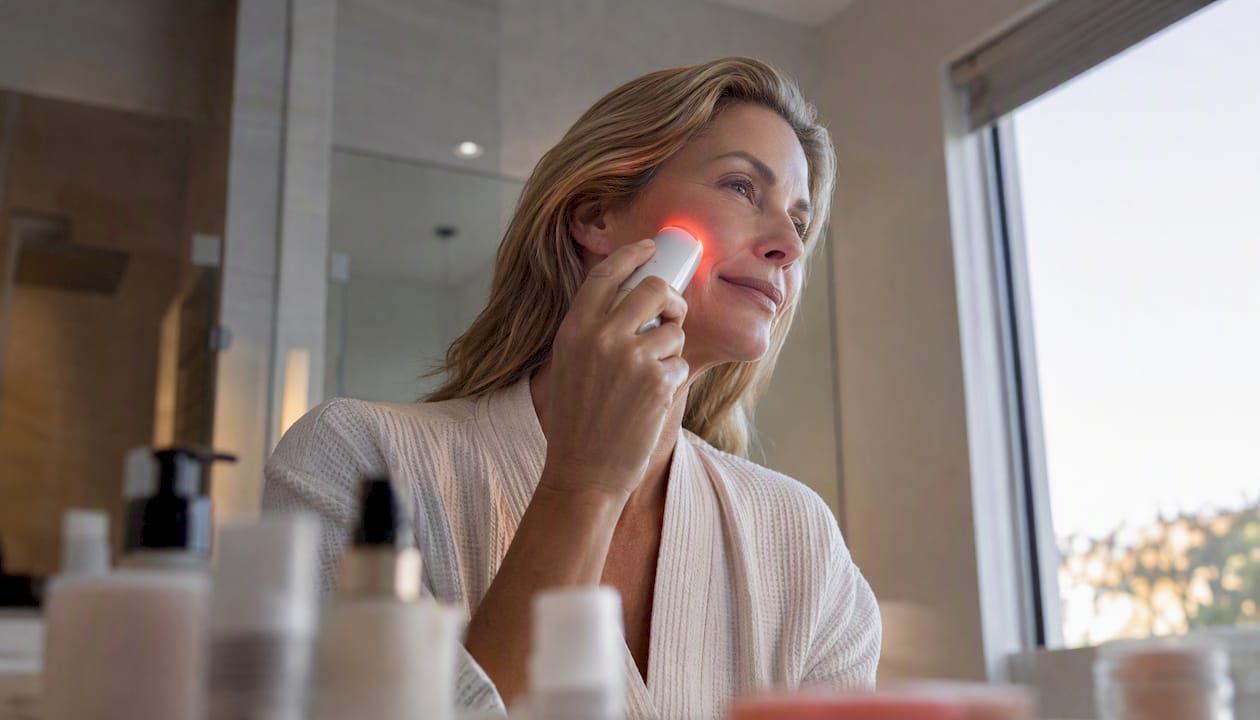
What the evidence does support is this: LED photobiomodulation is one of the safest non-invasive tools available for ongoing skin maintenance. It doesn’t replace retinoids, sunscreen, or professional procedures for significant photoaging. What it does is add a consistent, low-risk collagen stimulus to a broader routine, and that cumulative effect is real when the device has the right specs and you actually use it.
The gap between what the research shows and what most people do is consistency. A device used three times a week for three months outperforms a device used daily for two weeks and then forgotten. If you’re evaluating at-home LED, the honest question isn’t “does it work?” — it’s “will I use it consistently enough for the biology to respond?” For complex concerns, a board-certified dermatologist remains the right first call.
Sonedaskincare VividLift: clinical-grade home technology for serious skincare
If you’ve read this far, you understand what separates a device worth buying from one that just looks good in a flat-lay photo: stated wavelengths, sufficient irradiance, independent validation, and a multi-modal approach that addresses more than one layer of skin aging.
The Sonedaskincare VividLift delivers HIFU, sonophoresis, and multi-wavelength LED in one device, designed for adults who want clinical-level home therapy without a clinic schedule. It’s the choice for readers who’ve done the research, understand the evidence, and want a structured protocol they can maintain consistently at home. Check the VividLift product page to review the full technical specifications and available treatment sequences, then compare them against the device checklist in this article. If you have active skin conditions or take photosensitizing medications, consult a dermatologist before starting any light-based home therapy.
Sources
- LED Light Therapy: How It Works, Colors, Benefits & Risks
- 5 health benefits of red light therapy | UCLA Health
- Red light therapy safety guidance | American Academy of Dermatology
- 510(k) clearances | U.S. Food and Drug Administration