LED Therapy Results in 4–12 Weeks: Week by Week Tracking

Expect early calming signs within 1 to 3 weeks of consistent LED therapy, with visible improvements in texture, tone, or acne showing up between 4 and 12 weeks. Deeper collagen-driven changes, like softer fine lines, usually need the full 8 to 12 weeks. Device strength, wavelength, and how faithfully you stick to your sessions all shift that window, so think in terms of a season of commitment rather than a quick fix.
TL;DR:
- Visible improvements in skin texture and tone typically appear between weeks 4 and 6, with collagen-driven changes like softer lines emerging after 8 to 12 weeks.
- Results vary based on device strength, wavelength, and user consistency, making a season-long commitment essential for meaningful progress.
- Acne reduction can be noticeable as early as weeks 4 to 8, while firmness and wrinkle improvements usually take 8 to 12 weeks to become evident.
- Exceeding the recommended session frequency does not accelerate results and may blunt benefits due to the biphasic dose response.
- Regular tracking through photos and lesion counts helps confirm progress, with full evaluation recommended after 8 to 12 weeks of consistent treatment.
Table of Contents
- LED Therapy Results Timeline: Week by Week
- Why LED Results Vary So Much From Person to Person
- How Do You Know If LED Therapy Is Working?
- Safety and Best Practices for LED Sessions
- How Long Do LED Therapy Results Last?
- Choosing the Right At-Home LED Device
- A Publisher’s Note on Patience and Progress
- An At-Home Option Built for This Timeline
- Sources
LED Therapy Results Timeline: Week by Week
Photobiomodulation, the clinical term for what most people just call LED or red light therapy, works by triggering cellular activity long before that activity becomes visible on your face. Mitochondria absorb the light and ramp up ATP production, and collagen synthesis follows on a delay. That lag is why the timeline below matters more than any single before-and-after photo you see online.
Weeks 1 to 3: cellular activity, subtle surface changes
Nothing dramatic happens here, and that’s normal. You might notice calmer redness, a bit less reactivity after cleansing, or a faint glow after sessions. This window reflects early anti-inflammatory effects rather than structural skin changes. If you’re treating acne, this is often when the skin starts to feel less irritated, even though lesion counts haven’t dropped yet.
Weeks 4 to 6: the first real signals
Blue and red LED protocols for acne tend to show measurable reductions in inflammatory lesions starting around week 4, a pattern documented in clinical acne trials using controlled blue and red regimens. Skin texture often smooths out around this point too, and breakouts that used to linger for a week may resolve faster.
Weeks 6 to 12: collagen catches up
This is where fine lines soften, skin feels firmer, and tone starts to even out. A systematic review of clinical LED trials found that assessment points at 4, 8, and 12 weeks are standard across the research, because nothing in well-controlled studies shows meaningful change inside a single week. One device study on a popular LED mask reported that most visible improvements in texture and firmness landed between weeks 8 and 12, which lines up with what collagen remodeling actually requires biologically.
Beyond 12 weeks: diminishing certainty
Evidence gets thinner past the 12 week mark. Some users report continued improvement in tone and firmness with ongoing use, but the trial data supporting that is sparse without a maintenance protocol behind it.
Here’s how concern type tends to map onto the timeline:
- Acne: earliest responder, often visible by weeks 4 to 8.
- Redness and inflammation: can calm within weeks 1 to 3.
- Fine lines and firmness: typically needs weeks 8 to 12.
- Tone and texture: gradual, usually noticeable by weeks 6 to 10.
- Scarring: slowest to respond, often requiring months of consistent sessions.
Why LED Results Vary So Much From Person to Person
Two people can use nearly identical devices and see different results on completely different timelines. Most of that gap comes down to specs, not luck.
Irradiance and fluence, the amount of light energy actually delivered to skin, are the real levers here. Clinic-grade systems often deliver higher fluence in a single session than at-home devices, which is one reason in-clinic LED treatments can produce faster measurable change. At-home devices work through the same biology, they just require more sessions over more weeks to reach a comparable cumulative dose, a distinction worth understanding before comparing at-home devices against clinic systems.
Wavelength matters just as much:
- Blue light targets surface bacteria involved in acne.
- Red and near-infrared light penetrate deeper to stimulate collagen production and cellular repair.
Statistic to know: A 2025 randomized, sham-controlled trial found that two weekly red-light sessions produced wrinkle improvements similar to three weekly sessions over the study period. More sessions did not mean faster results.
That finding points to something researchers call a biphasic dose response: there’s an optimal energy window, and overshooting it can actually blunt benefits rather than accelerate them. Following your device’s protocol matters more than doubling up out of impatience.
How Do You Know If LED Therapy Is Working?
Progress with LED therapy is easy to miss in the mirror and easy to confirm with a little structure. A few practical checks:
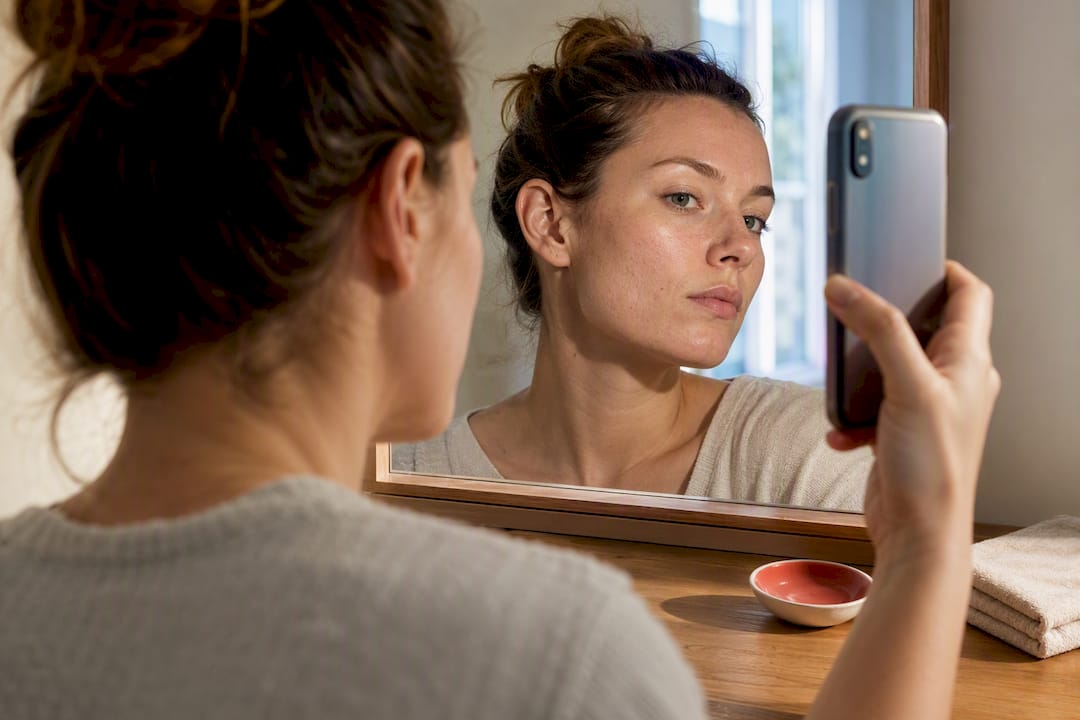
- Take standardized photos in the same lighting, angle, and time of day every week.
- Track lesion counts or flare frequency in a simple notes app if you’re targeting acne.
- Log how skin feels, not just how it looks. Tightness, sensitivity, and oiliness all shift before appearance catches up.
- Compare at week 4, then again at week 8, since those are the points most clinical trials use to judge whether a protocol is working.
If you’ve completed a full 8 to 12 week trial period for your specific concern and see nothing, that’s a reasonable point to reassess your device, your protocol, or bring in a dermatologist.
Pro Tip: Photograph your skin under the same window light every Sunday morning. Consistency in your tracking method matters more than the photo quality itself.
Safety and Best Practices for LED Sessions
LED therapy has a strong safety record across trials, with mild, rare side effects. Still, a few habits protect your skin and your results:
- Wear the eye protection that comes with your device. Every session, no exceptions.
- Keep the device surface clean between uses to avoid irritation or breakouts.
- Skip heavy sun exposure immediately after a session, since skin can be temporarily more sensitive.
- Hold off on harsh actives like retinoids right after treatment unless your device guidance says otherwise.
- Stick to the recommended frequency. Remember the biphasic dose response: more is not automatically better.
Stop use and check with a dermatologist if you notice unusual burning, blistering, or persistent redness that doesn’t fade within a day.
How Long Do LED Therapy Results Last?
Results from LED therapy are not permanent without upkeep. Once a full initial course wraps up, most people shift into a lighter maintenance schedule rather than stopping outright. Expert commentary from Stanford Medicine’s reporting on red light therapy notes that gains from wrinkle reduction and hair regeneration tend to fade gradually once treatment stops, since the underlying cellular stimulation isn’t ongoing.
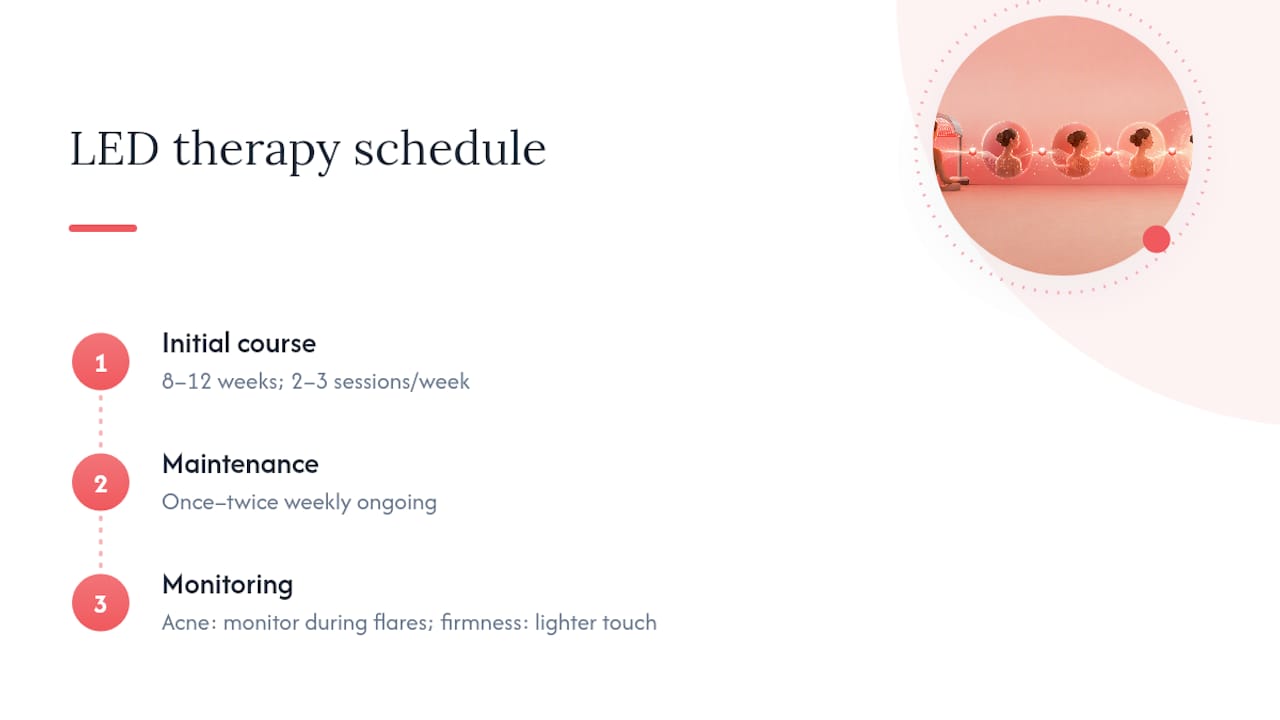
A conservative approach: run your initial 8 to 12 week course at 2 to 3 sessions weekly, then drop to once or twice weekly for upkeep. Some concerns, like acne, may need closer monitoring during flare seasons, while firmness maintenance often tolerates a lighter touch.
Choosing the Right At-Home LED Device
Not every LED device is built the same, and the gap between a clinical-grade at-home tool and a novelty gadget shows up in your results timeline. Soneda Skincare’s approach layers LED into broader treatment protocols rather than treating it as a standalone gimmick:
- VividLift™ 2-in-1 HIFU+Sono combines High-Intensity Focused Ultrasound with sonophoresis to support collagen production and hydration alongside light-based skin support.
- Sculpt2 pairs EMS facial toning with multi-wavelength LED, addressing firmness and tone in a single routine.
- Clinical-grade at-home devices are a reasonable choice when your goal is gradual firmness, hydration, or tone improvement through consistent use.
- A dermatologist visit remains the better route for active, inflamed acne or any concern that hasn’t responded after a full trial period.
Following your device’s protocol closely, rather than improvising frequency, is what separates users who see change by week 8 from those who don’t.
A Publisher’s Note on Patience and Progress
Nobody wants to hear that real change takes 8 to 12 weeks, but that’s the timeline the evidence supports, and rushing it rarely helps. What we’ve seen consistently is that people who stick with a protocol and actually track their sessions notice progress they’d otherwise miss entirely. Take a photo every week. Log your sessions. Give the process the full window before judging it. The commitment is real, but so is the payoff when you follow through.
— Customer
An At-Home Option Built for This Timeline
Some skincare devices combine multi-wavelength LED with HIFU and sonophoresis in one device, so at-home routines can work toward firmness, hydration, and tone on an evidence-backed schedule clinical trials use.

The VividLift™ 2-in-1 HIFU+Sono device is built to fit into a 2 to 3 session weekly cadence, the same frequency researchers found effective for photo-rejuvenation outcomes. If you want to understand the technology behind it first, see how HIFU works before you commit. For readers ready to start their own week-by-week tracking, preorder VividLift today and give your skin the full trial period the evidence recommends.
Sources
For readers who want the underlying research, the red LED light therapy meta-analysis and systematic review of clinical trial timelines cover most of the evidence cited above. The session frequency trial and this partner guide to real-world before-and-after timelines offer additional context on realistic expectations.
This article is general information, not a substitute for advice from a qualified doctor. Consult a qualified healthcare professional about your own circumstances before acting on anything here.
- Systematic review and clinical trial summaries (PMC10311288)
- Trial comparing session frequencies (PubMed entry)