Marionette Lines at Home: A Practical Daily Plan

The most effective way to soften marionette lines at home combines daily broad-spectrum SPF, a nightly retinoid or peptide serum, consistent hydration, facial massage three to five times a week, and periodic use of a clinically validated at-home HIFU device for deeper support. No single step does the job alone, but stacked together, this routine addresses both the surface skin and the tissue laxity underneath it.
Here’s the daily checklist to start today:
- Morning: cleanse, apply vitamin C serum, moisturize, finish with SPF 30 or higher.
- Evening: cleanse, apply a retinoid or peptide serum, layer hyaluronic acid if skin feels tight, moisturize.
- 3 to 5 times weekly: five minutes of targeted facial massage or exercise.
- 2 to 3 times weekly (optional): at-home HIFU session once skin has adjusted to your topical routine.
Realistic expectations: most people notice smoother texture and better hydration within 4 to 6 weeks. Visible softening of the crease itself, if it happens, usually takes 8 to 12 weeks of consistent use, and deep, static folds may need professional treatment to fully resolve. Energy-based devices like HIFU can produce modest improvement in skin laxity after multiple sessions, which makes them a reasonable middle step between skincare and injectables, not a replacement for either.
Key Takeaways
At-home improvement of marionette lines depends on consistent daily SPF, nightly collagen-supporting actives, safe massage, and, for deeper laxity, a validated HIFU device.
| Point | Details |
|---|---|
| SPF is non-negotiable | Daily broad-spectrum SPF 30+ prevents the UV damage that accelerates marionette line formation. |
| Retinoids need patience | Retinol or prescription retinoids support collagen function but take 8 to 12 weeks to show visible change. |
| Massage supports, doesn’t cure | Facial massage improves circulation and absorption but rarely resolves deep, structural creases alone. |
| Match treatment to cause | Mild lines often respond to skincare and massage, while deep static folds usually need professional evaluation. |
| Devices bridge the gap | The Soneda Home HIFU Device pairs sonophoresis with focused ultrasound to support collagen remodeling between topical care and in-office treatment. |
Table of Contents
- What Causes Marionette Lines at Home Skincare Can’t Fully Fix?
- Which Skincare Ingredients Actually Reduce Marionette Lines?
- Do Facial Exercises and Massage Actually Help?
- Which Home Remedies for Marionette Lines Are Worth Trying?
- Can At-Home Devices Like HIFU Really Improve Marionette Lines?
- A Responsible Next Step for At-Home Collagen Support
- Frequently Asked Questions
- Sources
What Causes Marionette Lines at Home Skincare Can’t Fully Fix?
Marionette lines run from the corners of your mouth down toward the chin, tracing the path of the depressor anguli oris muscle. They’re distinct from nasolabial folds (which run from nose to mouth) because they sit lower on the face and tend to deepen with age-related volume loss rather than expression alone.
The anatomy behind them is more complicated than most skincare marketing admits. Marionette lines form from several structural changes happening at once: the jawbone loses density, the fat pads in your cheeks shift downward, the ligaments that once held tissue in place lose tension, and the skin itself thins and loses elastin. A 2024 anatomical mapping identified five concurrent processes working together to create the visible crease, which is exactly why a single serum or one exercise routine rarely erases it completely.
Common contributors include:
- Chronological aging — collagen production drops roughly 1% per year after your mid-20s.
- Sun damage — UV exposure breaks down collagen and elastin faster than time alone.
- Smoking — repeated lip-pursing and reduced blood flow accelerate the crease.
- Weight fluctuation — significant weight loss can leave skin without the volume to support it.
- Genetics — bone structure and skin thickness are inherited traits that influence how early lines appear.
- Repeated facial movement — frequent frowning or pursing deepens the muscle groove over time.
Understanding which factor dominates your case matters. If volume loss is doing most of the work, topical products alone will underdeliver. If sun damage and skin laxity are the bigger issues, a disciplined skincare routine can make a real, visible difference.
Which Skincare Ingredients Actually Reduce Marionette Lines?
Not every ingredient marketed for “anti-aging” earns its place on your shelf. A handful have real evidence behind them, and the rest mostly offer temporary polish.
Retinoids remain the most studied topical option for aging skin. Retinoids help existing collagen function better and support new collagen production over time, though they work gradually and can’t correct bone loss or fat pad descent on their own. Start with over-the-counter retinol two to three nights a week, and build up to nightly use as your skin adjusts.

Peptides send signals that support your skin’s own collagen-building processes. They’re gentler than retinoids and pair well with sensitive skin that can’t tolerate daily retinol.
Hyaluronic acid pulls water into the skin, plumping fine lines temporarily. It’s a hydration tool, not a collagen-builder, so think of it as immediate cosmetic softening rather than long-term repair.
Vitamin C protects against free-radical damage from UV exposure and supports the collagen synthesis pathway. Apply it in the morning under sunscreen for the antioxidant boost.
Niacinamide improves skin barrier function and evens tone, which makes the whole area look healthier without directly targeting the crease.
AHAs (glycolic or lactic acid) smooth texture by encouraging cell turnover, which helps other actives absorb better.
Here’s a workable layering order:
- Morning: cleanser, vitamin C serum, moisturizer, SPF 30+.
- Evening: cleanser, retinoid or peptide serum (alternate nights if new to actives), hyaluronic acid on top if skin feels dry, moisturizer to seal.
- Once or twice weekly: AHA treatment on a night you skip retinoid, to avoid over-exfoliating.
None of this matters much without sunscreen. Daily broad-spectrum SPF 30 or higher, reapplied every two hours outdoors, is the single most effective step for preventing marionette lines from worsening, because UV exposure is the fastest way to break down the collagen and elastin you’re trying to preserve. Skip this step and every other product in your routine works against a losing battle.
Do Facial Exercises and Massage Actually Help?
Facial massage and targeted exercises won’t rebuild lost bone density, but they can improve circulation and support product absorption, which gives your topical actives a better shot at working. Technique matters more than intensity here. Aggressive pulling or tugging on thin skin around the mouth can actually stretch tissue over time, so gentleness is not optional.
Try this five-minute routine, three to five times a week:
- Cheek lift: Place your index and middle fingers on the top of your cheekbones. Gently push upward and hold for 10 seconds, then release. Repeat eight times.
- Marionette line smoothing: Using two fingers, apply light upward strokes from the corner of your mouth toward your cheekbone. Do this 10 times per side, using a light touch, never dragging skin downward.
- Jawline sculpt: Make a fist with light pressure and glide it along your jawline from chin to ear. Repeat five times per side.
- Cheek puff hold: Puff air into your cheeks and hold for 10 seconds, then release slowly. Repeat five times to engage the muscles around the mouth.
- Lip press: Press your lips together firmly, hold for five seconds, release, and repeat 10 times to activate the muscles that pull the crease downward.
Progress by consistency, not intensity. Five minutes daily beats a rushed 20-minute session once a week. Give it four to six weeks before judging results, since circulation and absorption benefits build gradually.
A few dos and don’ts worth repeating: don’t massage over active breakouts or irritated skin, don’t use so much pressure that skin reddens and stays red, and don’t perform these movements with dry hands, since friction on bare skin is what causes microtears over time.
Pro Tip: Apply your massage right after your serum, while skin is still slightly damp. The gentle pressure helps actives absorb more evenly instead of just sitting on the surface.

Which Home Remedies for Marionette Lines Are Worth Trying?
Pantry remedies get recommended constantly, and a few genuinely help, temporarily. Humectant ingredients like honey, aloe vera, and hyaluronic acid draw water into the skin’s surface, producing a short-term plumping effect on fine lines. That’s real, but it fades within hours and does nothing for the structural crease underneath.
Here’s how common remedies stack up:
- Aloe vera — mild humectant and soothing agent, safe for most skin types.
- Honey (raw) — humectant with mild antibacterial properties, but sticky and messy for daily use.
- Egg white masks — creates a temporary tightening sensation from drying on skin, not an actual lifting effect.
- Cucumber slices — mostly hydrating and cooling, minimal lasting impact.
- Banana or avocado masks — light antioxidant and moisture boost, comparable to a basic moisturizer.
- Coconut or olive oil — occlusive, meaning it seals in moisture rather than adding new hydration.
None of these will touch a deep, static fold caused by volume loss. Treat them as an occasional hydration boost, not a treatment plan. Always patch-test on your inner arm first, especially with citrus-based DIY treatments, since acidic ingredients can irritate the thin skin near your mouth and cause pigmentation issues over time.
Can At-Home Devices Like HIFU Really Improve Marionette Lines?
Skincare and massage work on the surface. Devices are the category that can plausibly reach deeper tissue layers, which is why they’ve become the fastest-growing part of the at-home anti-aging category.
HIFU (High-Intensity Focused Ultrasound) delivers focused energy beneath the skin’s surface to heat tissue and trigger collagen remodeling, without damaging the top layer. Microcurrent/EMS devices use low-level electrical currents to temporarily tone facial muscles, producing an immediate but short-lived lifting sensation. LED therapy uses light wavelengths, typically red and near-infrared, to support cellular repair at a surface level. Radiofrequency devices heat the dermis to encourage gradual collagen production, similar in principle to HIFU but generally at a shallower depth.
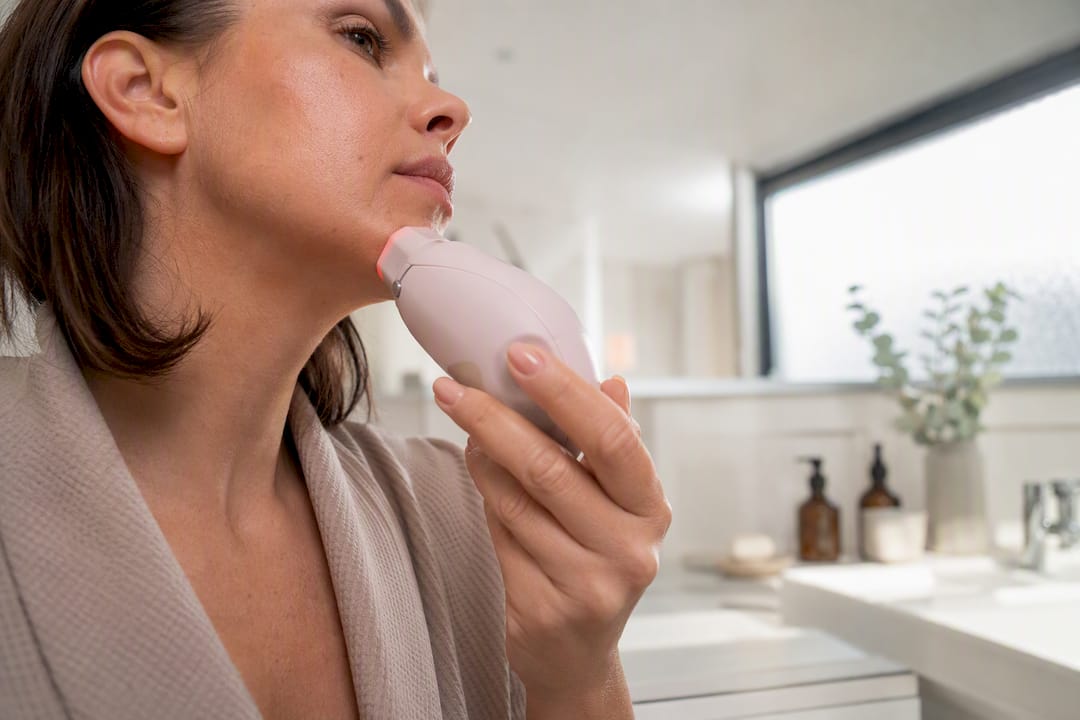
The tissue-depth distinction matters more than most marketing admits. Topical hyaluronic acid plumps the surface. The real difference is between “plumping” surface hydration and “lifting” deeper tissue, and only energy-based devices are built to reach that second layer at home.
The clinical picture is encouraging but modest. HIFU produces measurable improvement in skin laxity through controlled collagen remodeling after multiple sessions, and radiofrequency and HIFU both create controlled heating in deeper tissue layers, with clinical evidence for modest tightening building over several months, not overnight. This is a slow-build category. Expect gradual firmness over 8 to 12 weeks with consistent use, not an instant lift.
Before buying any device, run through this safety checklist:
- Confirm FDA clearance status, and understand that consumer-grade devices deliver lower energy intensity than in-office equipment for safety reasons.
- Patch-test on a small area first if you have sensitive skin, active acne, rosacea, or a history of keloid scarring.
- Avoid use over broken skin, active cystic acne, or recent injectables until your provider clears you.
- Follow the manufacturer’s session frequency guidance rather than increasing use to “speed up” results.
- Never use energy-based devices during pregnancy or over metal implants near the treatment area without medical clearance.
This is where a device like the Soneda Home HIFU Device fits into a realistic at-home plan. The VividLift™ 2-in-1 HIFU+Sono device combines focused ultrasound with sonophoresis, a technique that uses sound waves to help topical serums absorb more deeply into skin. For someone already committed to a retinoid and peptide routine, pairing it with periodic HIFU sessions addresses both layers at once: surface actives from your serums, deeper collagen stimulation from the device. It’s suited to adults with mild to moderate laxity who want more than skincare alone but aren’t ready for injectables. It is not a substitute for a dermatologist’s evaluation if your lines are deep, asymmetrical, or changing rapidly, since those signs warrant a professional opinion first.
How at-home care compares to in-office treatment
Topical routines and massage address hydration, texture, and mild laxity, and they’re the right starting point for prevention regardless of age. At-home energy devices like HIFU add a meaningful middle option, offering slow but real collagen support for moderate concerns. Deep, static folds caused primarily by volume loss typically respond best to injectable fillers or in-office energy treatments delivered at higher intensity than any consumer device is permitted to reach. Even dermatologists acknowledge that at-home products and devices can meaningfully improve appearance and complement, rather than replace, professional care when expectations stay realistic.
How a targeted routine at home stacks up
Working from the outside in rarely delivers a dramatic transformation, but it consistently delivers a believable one, softer texture, better hydration, and a face that looks rested instead of pulled. My honest read after going through the evidence: the people who see the best results aren’t chasing one miracle product. They’re running the boring, consistent version, SPF every single day, retinoid most nights, massage a few times a week, and a HIFU session added once the basics are locked in. If your lines are deep-set and haven’t budged after a few months of real consistency, or if they’re changing shape quickly, that’s the signal to see a dermatologist rather than buy another serum.
A Responsible Next Step for At-Home Collagen Support
Skincare and massage cover the surface. Getting real support for deeper tissue laxity is where most at-home routines hit a ceiling, and it’s exactly the gap Sonedaskincare built the VividLift™ 2-in-1 HIFU+Sono device to close.

The device combines focused ultrasound with sonophoresis so your topical serums absorb further into skin instead of sitting on the surface, giving your retinoid or peptide routine more to work with. It’s built for adults with mild to moderate laxity around the jaw and mouth who want more than a serum can offer but aren’t ready for an injectable clinic visit. Benefits reported by users include support for collagen stimulation, visible lifting over consistent use, and full compatibility with an existing skincare routine, no need to change your products, just add sessions two to three times weekly. Avoid use over active breakouts, broken skin, or recent injectables, and skip it entirely during pregnancy or if you have a pacemaker or other implanted metal device near the treatment area. If you’re ready to add a clinically validated device to your routine, check out the VividLift HIFU device and see which option fits your skin.
Frequently Asked Questions
Can marionette lines actually disappear with at-home care alone? Mild lines caused mainly by dehydration or early skin laxity can improve noticeably with consistent skincare, massage, and device use. Deep, static folds tied to significant bone or fat pad loss usually need professional treatment to fully resolve.
How long before I see results from an at-home routine? Most people notice smoother texture and better hydration within 4 to 6 weeks. Visible softening of the crease itself typically takes 8 to 12 weeks of consistent daily habits.
Is facial exercise safe for everyone? Gentle facial exercises are safe for most adults, but avoid them over active breakouts, recent injectables, or irritated skin. Stop any movement that causes pain or excessive redness.
Do I need a prescription retinoid, or is over-the-counter retinol enough? Over-the-counter retinol works well for most people starting out and causes less irritation than prescription-strength tretinoin. A dermatologist can recommend prescription options if OTC results plateau.
When should I see a dermatologist instead of continuing at-home treatment? See a professional if your marionette lines are deep, asymmetrical, worsening rapidly, or unchanged after several months of consistent at-home care. Sudden changes always warrant a medical opinion.
Sources
Readers who want to dig deeper into the clinical detail behind this routine can start with these sources:
- PMC review on facial aging and treatment approaches
- Marionette lines: An evidence-based guide for patients — Acibadem International
- The Best At-Home Products for Marionette Lines, According to Experts — NewBeauty