LED Mask While Pregnant: What You Need to Know

Facial LED and red-light therapy masks are generally considered low-risk during pregnancy, but no robust pregnancy-specific clinical trials exist for consumer devices. Consult your OB-GYN or midwife before continuing or starting any LED mask routine. The light is non-ionizing, meaning it cannot damage DNA, and its action is superficial — yet manufacturers routinely list pregnancy as a contraindication in their instructions for use (IFU), and clinicians take a precautionary stance by default.
Three immediate decisions if you are pregnant right now:
- Pause use in the first trimester unless your clinician has explicitly cleared you, since fetal development is most rapid during this window.
- Never apply any LED panel to your abdomen. Facial masks stay on the face and neck — keep them there.
- Stop and call your provider if your skin reacts unusually, you experience sudden swelling, or any other unexpected symptom appears.
Key Takeaways
LED masks are generally low-risk in pregnancy due to their non-ionizing, superficial mechanism, but no consumer-device trials in pregnant people exist, making clinician clearance the single most important step before use.
| Point | Details |
|---|---|
| Safety verdict | LED masks use non-ionizing light with no mutagenic potential; no direct evidence of fetal harm exists. |
| First-trimester caution | Most clinicians recommend pausing elective LED use in the first trimester without explicit sign-off. |
| Key precautions | Avoid abdominal exposure, blue-light modes if melasma-prone, and photosensitizing medications during sessions. |
| Postpartum evidence | Clinical RCTs support PBM for perineal and nipple pain postpartum, where the evidence base is stronger than prenatal. |
| Sonedaskincare devices | The Soneda Lumira’s 4-wavelength selectable system and clear IFU make it a transparent option to review with your clinician. |
Table of Contents
- What pregnancy and LED mask therapy actually involve
- What the research says about pregnancy and red-light therapy
- Benefits people seek from LED therapy during pregnancy
- Risks and unknowns specific to pregnancy
- What clinicians commonly advise
- How to use an LED mask safely if your clinician clears you
- When you should not use LED therapy during pregnancy
- Using LED therapy while breastfeeding
- Why clinicians recommend caution despite the low biological risk
- Our perspective on advising pregnant customers
- Sonedaskincare’s device features for safety-conscious users
- Sources
What pregnancy and LED mask therapy actually involve
Photobiomodulation (PBM) is the clinical term for what consumer LED masks deliver. Devices emit specific wavelengths of visible or near-infrared (NIR) light that are absorbed by chromophores in skin cells, primarily cytochrome c oxidase in the mitochondria. That absorption triggers a local cellular response: improved ATP production, reduced oxidative stress, and mild anti-inflammatory signaling. A PMC systematic review describes this mechanism in detail and classifies red and NIR light as non-ionizing, meaning it carries no mutagenic potential.
Consumer masks typically use wavelengths in these ranges:
- Red light (630–700 nm): Penetrates a few millimeters into the dermis. Used for collagen support, inflammation reduction, and wound healing.
- Near-infrared (700–1060 nm): Reaches slightly deeper into subcutaneous tissue. Used for pain relief and deeper tissue recovery.
- Blue light (415–450 nm): Stays in the epidermis. Used for acne-causing bacteria. Carries the highest melasma risk for hormonally sensitive skin.
LED masks are distinct from low-level laser therapy (LLLT) devices used in clinical settings. Both are non-ionizing, but clinical LLLT devices are typically more powerful and precisely calibrated. Home LED masks operate at lower irradiance levels, which is relevant to the fetal exposure question: the light does not penetrate beyond superficial tissue layers when applied to the face.
What the research says about pregnancy and red-light therapy
No large, randomized, pregnancy-specific clinical trial has tested consumer LED masks in pregnant people. That absence is the core of the clinical uncertainty, and it is worth stating plainly before anything else.
What does exist: animal studies, small clinical reports, and broader PBM safety reviews. Animal models (including studies cited in consumer and clinical summaries) found no teratogenic effects when therapeutic-dose red and NIR light was applied, even with direct fetal irradiation in some protocols. A clinical PBM review on PMC documents examples where PBM was used in pregnancy-adjacent clinical contexts without reported obstetric adverse outcomes, while explicitly noting the limited pregnancy-specific data. The Hale Institute’s clinical summary collates these animal studies and small clinical reports, concluding that no teratogenic signal has emerged at therapeutic doses, though human pregnancy data remain thin.
Key limitations of the current evidence:
- No randomized controlled trials enrolling pregnant participants for cosmetic LED devices.
- Ethical constraints make prospective pregnancy trials difficult to conduct.
- Most clinical PBM studies use medical-grade devices, not consumer masks.
- Follow-up periods are short and outcomes are typically dermatologic, not obstetric.
- Device heterogeneity (power, wavelength, session length) makes cross-study comparison unreliable.
The practical conclusion: the biological mechanism of non-ionizing, superficial light makes systemic fetal exposure implausible, and no direct evidence of harm exists. That is reassuring but not the same as a clean safety record from well-designed human trials. The AAD’s guidance on red-light therapy reinforces this framing, noting that red-light therapy is non-ionizing and that the main practical concerns are photosensitivity, device quality, and heat, not ionizing radiation.
Benefits people seek from LED therapy during pregnancy
Pregnant skin changes fast. Hormonal shifts drive acne, hyperpigmentation, dryness, and inflammation, which is why LED therapy appeals to many expectant mothers looking for non-chemical options.
Plausible benefits supported by PBM literature:
- Acne control: Red and blue light combined can reduce Cutibacterium acnes bacteria and calm sebaceous inflammation. Red-only modes carry less melasma risk than blue.
- Reduced skin inflammation: Red and NIR wavelengths support anti-inflammatory pathways, which may help with pregnancy-related skin flares.
- Mild musculoskeletal pain relief: PBM has documented benefits for back and neck pain in non-pregnant populations, and some clinicians use it for pregnancy-related musculoskeletal discomfort under supervision.
- Wound healing support: Postpartum, PBM shows stronger evidence for perineal and nipple pain recovery (see the breastfeeding section below).
One important limit: LED masks are not a proven treatment for melasma, the hormonal hyperpigmentation that affects many pregnant people. Heat and certain light wavelengths can actually worsen melasma. If that is your primary concern, discuss targeted options with a dermatologist rather than relying on a home device. For a broader look at at-home light therapy devices and how they compare, Sonedaskincare’s device guide covers the key spec differences.
Risks and unknowns specific to pregnancy
The risks are real, even if the evidence of direct fetal harm is absent. Understanding them helps you make a genuinely informed decision.
Key concerns to discuss with your clinician:
- Photosensitizing medications: Certain antibiotics (tetracyclines), retinoids, some antifungals, and St. John’s Wort increase skin sensitivity to light. Using an LED mask while on these medications raises the risk of burns or reactions.
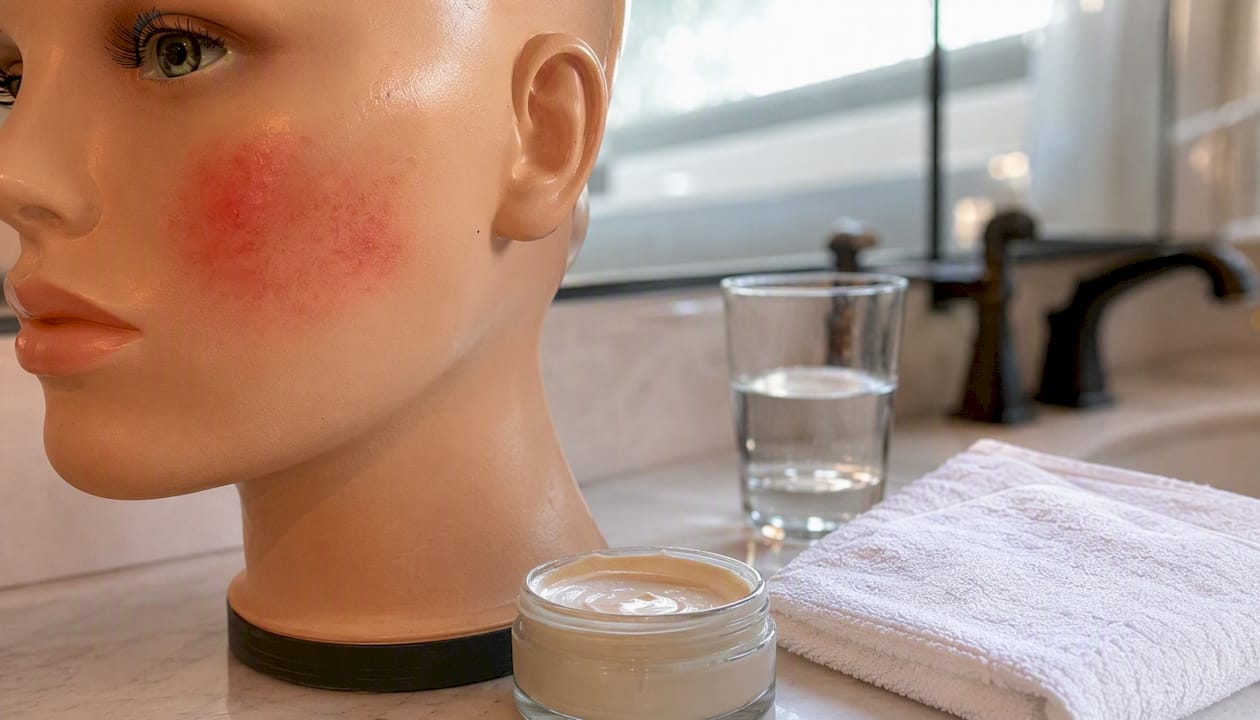
- Blue-light modes and melasma: Hormonal changes during pregnancy elevate melasma risk. Blue light and heat can trigger or worsen it. Avoid blue modes if you have any existing hyperpigmentation.
- Device heat and pressure: Some masks generate mild heat. Prolonged heat exposure to facial tissue is not dangerous at typical device levels, but comfort and skin sensitivity change during pregnancy.
- Manufacturer IFU contraindications: Most consumer LED device manufacturers list pregnancy as a contraindication. As noted in industry education pieces, this language often reflects liability caution rather than documented harm, but it still means the device has not been tested in pregnant users and the manufacturer cannot vouch for safety in that context.
- Abdominal exposure: No consumer facial mask should be applied to the abdomen. This is a non-negotiable boundary regardless of trimester.
Pro Tip: If you are melasma-prone or already showing any dark patches, skip blue-light modes entirely and reduce session frequency to once or twice per week rather than daily. Red-only or NIR-only modes carry a lower risk of triggering pigmentation changes.
Stop use and contact your provider immediately if you experience a severe skin reaction, blistering, sudden facial swelling, or any systemic symptom following a session.
What clinicians commonly advise
Ask your OB-GYN or midwife for explicit clearance and document it before continuing a routine. That single step resolves most of the uncertainty.
Questions to bring to your clinician:
- Are you comfortable with me using a facial LED mask during my current trimester?
- Am I on any medications that increase photosensitivity?
- Do I have any skin conditions or pregnancy complications that make light therapy inadvisable?
- Should I pause during the first trimester and resume later?
- Are there specific wavelengths or modes I should avoid?
Consumer health reporting confirms that many OB-GYNs take a precautionary stance precisely because pregnancy-specific trials for consumer LED devices are limited. The typical clinician approach is case-by-case: they weigh your individual health history, current medications, trimester, and the specific device you are using. Most lean toward pausing elective cosmetic treatments in the first trimester and reassessing in the second. Professional bodies including the AAD and ACOG do not issue blanket bans on LED therapy in pregnancy, but they consistently recommend clinician consultation for elective cosmetic treatments during this period.
How to use an LED mask safely if your clinician clears you
Clinician clearance is step one. After that, a conservative protocol reduces your exposure and keeps sessions comfortable.
- Read the device IFU in full. If pregnancy is listed as a contraindication, bring that language to your clinician before proceeding.
- Get written or documented verbal clearance from your OB-GYN or midwife.
- Shorten sessions. Standard sessions run 10–20 minutes; during pregnancy, start at 5–10 minutes and do not exceed the lower end of the manufacturer’s recommended range.
- Reduce frequency. Drop to two to three sessions per week rather than daily use.
- Always use the included eye protection. LED light at close range poses a real risk to retinal tissue without proper shielding.
- Ensure good ventilation. Use the device in a cool, well-ventilated room to minimize heat buildup.
- Avoid tight straps or pressure. Masks that press firmly against the face can cause discomfort as facial tissue becomes more sensitive during pregnancy.
- Skip blue-light modes if you have any melasma or hormonal pigmentation.
- Do not apply topical actives immediately before a session. Retinoids, AHAs, and BHAs increase photosensitivity. Apply LED therapy to clean, product-free skin.
Dos and don’ts for routine maintenance:
- Clean the mask with a gentle, non-alcohol wipe after each use.
- Store it away from direct sunlight and heat.
- Do not share the mask during pregnancy (immune sensitivity is elevated).
- Do not use on broken, irritated, or sunburned skin.
Pro Tip: If you use a multi-panel or larger device for back or hip pain, position it so the panels treat only the lower back or hips. Place a folded towel or pillow between the panel and your abdomen as a physical barrier, and keep sessions short. Always confirm this use with your clinician first.
When you should not use LED therapy during pregnancy
Some situations call for a clear stop, not a cautious proceed.
Avoid LED mask use entirely if:
- Your device IFU lists pregnancy as a contraindication and your clinician has not reviewed and overridden that warning.
- You are taking photosensitizing medications (tetracyclines, fluoroquinolones, certain antifungals, retinoids, or St. John’s Wort).
- You have active infections, open wounds, or active eczema/psoriasis flares on the treatment area.
- You have been diagnosed with a high-risk pregnancy condition (placenta previa, preeclampsia, or other complications requiring maternal-fetal medicine oversight). Discuss with your MFM specialist before any elective device use.
- You are in the first trimester without explicit clinician sign-off.
Red-flag actions: If you experience blistering, severe redness, sudden swelling, or any systemic reaction after a session, stop immediately, do not use the device again until you have spoken with your provider, and seek same-day care if symptoms are severe.
Using LED therapy while breastfeeding
The localized nature of PBM makes systemic effects on breast milk biologically implausible. Light applied to the face does not reach the mammary glands, and there is no mechanism by which photobiomodulation of facial tissue would alter milk composition or volume.
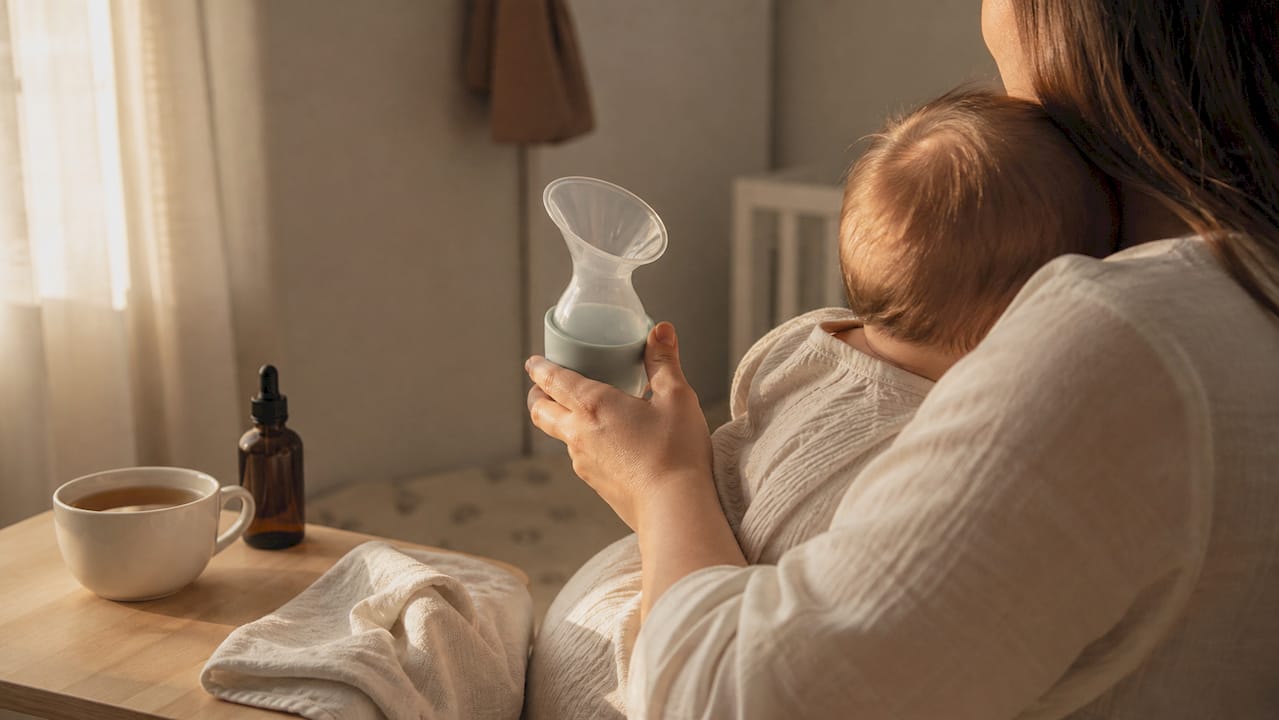
Postpartum is actually where PBM evidence is strongest. Clinical RCTs cited in the Hale Institute’s review report benefits for perineal wound healing and nipple pain in breastfeeding mothers, with no adverse effects reported in mother or infant. If you are experiencing nipple pain or perineal discomfort postpartum, ask your midwife or lactation consultant whether a targeted PBM protocol is appropriate for you.
For facial LED use while breastfeeding: keep the mask on the face and neck only, maintain eye protection, and continue avoiding blue-light modes if melasma persists postpartum (it often does for several months). Time sessions away from feeding if you are using any topical products alongside the device, since some actives should not transfer to the infant’s skin.
Why clinicians recommend caution despite the low biological risk
The precaution is not about proven harm. It is about the absence of proof of safety in the specific context of pregnant people using consumer-grade devices.
Research gaps that drive clinical caution:
- No randomized controlled trials in pregnant participants for consumer LED masks.
- Device heterogeneity: power output, wavelength accuracy, and session protocols vary widely across brands.
- Short follow-up periods in existing studies, with no long-term obstetric outcome data.
- Outcomes in existing PBM studies are dermatologic, not obstetric, so fetal safety is inferred rather than measured.
From a device-specification standpoint, what to look for in a consumer mask if you are pregnant or postpartum: selectable wavelengths (so you can avoid blue modes), low-heat operation, short-session presets, clear IFU language about pregnancy, and certified eye protection. The Soneda Lumira LED Face & Neck Mask uses a 4-wavelength system with selectable modes, and the Soneda Sculpt2 EMS Facial Toning Device combines EMS toning with light therapy in a low-heat format. Both carry clear IFU documentation that safety-conscious users can bring to their clinician for review.
Better evidence would look like prospective observational registries tracking pregnant people who used consumer LED devices across all three trimesters, with trimester-stratified outcome reporting on both dermatologic and obstetric endpoints.
Our perspective on advising pregnant customers
At Sonedaskincare, when a pregnant customer asks about LED mask use, the answer is always the same: clinician clearance first, device IFU second, and conservative protocol third. We do not recommend starting a new LED routine during pregnancy without explicit sign-off from your OB-GYN or midwife. For customers already using our devices who become pregnant, we advise pausing until they have had that conversation.
Our product pages include full IFU documentation and clinical references so you can bring accurate device specifications to your provider. For the Soneda Lumira and Sculpt2, those details are available directly on the product listings. We also encourage customers to review the LED light therapy device guide on our blog for spec comparisons that are relevant to safety-conscious decisions.
Sonedaskincare’s device features for safety-conscious users
This is a product note, not medical advice. Consult your OB-GYN or midwife before purchasing or using any LED device during pregnancy.
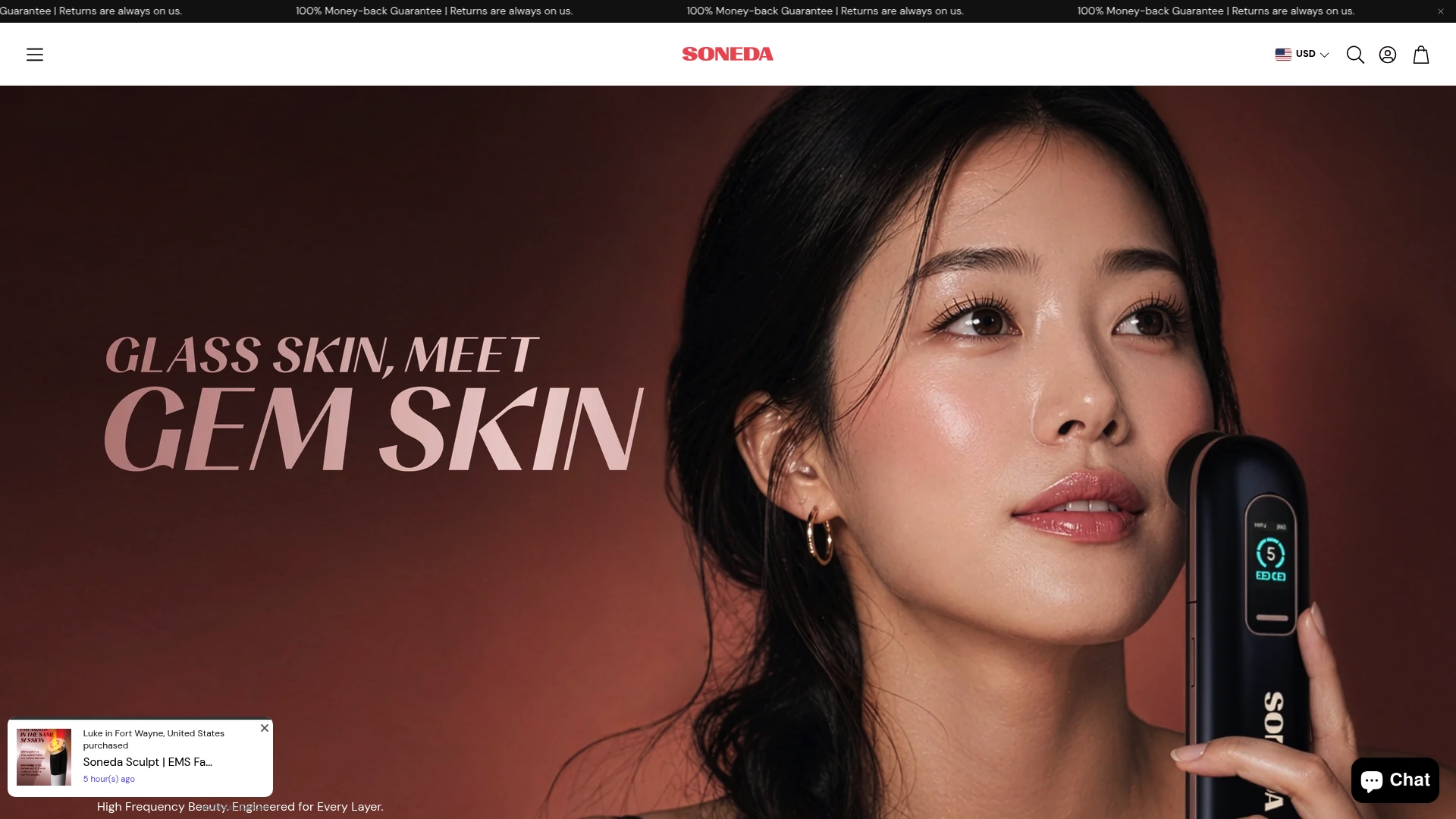
The Soneda Lumira LED Face & Neck Mask is built with features that matter when you need precise control over your light therapy sessions:
- 4 selectable wavelengths: Choose red, NIR, blue, or combination modes, so you can avoid blue light entirely if melasma is a concern.
- Low-heat operation: Designed to minimize thermal buildup during sessions.
- Short-session presets: Built-in timers support conservative session lengths.
- Certified eye protection included: Proper shielding for retinal safety.
- Clear IFU documentation: Full instructions for use available on the product page for clinician review.
The Soneda Sculpt2 EMS Facial Toning Device pairs EMS toning with light therapy in a compact, low-heat format suited for postpartum skin recovery routines.
Check the full device IFU on the product page, share it with your clinician, and get clearance before your first session. Ready to review the specs? Visit the Soneda Lumira page and bring the IFU to your next appointment.
Sources
Bring these links to your clinician appointment for an informed conversation:
This article is general information, not a substitute for advice from a qualified doctor. Consult a qualified healthcare professional about your own circumstances before acting on anything here.