5 Clinically Backed Rules to Spot Red Light Myths for Shoppers

Red light therapy is backed by solid evidence for a few targeted uses, including skin rejuvenation and pattern hair loss, but most sweeping “miracle cure” claims don’t hold up. Safety is generally good for short-term, appropriate use, though long-term data on frequent at-home exposure is still thin. If you’re on photosensitizing medication or managing a complex skin condition, talk to a clinician before starting.
TL;DR:
- Clinical evidence supports red light therapy primarily for skin rejuvenation and pattern hair loss, but not for fat melting, cellulite, or systemic wellness.
- Effective dosing follows a specific “sweet spot,” with over- or under-exposure reducing benefits, and device specifications like wavelength and irradiance are crucial.
- Home devices usually deliver lower intensity than clinic-grade equipment, making results slower and emphasizing the need for proper safety protocols.
- Consumers should focus on device specifics, such as wavelength and clinical data, and avoid exaggerated claims about deep tissue or brain effects.
- For lifting and skin hydration, alternatives like high-intensity focused ultrasound and sonophoresis may be more effective than red light therapy.
Table of Contents
- Red Light Myths: What Photobiomodulation Really Is
- Debunking the Biggest Red Light Myths
- How to Evaluate Red Light Devices and Use Them Safely
- What the Medical Consensus Actually Says
- Why the Hype Cycle Around Red Light Gets This Wrong
- A Different Route for Lifting and Hydration
- Sources
Red Light Myths: What Photobiomodulation Really Is
Photobiomodulation is the clinical term for what most people call red light therapy, and knowing that term matters because it’s what shows up in the actual research, not the marketing copy. It uses red and near-infrared wavelengths, typically in the 600 to 900 nanometer range, delivered through LED panels or low-level lasers.
The leading theory is that these wavelengths get absorbed by cytochrome c oxidase, an enzyme in mitochondria, which may boost cellular energy production. Researchers still don’t fully agree on the mechanism, and Stanford Medicine notes the science has outpaced consumer marketing in some areas. The strongest clinical evidence sits in a narrow lane: skin rejuvenation through collagen stimulation, androgenetic alopecia (pattern hair loss), and select uses like oral mucositis management.
Device type matters too. Low-level laser devices deliver a single, focused wavelength, while LED panels spread broader, less intense light over a larger area. And here’s a distinction most shoppers miss: FDA clearance means a device is similar enough to an existing approved product to be sold safely. It is not the same as FDA approval for treating a specific medical condition, a nuance the Cleveland Clinic flags directly for consumers.
Debunking the Biggest Red Light Myths
Wellness marketing has stretched a handful of real findings into a long list of red light myths. Here’s where the evidence actually lands.
Myth: It’s a miracle cure for almost anything. Red light therapy has genuine support for skin texture, fine lines, and hair density in androgenetic alopecia. It does not have credible evidence as a treatment for depression, thyroid disorders, or general “wellness optimization.” The gap between what’s studied and what’s advertised is exactly what makes this the most persistent of all the red light therapy misconceptions.
Myth: It melts fat or removes cellulite. This claim shows up constantly, and it’s one of the weakest supported. Science-Based Medicine points out that most fat-loss and cellulite studies are small, short, and often funded by the device manufacturer itself. Temporary circumference changes from water shifts or swelling get marketed as fat loss when they aren’t.
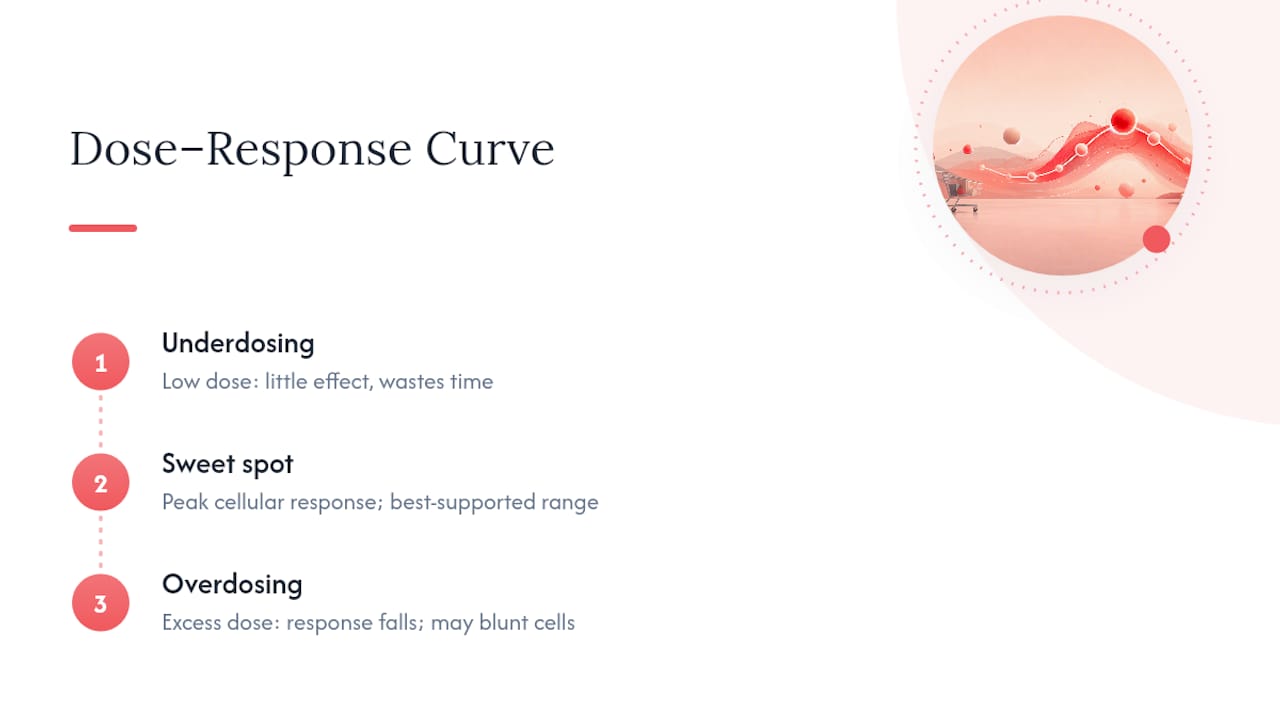
Myth: More power always works better. Dosing follows a curve, not a straight line. Underdosing wastes your time; overdosing can actually blunt the cellular response instead of amplifying it. Scientific American describes this as a “sweet spot” that researchers still haven’t fully mapped for every wavelength and skin type.
Myth: Near-infrared light passes straight through the skull. Some near-infrared photons do penetrate deeper into tissue than visible red light, but claims about meaningful brain-level effects from consumer headsets go well beyond what current data supports.
Myth: It’s basically tanning, so it causes skin damage or cancer. This one confuses wavelength categories. Ultraviolet light causes sunburn and DNA damage tied to skin cancer risk. Red and near-infrared wavelengths sit outside the UV spectrum entirely, and current safety data shows a different, generally more favorable risk profile.
Myth: Results are instant and permanent. Photobiomodulation is cumulative. Clinical protocols involve repeated sessions over weeks, and benefits like improved skin tone or hair density tend to fade if you stop treatment entirely.
Myth: It can regrow hair from follicles that are already dead. Red light therapy can extend the growth phase of follicles that are still biologically active. It cannot resurrect follicles that have fully scarred over or stopped functioning.
A recurring pattern across Cleveland Clinic and Science-Based Medicine findings: the claims with real support are narrow and specific. The claims that sound the most exciting tend to be the ones with the thinnest evidence behind them.
How to Evaluate Red Light Devices and Use Them Safely
Before you buy anything, run it through this checklist:
- Check the irradiance, not just the wattage. Look for a specific mW/cm² figure at a stated distance. “Total wattage” without distance and irradiance data tells you almost nothing useful, a red flag Science-Based Medicine calls out directly.
- Confirm the exact wavelength. Legitimate devices list a specific number (like 630nm or 830nm), not vague phrases like “full-spectrum glow.”
- Look for published clinical data on that specific device, not just on the general category of red light therapy.
- Verify FDA clearance status and understand what it actually covers, since Scientific American notes clearance and approval get conflated constantly.
- Read the safety instructions, particularly around session length and distance from skin.
Power density and exposure time together determine your actual dose, and clinical settings typically use far more powerful equipment than most home devices can deliver. That’s not automatically a dealbreaker, but it’s why home results tend to build more slowly than in-office treatments.
A few safety rules apply regardless of device: wear the eye protection that comes with laser-based units, check with your doctor if you take photosensitizing medications like certain antibiotics or acne treatments, and know that darker skin tones may need adjusted exposure guidance to avoid pigment changes. If you notice unusual redness, blistering, or worsening skin issues, stop and see a dermatologist.
Pro Tip: Treat red light therapy as an add-on to your skincare routine, not a replacement for a dermatologist visit if you have a diagnosed skin condition.
What the Medical Consensus Actually Says
The American Medical Association is direct about this: red light therapy can support collagen production and help in some hair-loss cases, but it is not a standalone cure and works best paired with established treatments. Stanford researchers echo that caution, warning that underpowered consumer devices and inflated claims risk undermining legitimate photobiomodulation research.
Clinic-grade equipment generally delivers more consistent, higher-intensity dosing than most home units, which is exactly why device specifications matter so much when you’re comparing options. For readers who want a clinically minded device built around a different but complementary technology, that’s precisely the gap Sonedaskincare’s approach to at-home skincare tools is designed to address.
Why the Hype Cycle Around Red Light Gets This Wrong
The conventional wisdom on red light therapy tends to split into two unhelpful camps: total believers who treat it as a cure-all, and skeptics who dismiss it entirely because some claims are exaggerated. Both miss the more useful, narrower truth.
What the evidence actually supports is a therapy with real, specific value for skin and certain hair-loss cases, and no credible support for the systemic claims that get it the most attention online. That’s not a knock against the technology. It’s a call for better labeling and clearer consumer expectations.
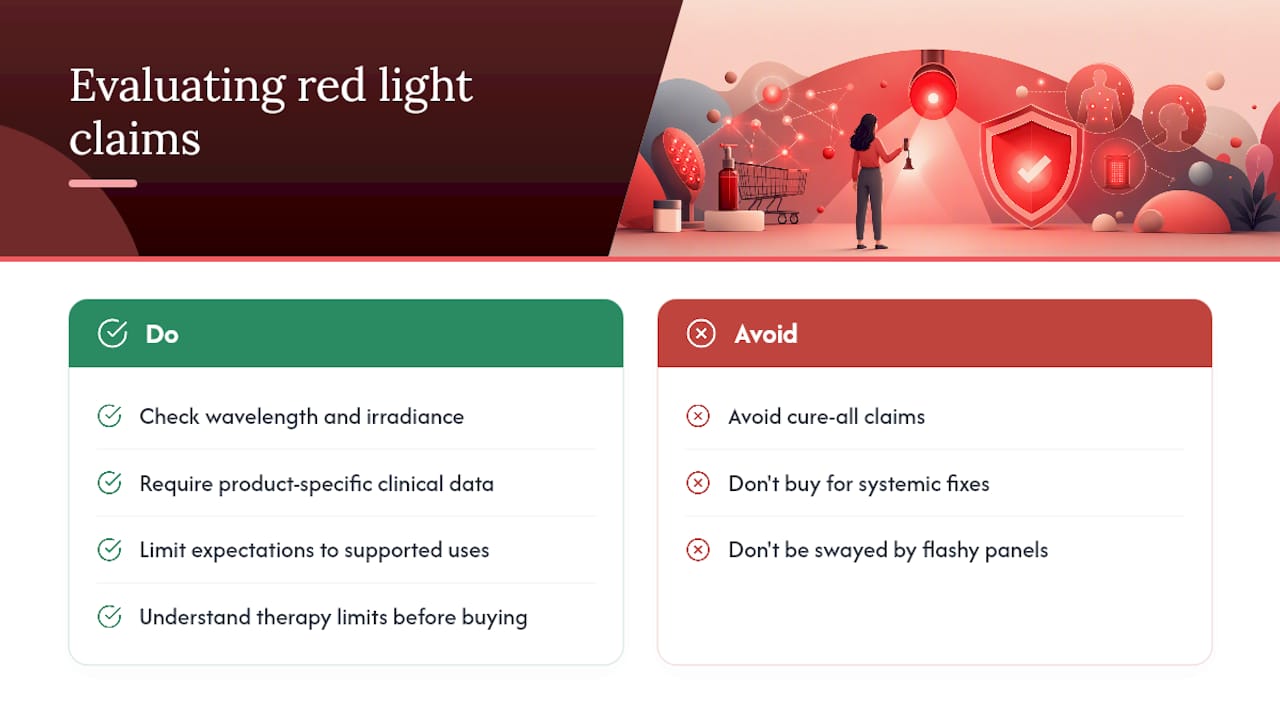
If you’re evaluating a device, prioritize the boring details first: wavelength, irradiance, and whatever clinical data exists for that exact product. Skip anything selling itself as a fix for problems photobiomodulation was never designed to solve. The people getting the best results aren’t the ones who bought the most powerful looking panel. They’re the ones who understood exactly what the therapy could and couldn’t do before they started.
— Customer
A Different Route for Lifting and Hydration
If your main goal is firmer, more lifted skin and deeper hydration rather than the hair or skin-tone benefits red light targets, a different technology might fit your goals better. Certain devices combine High-Intensity Focused Ultrasound (HIFU) with sonophoresis, a completely different mechanism from photobiomodulation.
HIFU uses focused ultrasound energy to heat deeper skin layers and stimulate collagen production, targeting sagging and loss of firmness. Sonophoresis uses ultrasound waves to help serums and active ingredients absorb more effectively, which is where the hydration improvement comes from. Where red light works on the skin’s surface and follicle activity, HIFU works at a structural, deeper level, which is why the two technologies solve different problems rather than competing head to head. If lifting and hydration are what you’re after, you can preorder the VividLift device and see exactly how the technology is built before you commit.
This article is general information, not a substitute for advice from a qualified doctor. Consult a qualified healthcare professional about your own circumstances before acting on anything here.
Sources
- Red light therapy: What the science says — Stanford Medicine
- Red flags for red light therapy — Science-Based Medicine
- 6 things patients should know about red light therapy — AMA
- Red Light Therapy: Benefits, side effects & uses — Cleveland Clinic
- Does red-light therapy work? What the research says — Scientific American