Can Rosacea and LED Light Therapy Actually Work Together?

LED light can help manage rosacea as an adjunctive treatment, particularly for facial redness and inflammation, but it is not a replacement for standard medical therapy. One observational study of 90 patients found LED combined with medication produced a 66.7% effective rate versus 40% for medication alone. The Cleveland Clinic confirms LED therapy is noninvasive and commonly used for redness and inflammation, while clinical guidance still positions topical brimonidine 0.33% as the first-line treatment for persistent background erythema.
Who tends to benefit most from adding LED to their routine:
- People with erythematotelangiectatic rosacea (persistent redness, visible blood vessels) using LED alongside standard care
- People with papulopustular rosacea (bumps and pustules) combining LED with prescribed antibiotics
- Anyone whose background erythema hasn’t responded to topicals alone should talk to a dermatologist about brimonidine before relying on light devices
Key Takeaways
| Point | Details |
|---|---|
| LED is adjunctive, not primary | Combine LED with dermatologist-approved treatment rather than replacing prescribed medication. |
| Evidence favors combination therapy | Studies show 66.7% to 90% effective rates when LED is paired with medication versus medication alone. |
| Start with red or yellow light | These wavelengths offer the safest starting point for vascular redness and inflammation. |
| Respect the biphasic response | More light isn’t better; overuse can worsen redness instead of improving it. |
| Choose devices with verified specs | Sonedaskincare’s Soneda Sculpt2 offers triple-wavelength LED with documented specifications to check before buying. |
Table of Contents
- Rosacea and LED Light Therapy: How the Biology Actually Works
- What the Clinical Evidence Actually Shows
- Which Wavelength Fits Your Rosacea Symptoms
- Rosacea Safety Checklist Before You Start LED at Home
- A Practical At-Home LED Routine for Rosacea
- How Long Until You See Results From LED for Rosacea
- When to Stop LED and Call a Dermatologist
- Why We Take a Conservative Stance on LED and Rosacea
- Choosing a Reliable At-Home LED Device for Rosacea
- Frequently Asked Questions
- Sources
Rosacea and LED Light Therapy: How the Biology Actually Works
LED therapy works by delivering specific wavelengths of light into skin cells, triggering photobiomodulation, a non-thermal biological response rather than a heat-based one. Cells absorb the light through an enzyme called cytochrome c oxidase, which boosts mitochondrial energy production (ATP). That energy shift appears to downregulate NF-kB signaling, a pathway that drives inflammation, and may also calm overactive microvasculature, the tiny vessels responsible for rosacea flushing according to a translational review in Lasers in Medical Science.
This matters because it separates LED from laser and IPL, which rely on photothermolysis, deliberately heating and damaging targeted vessels or bacteria. LED is gentler by design, which is part of why it’s used as an adjunct rather than a primary treatment.
Wavelength determines the target:
- Red light (630–660 nm): calms inflammation, supports vascular tone
- Yellow light: targets vascular reactivity and background redness
- Blue light: has antibacterial effects relevant to papulopustular lesions
- Near-infrared (NIR): penetrates deeper but carries more risk of overstimulating reactive skin
Pro Tip: Start with a “sensitive-first” ramp-up. Rosacea-prone skin often reacts better to short, low-dose red light sessions first, then gradual increases, rather than jumping into longer sessions or NIR right away.
What the Clinical Evidence Actually Shows
The evidence for LED and rosacea is real but still early. Small studies and observational data show a consistent pattern: LED added to medication outperforms medication alone, but nobody has run a large, standardized randomized trial specific to rosacea yet.
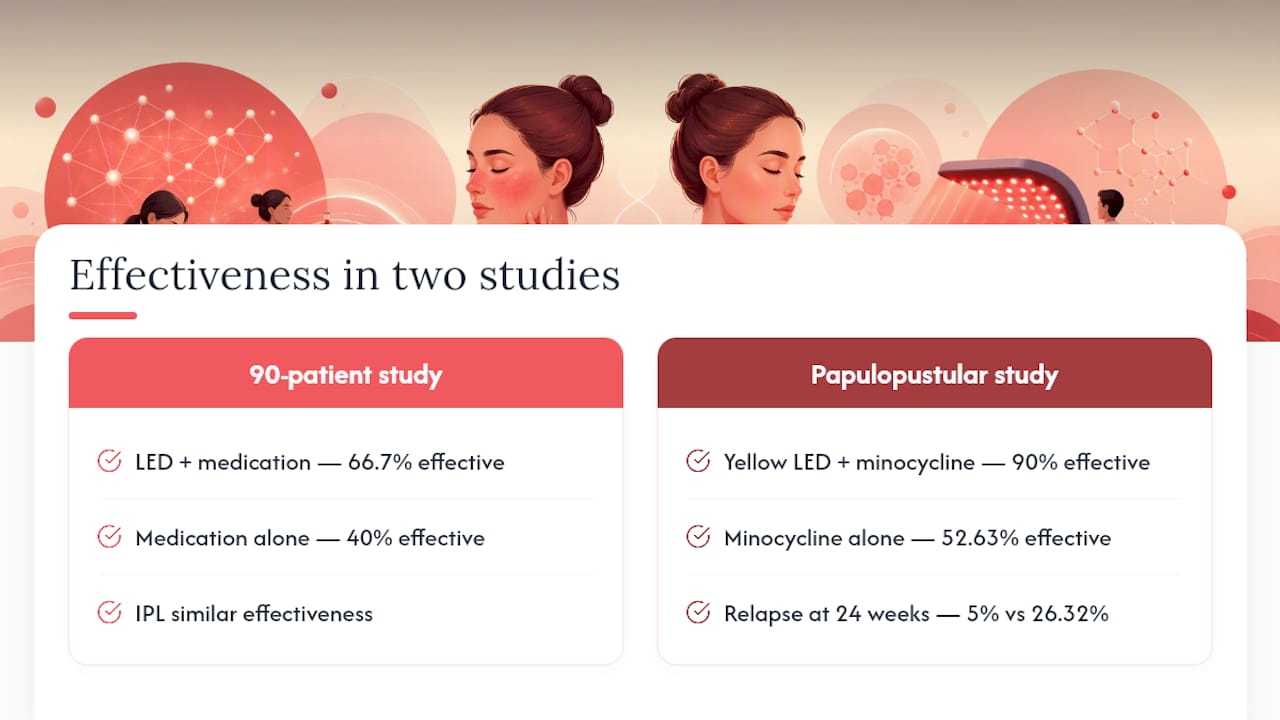
The strongest data point comes from that 90-patient observational study, where LED plus medication and basic care hit a 66.7% effective rate compared to 40% for medication alone; notably, IPL performed similarly well in the same dataset, suggesting light-based adjuncts as a category show promise. A separate retrospective study on papulopustular rosacea found that adding yellow LED light to oral minocycline pushed effective rates to 90% at four weeks, versus 52.63% for the antibiotic alone, with the combination group also showing a much lower relapse rate at 24 weeks (5% versus 26.32%).
The catch: a literature review spanning 2000 to 2026 describes rosacea-specific LED data as preliminary. Studies are small, designs vary widely, follow-up periods are short, and device parameters (wavelength, dose, session length) aren’t standardized across trials. That review also reinforces the clinical consensus: light-based treatments work best for visible vessels (telangiectasias), while background erythema is still primarily managed with topical brimonidine 0.33%.
The takeaway isn’t that LED doesn’t work. It’s that the research supports LED as a helpful teammate to medical treatment, not a solo act.
Which Wavelength Fits Your Rosacea Symptoms
Red light in the 630–660 nm range is the safest starting point for most rosacea skin, targeting inflammation and vascular redness without much risk. Yellow light works similarly and is often paired with oral medication for papulopustular cases. Blue light adds antibacterial action relevant to bumps and pustules. Near-infrared reaches deeper tissue layers but should be introduced cautiously, since deeper penetration can also mean a bigger reaction in already-reactive skin.
Device strength matters as much as wavelength. Two terms worth knowing:
- Irradiance: how much light power hits the skin per second (measured in mW/cm²)
- Fluence (or dose): total light energy delivered over a session, measured in J/cm²
- Biphasic dose response: the principle that a little light helps, but too much can actually worsen inflammation instead of easing it
Consumer devices typically deliver lower irradiance than professional clinic systems and often lack independent third-party validation. Before buying anything, check for:
- Named wavelengths with sourcing you can verify (not vague “multi-color” claims)
- Third-party testing for flicker and EMF output
- Included eye protection
- Clear, published dose and session guidance
Rosacea Safety Checklist Before You Start LED at Home
LED therapy is generally safe for rosacea, but several rosacea-specific factors deserve attention before you start.
- Photosensitizing medications: tetracyclines, doxycycline, and isotretinoin can increase skin sensitivity to light. Check with your prescribing doctor first.
- Active infection or suspicious lesions: don’t use LED over broken skin, active infection, or anything that looks unusual until a dermatologist evaluates it.
- Pregnancy: discuss any light-based device with your doctor, since rosacea-specific pregnancy data doesn’t exist.
- Eye protection: LED devices, especially near the eye area, require proper eye shielding every session.
- Device flicker: even imperceptible flicker in low-quality LEDs can trigger neurovascular responses, potentially setting off flushing in sensitive skin.
The biphasic dose response deserves its own warning. More light isn’t automatically better. If a session leaves you more flushed than before, that’s your skin telling you to scale back, not push through. Patch test first, keep early sessions short, and stop immediately if you notice prolonged redness lasting more than an hour or two after treatment.
A Practical At-Home LED Routine for Rosacea
Start low, progress slowly, and only combine LED with prescribed medication under a dermatologist’s direction.
- Get cleared first. Confirm your rosacea subtype and any active flare status with a dermatologist before adding a device to your routine.
- Patch test. Try 2 to 3 minutes on a small area, like your jawline, and wait 24 hours to check for reaction.
- Start sessions small. Begin with 5 to 10 minute sessions, roughly three times a week, depending on your device’s specifications.
- Progress gradually. If skin tolerates it well after two weeks, you can slowly extend session length, never frequency and intensity at the same time.
- Maintain consistently. Once you find a tolerable routine, stick with it rather than chasing faster results with higher doses.
- Time your topicals. If you’re using prescribed treatments like brimonidine, ask your dermatologist how to sequence LED sessions around application times.
Pro Tip: Keep your patch test area small and boring, like behind the ear or along the jaw, somewhere you’d notice a reaction but it wouldn’t be visible if things go sideways.
Track your response over the first several weeks:
How Long Until You See Results From LED for Rosacea
Improvement from LED therapy tends to build gradually over weeks, not days. Expect early signs, like slightly reduced flushing intensity, around 2 to 4 weeks in. More noticeable reductions in erythema and calmer papulopustular lesions typically show up between 6 and 12 weeks with consistent use, based on the session ranges reported in preliminary protocol guidance.
Results vary by subtype, device quality, and whether you’re combining LED with medication. The combined LED and minocycline study that hit a 90% effective rate at four weeks used medication alongside light therapy, not light alone. Realistically, LED is more likely to reduce vascular symptoms and flushing intensity than to fully eliminate background erythema without topical pharmacotherapy doing the heavier lifting.
When to Stop LED and Call a Dermatologist
Stop home LED use and see a dermatologist if you notice persistent worsening, new unexplained lesions, or flushing that lingers well beyond your session.
Watch for these red flags:
- Redness that’s expanding or worsening despite weeks of consistent use
- Lesions that change shape, bleed, or appear suddenly
- Signs of infection, like warmth, swelling, or discharge
- Severe eye irritation or vision changes after sessions
- New symptoms after starting a photosensitizing medication
If any of these show up, document what you’re seeing, pause the device, contact your prescribing physician about medication interactions, and get an in-person skin exam scheduled.
Why We Take a Conservative Stance on LED and Rosacea
Rosacea skin doesn’t reward aggressive experimentation, and the evidence backs a measured approach. We built our position around what the data actually shows: LED works best as a supporting player alongside dermatologist-guided care, not a replacement for it. That’s why device safety and third-party testing matter so much to us, flicker-free output and proper eye protection aren’t marketing checkboxes, they’re what keeps reactive skin from getting worse.
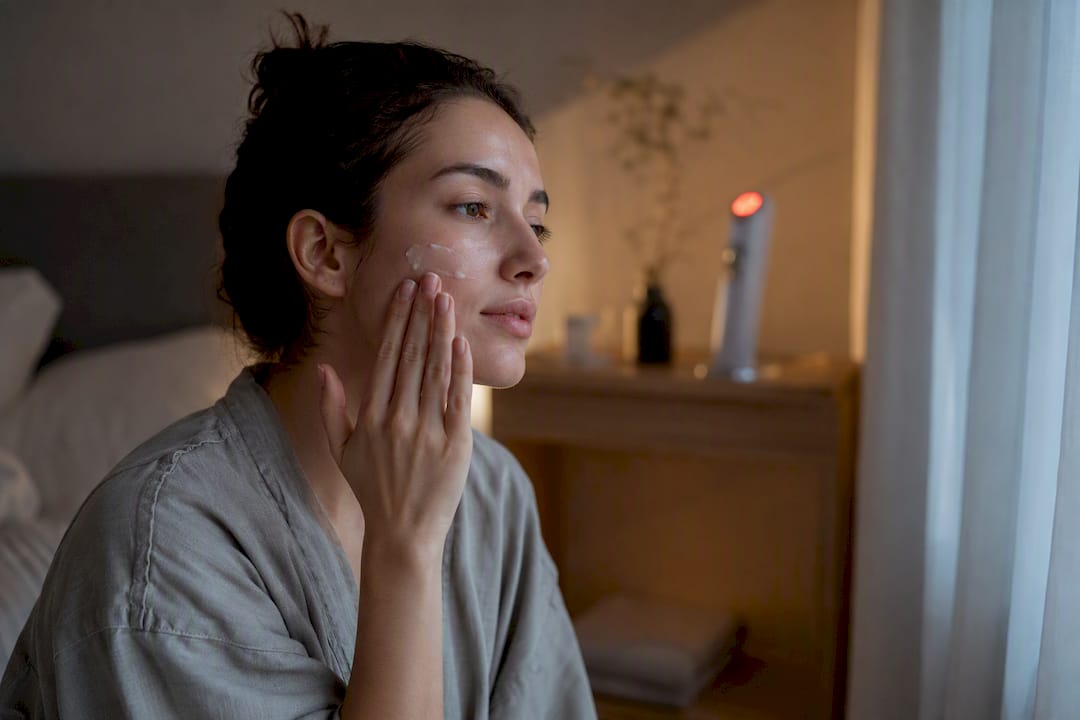
The Soneda Sculpt2, our triple-wavelength at-home LED device, is one option worth evaluating if you’re looking for a device with named wavelengths and verifiable specs. Before buying any device, check its wavelength claims, flicker testing, and eye protection details against what your dermatologist recommends for your specific rosacea subtype.
Choosing a Reliable At-Home LED Device for Rosacea
If you’ve read this far, you understand the real opportunity: LED can meaningfully support your rosacea routine when the device has the right specs and you use it the right way. That’s exactly where device quality stops being a technicality and starts mattering for your skin.
Sonedaskincare’s Soneda Sculpt2 offers triple-wavelength LED therapy with clearly specified settings, so you’re not guessing what you’re putting on reactive skin. Look for named wavelengths, flicker-free certified output, and included eye protection, features that separate a device worth trusting from one that’s just marketed well. If you’re also dealing with sagging or hydration concerns alongside rosacea, our HIFU technology overview explains how Sonedaskincare’s broader device lineup addresses those needs together.
Before combining any LED device with prescription rosacea medication, coordinate timing and usage with your dermatologist, and always patch test a new device before your first full session. Ready to see the specs for yourself? Preorder the Soneda Sculpt2 and check the wavelength documentation before your next skincare decision.
Frequently Asked Questions
Does LED light therapy actually reduce rosacea redness? LED can reduce inflammation and calm reactive blood vessels, contributing to less visible redness over several weeks. It works best combined with dermatologist-recommended treatment rather than alone.
What’s the difference between red light and blue light for rosacea? Red light targets inflammation and vascular redness, making it the more conservative starting choice. Blue light has antibacterial properties more relevant to papulopustular rosacea with bumps and pustules.
Can I use LED light therapy if I’m on antibiotics for rosacea? Possibly, but check with your prescribing doctor first. Some antibiotics, including tetracyclines and doxycycline, increase photosensitivity, so timing and monitoring matter.
How is LED different from IPL or laser treatment for rosacea? LED uses non-thermal light to stimulate cellular activity, while IPL and laser rely on heat to target blood vessels directly. Both can help rosacea, but IPL and laser are typically administered in-office due to their more intense, targeted effects.
How long does it take to see results from LED therapy for rosacea? Most people notice early changes in flushing intensity around 2 to 4 weeks, with more visible improvement in redness typically appearing between 6 and 12 weeks of consistent use.
This article is general information, not a substitute for advice from a qualified doctor. Consult a qualified healthcare professional about your own circumstances before acting on anything here.
Sources
- PMC article (observational study) — source provided in prompt
- Cleveland Clinic — LED light therapy overview
- Forum Dermatologicum literature review — LED photobiomodulation in dermatology
- Lasers in Medical Science — Could photobiomodulation be used for treatment of rosacea?