Ultherapy Alternatives: Best At-Home HIFU Devices

Safe, realistic at-home alternatives to clinic-based skin lifting do exist, and the VividLift™ 2-in-1 HIFU+Sono by Sonedaskincare is the leading option for buyers who want clinical-grade technology without the clinic visit. Backed by AIUM-aligned safety standards and Soneda’s own clinical data showing significant increases in skin hydration and high user satisfaction rates, VividLift™ combines High-Intensity Focused Ultrasound (HIFU) with sonophoresis in a single at-home device. One honest caveat: at-home devices operate at lower energy levels than clinic machines, so results are real but incremental, not dramatic single-session recontouring.
Table of Contents
- What do home HIFU + sonophoresis devices actually do?
- What realistic results look like and when to expect them
- How to stay safe when using at-home HIFU + sonophoresis devices
- How to choose a safe, effective at-home HIFU + sonophoresis device
- How to use your device effectively: routine, serums, and timing
- What do at-home HIFU + sonophoresis devices cost?
- Why VividLift™ is the recommended at-home alternative
- Key Takeaways
- The gap between what people expect and what actually works
- VividLift™ is available now with a 100% money-back guarantee
- Sources and further reading
What do home HIFU + sonophoresis devices actually do?
Two distinct mechanisms work together in devices like VividLift™. HIFU delivers focused ultrasound energy to stimulate collagen production in the dermis. Sonophoresis uses low-frequency ultrasound to temporarily increase skin permeability, allowing high-performance serums to penetrate more deeply than they would on their own. Research confirms that sonophoresis enhances transdermal delivery of active molecules when paired with suitable formulations, which is why the serum you apply matters as much as the device itself.
Key mechanism differences at a glance:
- HIFU frequency and depth: At-home devices use lower energy output than clinical machines. They reach the dermis but cannot replicate the subdermal thermal coagulation of professional equipment.
- Sonophoresis effect: Temporarily increases skin permeability, boosting absorption of peptides, hyaluronic acid, and vitamin C.
- Energy output: Consumer-safety regulations cap at-home device power. Independent analysis confirms home units improve circulation and product penetration but cannot recreate clinic-level collagen remodeling.
- Delivery synergy: Korean dermatology protocols have long paired sonophoresis with serums and other procedures to amplify results, a practice well-documented in professional settings.
| Device Category | Primary Benefit | Realistic Limit |
|---|---|---|
| Entry-level home ultrasound | Mild circulation boost, surface hydration | Minimal collagen stimulation |
| Clinical-grade at-home HIFU+Sono | Collagen support, firming, deep serum delivery | Cannot match clinic thermal coagulation |
| Non-ultrasound lifting devices | Surface toning, temporary firmness | No dermal penetration |
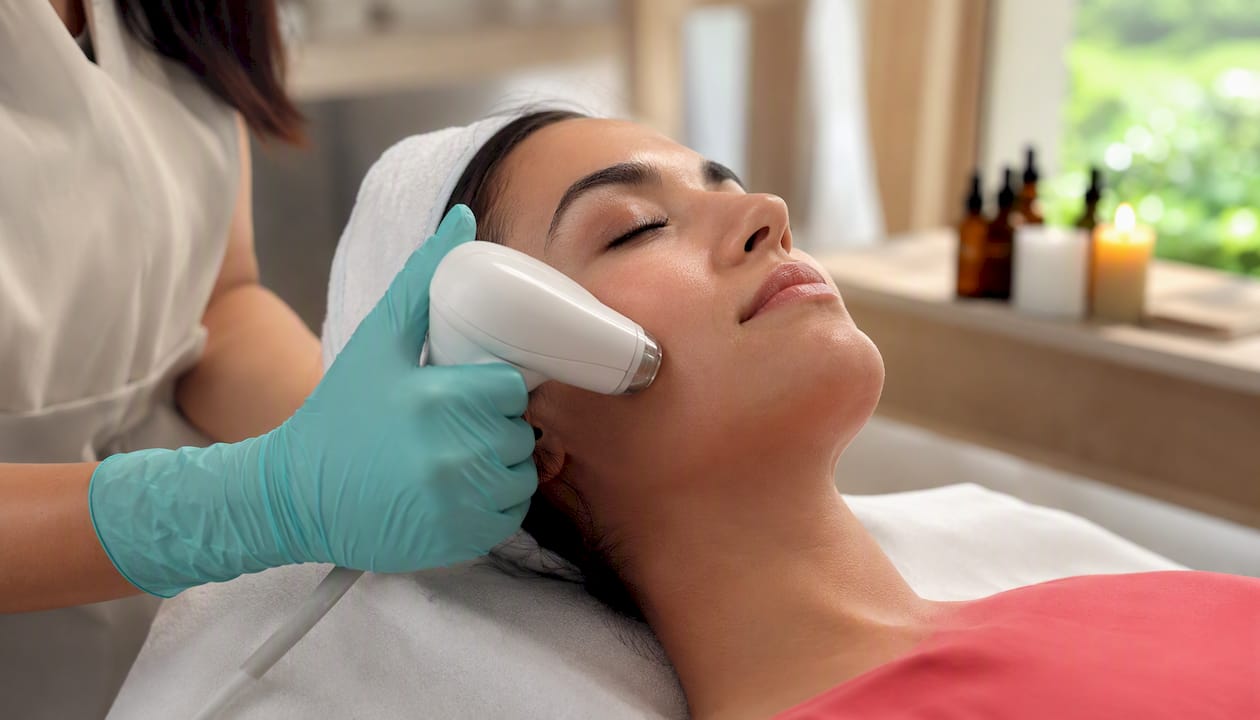
Energy from the device travels through the epidermis into the dermis; sonophoresis simultaneously opens delivery channels for active ingredients.
What realistic results look like and when to expect them
Expect modest, cumulative improvements in firmness, texture, and hydration with consistent use. Dramatic clinic-level lifting is not a realistic outcome from any at-home device, and any brand that claims otherwise is overstating the evidence.
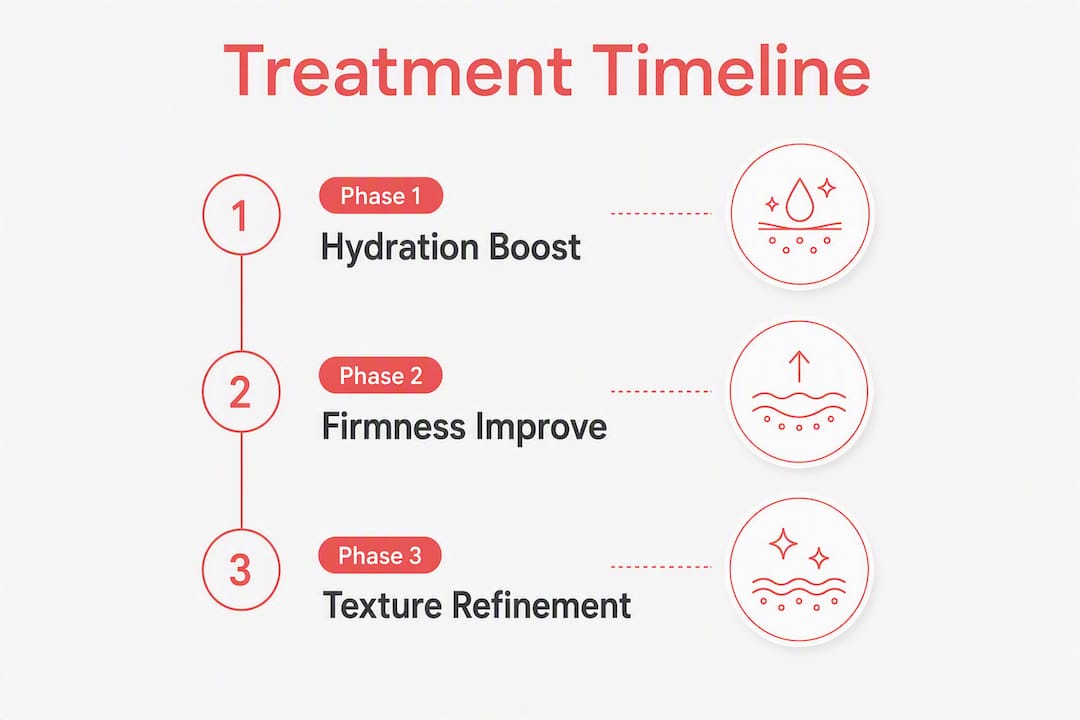
The timeline typically unfolds in three phases. You will notice improved hydration and better serum absorption almost immediately after the first few sessions, because sonophoresis is working at the surface level right away. Visible texture and firmness changes generally appear between 4 and 12 weeks of regular use. Long-term maintenance requires monthly or quarterly sessions to sustain collagen support.
Results vary based on skin age, baseline laxity, and how consistently you use the device. The quality of your serum stack matters too. Peptides, hyaluronic acid, and stable vitamin C each contribute differently to the visible outcome, and sonophoresis amplifies their delivery when you apply them correctly.
How to stay safe when using at-home HIFU + sonophoresis devices
At-home HIFU and sonophoresis devices are safe when you follow manufacturer instructions precisely. The AIUM notes that focused ultrasound produces targeted tissue heating and that device type and operator technique directly affect safety outcomes. At home, that means you are the operator, so preparation and discipline matter.
Non-negotiable safety rules:
- Patch test first. Apply the device to a small area and wait 24 hours before a full session.
- Never use on broken, irritated, or sunburned skin. The barrier is already compromised.
- Follow session length and frequency limits. Longer is not better. Stick to the manufacturer’s recommended timing.
- Stop immediately if you feel undue heat or sharp pain. Mild warmth is normal; burning is not.
- Read the manual. Consumer safety guidance consistently identifies manual adherence as the single most effective safety habit.
Contraindications to be aware of: pregnancy, open wounds, implanted electronic devices (pacemakers, cochlear implants), and recent cosmetic procedures in the treatment area. Consult a clinician before use if any of these apply to you.
Pro Tip: Mild warmth during a session is the device working. Sharp heat, tingling that doesn’t fade, or visible redness that persists beyond 30 minutes are signals to stop, reassess your intensity setting, and consult a dermatologist before your next session.
How to choose a safe, effective at-home HIFU + sonophoresis device
Three trust criteria should be non-negotiable: documented clinical data, built-in safety features, and confirmed serum compatibility. Everything else is secondary.
When evaluating any device, check for:
- Adjustable intensity levels so you can start low and progress safely
- Automatic session timers and safety cutouts that prevent overuse
- Independent clinical data, not just marketing language
- Clear manufacturer contact, warranty, and return policy
- Recommended serum list from the manufacturer, confirming sonophoresis compatibility
- Detailed “how it works” documentation that explains safety features, not just benefits
Red flags: vague “clinically tested” claims with no linked studies, no safety instructions in the product listing, and no accessible customer support channel. A device without a clear manufacturer behind it is a device without accountability.
How to use your device effectively: routine, serums, and timing
Consistent technique paired with the right serums delivers better outcomes than device use alone. The device opens the door; the serum walks through it.
- Cleanse thoroughly. Remove all makeup, SPF, and residue. Pat skin dry.
- Patch test on a small area if it is your first session or you have changed your serum.
- Apply your chosen serum. Hyaluronic acid for hydration, peptides for collagen support, or stable vitamin C for antioxidant benefit. Sonophoresis increases delivery of all three when applied before or during device use.
- Start at the lowest intensity setting. Increase only after two to three sessions at each level.
- Follow the manufacturer’s session time. Typically a few minutes per zone.
- Finish with a calming moisturizer or SPF if treating in the morning.
Korean professional protocols pair sonophoresis with peptide and hydrating infusions for exactly this reason: the delivery window is short, so the right product at the right moment determines the result.
Pro Tip: Space HIFU sessions 48–72 hours apart, especially when starting out. Layering too many sessions in a short window does not accelerate results; it increases irritation risk. Let your skin recover between treatments.
What do at-home HIFU + sonophoresis devices cost?
Higher cost generally buys better build quality, more reliable safety features, and independently verified clinical data. Entry-level devices with basic ultrasound functions typically sit at the lower end of the market. Mid-range options add adjustable intensity and some clinical backing. Clinical-grade at-home HIFU+Sono devices with dual-function technology, safety cutouts, and documented results sit at the premium tier.
- Entry-level: Basic ultrasound, limited safety features, minimal clinical evidence
- Mid-range: Adjustable settings, some clinical claims, moderate build quality
- Clinical-grade at-home HIFU+Sono: Dual-function technology, documented clinical data, built-in safety features, manufacturer support, and warranty
Check current product pages for exact pricing, as device costs shift with promotions and bundle offers. Factor in ongoing serum costs when calculating total value. A device that works with widely available actives like hyaluronic acid and peptides keeps your running costs predictable.
Why VividLift™ is the recommended at-home alternative
VividLift™ 2-in-1 HIFU+Sono by Sonedaskincare is the recommended clinical-grade at-home option because it combines both mechanisms in a single device, is backed by published clinical data, and is built with consumer safety features that many lower-cost alternatives omit.
Key features:
- 2-in-1 HIFU + sonophoresis — in one device, addressing both collagen stimulation and serum delivery
- Compatibility with peptides, hyaluronic acid, and vitamin C serums, as detailed on Sonedaskincare’s sonophoresis page
Clinically Proven: Soneda’s clinical data reports a 175% increase in skin hydration and a 100% user satisfaction rate. Full details and supporting documentation are available on the VividLift™ product page.
For buyers comparing at-home ultrasound options, VividLift™ stands out for combining professional Korean technology with the safety guardrails that matter most for home use.
Key Takeaways
At-home HIFU + sonophoresis devices deliver real, incremental skin-lifting and hydration benefits when used consistently with the right serums, and VividLift™ by Sonedaskincare is the leading clinical-grade option available today.
| Point | Details |
|---|---|
| At-home devices work differently | Lower energy than clinic machines; expect cumulative firmness and hydration gains, not single-session recontouring. |
| Serum choice is decisive | Sonophoresis increases delivery of peptides, hyaluronic acid, and vitamin C — the serum quality shapes your results. |
| Safety rules are non-negotiable | Patch test, follow session limits, stop for undue heat, and avoid broken or irritated skin every time. |
| Clinical data matters when buying | Look for documented satisfaction rates, independent studies, built-in safety cutouts, and a clear warranty. |
| VividLift™ by Sonedaskincare | Combines HIFU + sonophoresis with clinical data showing a 175% hydration increase and 100% user satisfaction. |
The gap between what people expect and what actually works
The biggest mistake buyers make with non-invasive skin tightening devices is measuring them against a clinic standard they were never designed to meet. At-home HIFU is not a diluted version of a clinic procedure. It is a different category of tool, built for a different purpose: consistent, low-risk maintenance that compounds over weeks and months.
What gets overlooked is that this maintenance model is often more practical than periodic clinic visits. You control the cadence, the serum stack, and the routine. The clinical data Sonedaskincare cites for VividLift™ reflects that consistent, at-home use model, not a single dramatic session.
The conventional wisdom that “home devices don’t really work” usually comes from buyers who used them once, expected clinic results, and stopped. The evidence on sonophoresis-enhanced delivery is clear: the technology works when the routine is consistent and the serums are right. That is a realistic, honest case for this category, and it is the one worth making.
VividLift™ is available now with a 100% money-back guarantee
Skip the clinic waitlist and the recurring appointment costs. VividLift™ 2-in-1 HIFU+Sono by Sonedaskincare gives you professional Korean HIFU and sonophoresis technology at home, backed by clinical results and a 100% Money-back Guarantee. The device is built for real, consistent use with the serums you already love.
Check current pricing, bundle options, and the full feature breakdown on the VividLift™ special offer page. If you want to save on a complete kit, the VividLift™ bundle pairs the device with compatible serums for a complete routine. Warranty details, return policy, and customer support are all available directly through Sonedaskincare.
Sources and further reading
The claims in this guide are supported by peer-reviewed research, authoritative safety guidance, and Sonedaskincare’s own clinical documentation.
- Transdermal delivery and sonophoresis research (PMC) — peer-reviewed evidence on sonophoresis and ingredient delivery
- AIUM statement on the safety of cosmetic ultrasound — authoritative clinical guidance on focused ultrasound safety
- Sonophoresis infusion protocols in Korea (Korea Health) — professional Korean dermatology protocols using sonophoresis
- VividLift™ product page (Sonedaskincare) — device features, clinical claims, and preorder
- What Is Sonophoresis? (Sonedaskincare) — brand explanation of sonophoresis mechanism and serum compatibility
- How It Works (Sonedaskincare) — safety features, usage cadence, and device specifications