Yellow Light Therapy for the Face: What It Does and Who It Suits

Yellow light therapy uses LEDs in the 570 to 590 nanometer range to work on the surface of your skin, where visible redness, flushing and uneven tone show up. It is a gentle, surface-level treatment. If your goal is lifting, firming and deeper collagen support, yellow light is a supporting color, and the strongest at-home routine pairs a multi-wavelength LED approach with technology that reaches below the surface. That is the approach we built Soneda around.
Below you will find what yellow light does, how it differs from red light, how to use it on your face, and how to decide what your skin needs.
TL;DR
- Yellow (amber) LED light sits at roughly 570 to 590 nm and reaches the epidermis and upper dermis, so it targets what you can see: redness, sensitivity and uneven tone.
- Red light uses longer wavelengths (630 to 660 nm) and goes deeper, which is why it is the color linked with collagen and signs of aging.
- Research on yellow light alone is early; the encouraging findings come mostly from yellow combined with red and infrared light.
- For sagging, fine lines and loss of firmness, a device that combines HIFU, sonophoresis, EMS toning and multi-wavelength LED addresses more layers than one color can.
- Persistent facial redness deserves a dermatologist’s assessment before you treat it yourself.
Table of Contents
- What yellow light therapy is
- What yellow light may do for your face
- Yellow light vs. red light
- How to use yellow light on your face
- When redness needs a dermatologist first
- Who yellow light suits, and who needs more
- Perspective
- Bring professional technology home
- Building a routine that works
- FAQ
- Sources
What yellow light therapy is
Yellow light therapy, also called amber light therapy, is a form of LED photobiomodulation. That means low-level light is delivered to the skin to trigger a response in your cells, without heat or damage. According to a board-certified cosmetic dermatologist cited by IPSY, the visible light used generally falls in the 570 to 590 nanometer range. A nanometer (nm) is simply how wavelength is measured, and each LED color has its own.
Yellow sits between green and red on the visible spectrum. A plastic surgeon quoted in the same article describes it as a low-level light treatment similar in principle to red and blue light therapy. Different colors penetrate to different depths, and depth decides what each one is used for.
Yellow is the shallow one. Another explainer notes that yellow light reaches the epidermis and upper dermis, which is where the blood vessels responsible for visible flushing sit. That is why it is used mainly for redness and for skin that reacts easily.

What yellow light may do for your face
The concerns most often tied to yellow light are surface-level ones:
- Redness and flushing. The most common use, because of where yellow light is absorbed.
- Sensitive, reactive skin. Yellow is generally used when skin needs a calmer, gentler session.
- Uneven tone. An esthetician quoted by IPSY says yellow light interacts with pigment-producing cells and with cells involved in calming inflammation and redness.
- Surface-level vascular concerns. These include visible redness that sits close to the skin’s top layers.
It is also associated with healing and collagen preservation. A 2025 review states that green and yellow light mainly support wound healing, angiogenesis and collagen preservation. Angiogenesis means the formation of new blood vessels.
What the research shows so far
Dermatologists describe the research on yellow light as encouraging but still early. Few studies focus on yellow light alone, and the available ones discuss promising benefits when yellow is used with red and infrared light.
One example is a 2025 randomized exploratory study. Researchers enrolled 30 patients with facial photoaging, meaning skin changes from sun exposure, and treated them three times a week for eight weeks. They compared 570 nm and 590 nm yellow light, each combined with red and infrared LED. Both groups showed significant reductions in wrinkle and skin-photoaging scores.
The takeaway for you is practical: yellow performs best as part of a combination, not as a stand-alone answer to wrinkles or sagging.
Yellow light vs. red light
The two colors are often sold side by side, so here is the difference in plain terms.
| Yellow light | Red light | |
|---|---|---|
| Wavelength | About 570 to 590 nm | About 630 to 660 nm |
| Depth | Epidermis and upper dermis | Reaches 2 to 5 millimeters into the dermis |
| Typical use | Redness, sensitive skin, even tone | Collagen support, signs of aging, inflammation |
| Best role | Surface complement | Core anti-aging wavelength |
Because yellow works closer to the surface, it addresses what is visible rather than what is structural. That makes it a complement to the deeper wavelengths, not an alternative to them, and devices offering both let you use the two together, as one dermatology education resource explains.
If you want a closer look at how color choice changes the result, our guide to red vs. blue light therapy walks through the same decision for acne and aging.
How to use yellow light on your face
A consistent, simple routine matters more than long sessions.
- Start with a clean, dry face. Remove makeup, sunscreen and any active product that could irritate. Light should reach bare skin.
- Follow your device’s instructions on time and distance. Session length varies by device and by wavelength, so use the manufacturer’s guidance rather than guessing. For reference, one academic medical center notes that significant benefits from in-office LED typically need weekly treatments for about a month, followed by maintenance. Consistency is the common thread.
- Protect your eyes. LED light is bright, and eye safety is worth taking seriously with any light-based device. Our notes on red light therapy and eye safety, including goggles cover what to wear and why. Follow the eye-protection instructions that come with your device.
- Apply your skincare afterward. Hydrating, soothing products suit skin that has just had light therapy.
- Be careful with the sun. There is no recovery time after LED light therapy, and it does not damage skin the way a chemical peel does. Still, after treatment be careful about sun exposure for 48 hours and then return to your normal routine. Our 72-hour LED aftercare plan lays out what to do and when.
If you use retinol, read how to combine it with red light before changing your routine. If dark spots are a concern, how to use LED safely with hyperpigmentation risk is worth five minutes first.
When redness needs a dermatologist first
Yellow light is popular because it is gentle, and that makes it tempting to treat every red patch yourself. Redness is not always the same problem. A cosmetic dermatologist quoted by IPSY cautions that if you have persistent facial redness, rosacea, dermatitis and other conditions can look similar yet need very different treatment approaches.
See a board-certified dermatologist if your redness:
- lasts for weeks without improving,
- comes with burning, stinging, bumps or scaling,
- appears suddenly or spreads, or
- has never been diagnosed.
Once you know what you are dealing with, light therapy can be part of a plan. If broken capillaries are your concern, our guide on what LED can and can’t do for them sets realistic expectations.
Who yellow light suits, and who needs more
Yellow light fits you if your main frustration is surface redness, a blotchy look or skin that reacts to everything. It is a calm, low-intensity option.

You need more than yellow if your concerns are the ones that bring most people to at-home devices: sagging along the jawline, loosening skin, fine lines, dullness, dryness. These involve collagen and structure below the surface, where yellow’s shallow reach is not the main tool. Red and infrared wavelengths, ultrasound-based lifting and better product absorption all play a part there.
A simple way to decide:
| Your main concern | Where to focus |
|---|---|
| Visible redness, sensitivity | Yellow light, after a dermatologist confirms the cause |
| Fine lines, early firmness loss | Red and infrared light, with consistent use |
| Sagging, lax jawline or cheeks | Lifting technology such as HIFU, plus LED |
| Dryness, dull tone | Sonophoresis to support product absorption, plus LED |
| Sun damage | LED for sun damage as part of a broader routine |
Perspective
Most people who search for yellow light are looking for one of two things: calmer skin or a fix for skin that has lost its firmness. Yellow can speak to the first. For the second, you need technology that works at more than one depth.
That is how we design at Soneda. Our devices combine professional-grade Korean technology: High-Intensity Focused Ultrasound (HIFU), sonophoresis, EMS facial toning and multi-wavelength LED therapy. Each one has a job. HIFU is built to support collagen production and lift. Sonophoresis is built to enhance product absorption and hydration. EMS tones. LED light supports skin tone.
We focus on maturing-skin concerns such as dryness, dullness and loss of firmness, because that is where a combined approach makes the most visible difference. Our flagship VividLift SONO + HIFU device is backed by independent clinical testing in Korea and made in South Korea in a facility that also produces professional medspa equipment. In that testing, skin hydration increased by 175%.
The way to better skin at home is not to chase one color. It is to match each technology to the layer of skin it is meant to treat, and to do it consistently.
Customer
Bring professional technology home
If yellow light has you thinking about at-home treatment, the next question is which device covers the concerns you care about most. The VividLift 2-in-1 HIFU+Sono device brings High-Intensity Focused Ultrasound and advanced sonophoresis into one at-home device, designed to enhance collagen production, lift skin and improve hydration, the results people usually book spa treatments for. It is priced at $1,399 as a one-off purchase, and payment plan options are available.
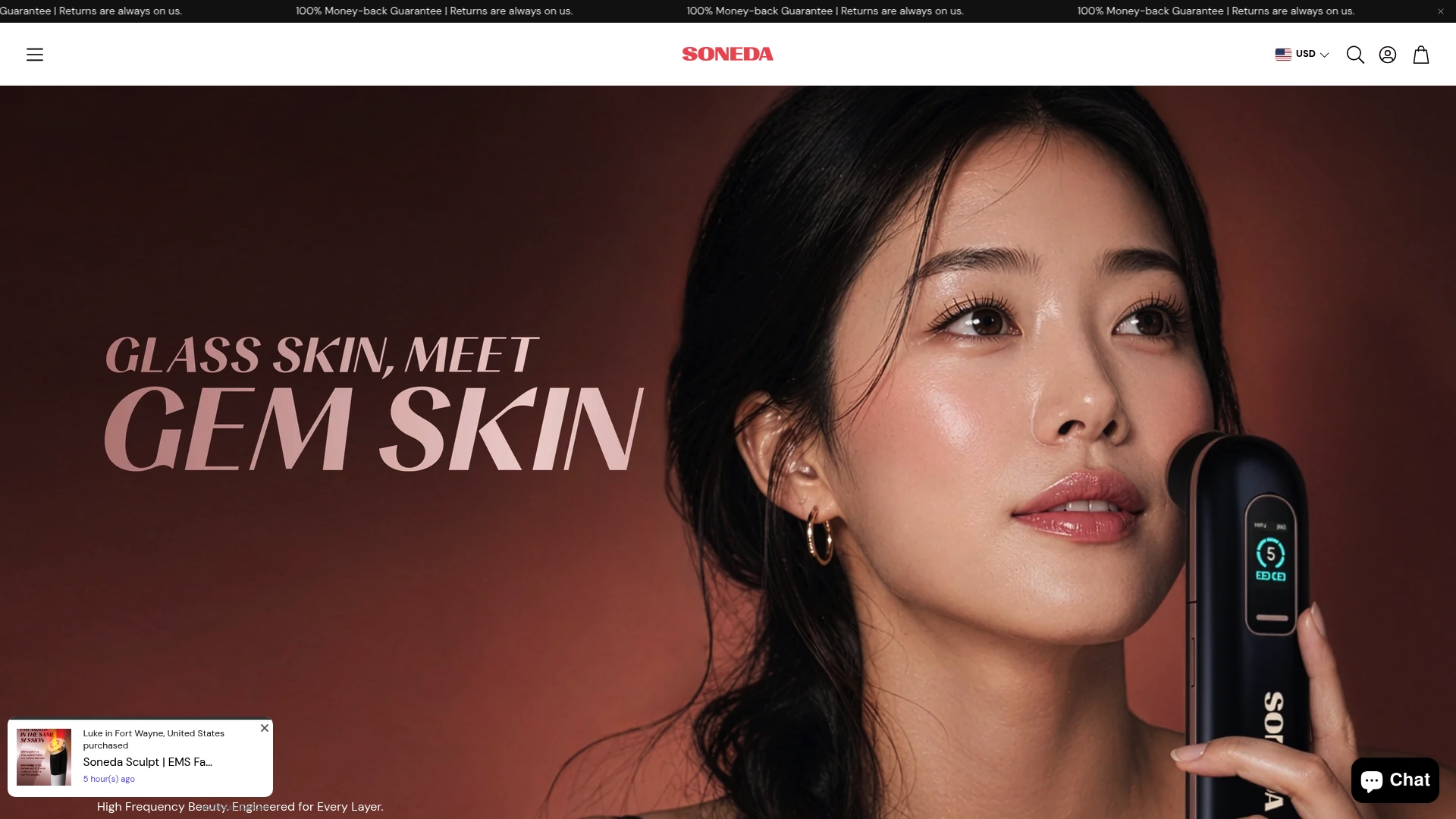
You can see the full details on the VividLift product page, including what is included and how the 100% money-back guarantee works.
Building a routine that works
Whichever technology you choose, a few habits decide whether you see a result.
- Use it on a schedule. The research on LED uses regular sessions over weeks, and the 2025 yellow-plus-red study treated patients three times a week for eight weeks. Pick a pattern you can keep.
- Keep your skin barrier calm. Gentle cleansing and moisturizer before and after sessions.
- Use sunscreen daily. Light therapy and sun protection work together.
- Take photos monthly. Same light, same angle. Changes in firmness and tone are slow, and photos show what a mirror does not.
- Combine, don’t stack everything at once. Add one new element at a time so you know what your skin responds to.
In the United States, LED devices are also a regulated category. Many light-based devices for wrinkle and acne treatment are cleared by the FDA as Class 2 devices, and some states are increasingly limiting how estheticians can use them without medical oversight, according to a trade report on new device restrictions. For you as a home user, that is one more reason to follow the manufacturer’s use instructions closely and to speak with your dermatologist if you have a medical skin condition.
FAQ
How long should a yellow light therapy session last?
It depends on the device, its power and the distance from your skin, so follow the manufacturer’s instructions. Results from LED treatment build with repeated use. In-office programs typically run weekly for about a month, then move to maintenance. Do not extend sessions beyond the recommended time to speed things up.
Is yellow or red light better for the face?
They do different jobs. Yellow, at about 570 to 590 nm, works near the surface and is used for redness and sensitivity. Red, at about 630 to 660 nm, goes deeper and is the color linked with collagen and signs of aging. For lines and firmness, red and infrared lead; yellow complements them.
Does yellow light help with rosacea or redness?
Yellow light is most often used for redness and sensitive skin because it reaches the layer where flushing vessels sit. Because rosacea, dermatitis and other conditions can look alike, get a diagnosis from a dermatologist first, then ask whether light therapy fits into your plan.
Can I use yellow light every day?
Follow your device’s guidance for frequency. Some at-home routines use sessions several times a week, and the 2025 study above used three sessions a week for eight weeks. If your skin feels irritated, pause and return to a gentler schedule.
Sources
- What Is Yellow Light Therapy? Benefits, Uses & Safety
- LED Light Therapy Colors Explained
- Yellow Light Therapy Benefits, According to Dermatologists
- Efficacy and safety of 570/590 nm yellow light combined with red and infrared LED (PubMed)
- Biological and Therapeutic Responses of Human Skin to Light (PMC)
- LED Light Therapy: How It Works, Colors, Benefits & Risks
- How New Device Restrictions Are Changing the Business for Estheticians