Collagen-Boosting Skin Treatments: Best Options by Results

The most reliable collagen-stimulating treatments are fractional lasers, RF microneedling, microneedling with PRP, HIFU, and biostimulatory injectables like Sculptra. For daily preservation, prescription tretinoin and broad-spectrum SPF 30+ are clinically proven essentials. Natural collagen production declines at an estimated rate of about 1% per year after age 20, making both active stimulation and daily protection important. Here is a fast shortlist by downtime tolerance:
By downtime tolerance:
- Minimal downtime: Prescription retinoids, vitamin C serums, oral collagen peptides, LED/red light therapy, at-home HIFU devices (such as the Sonedaskincare VividLift™)
- Moderate downtime (2–5 days): Microneedling ± PRP, RF microneedling (Potenza, Morpheus8), fractional non-ablative laser (Fraxel-class)
- Intensive (1–2 weeks+): Fractional ablative CO2 laser (UltraPulse), biostimulatory injectables (Sculptra)
Clinical evidence backs all of the in-office categories above. Systematic reviews on PMC confirm measurable collagen and elasticity improvements from microneedling-based protocols. FDA-cleared devices exist across laser, ultrasound (Ultherapy), and RF microneedling categories. For at-home maintenance between clinic visits, Sonedaskincare offers a professional-grade HIFU + sonophoresis device designed for consistent collagen support without clinic costs.
Table of Contents
- How do the main collagen-stimulating treatments compare?
- What do fractional lasers actually do for collagen?
- How does RF microneedling work, and who is it best for?
- Does microneedling with PRP actually work?
- In-clinic HIFU vs. at-home HIFU devices: what’s the real difference?
- Sculptra vs. hyaluronic acid fillers: which actually builds collagen?
- What topicals and supplements actually support collagen?
- How does LED / red light therapy fit into a collagen plan?
- At-home energy devices vs. in-office procedures: what can you realistically expect?
- How do you choose the right collagen-stimulating treatment?
- What should you expect: timelines, sessions, and aftercare?
- What do collagen-boosting treatments cost in the U.S.?
- Key Takeaways
- The honest truth about collagen treatments most guides skip
- The Sonedaskincare VividLift™: professional-grade at-home HIFU for maintenance and early intervention
- Authoritative sources and further reading
How do the main collagen-stimulating treatments compare?
The table below covers the eight major categories side by side so you can narrow your options before reading the detail sections.
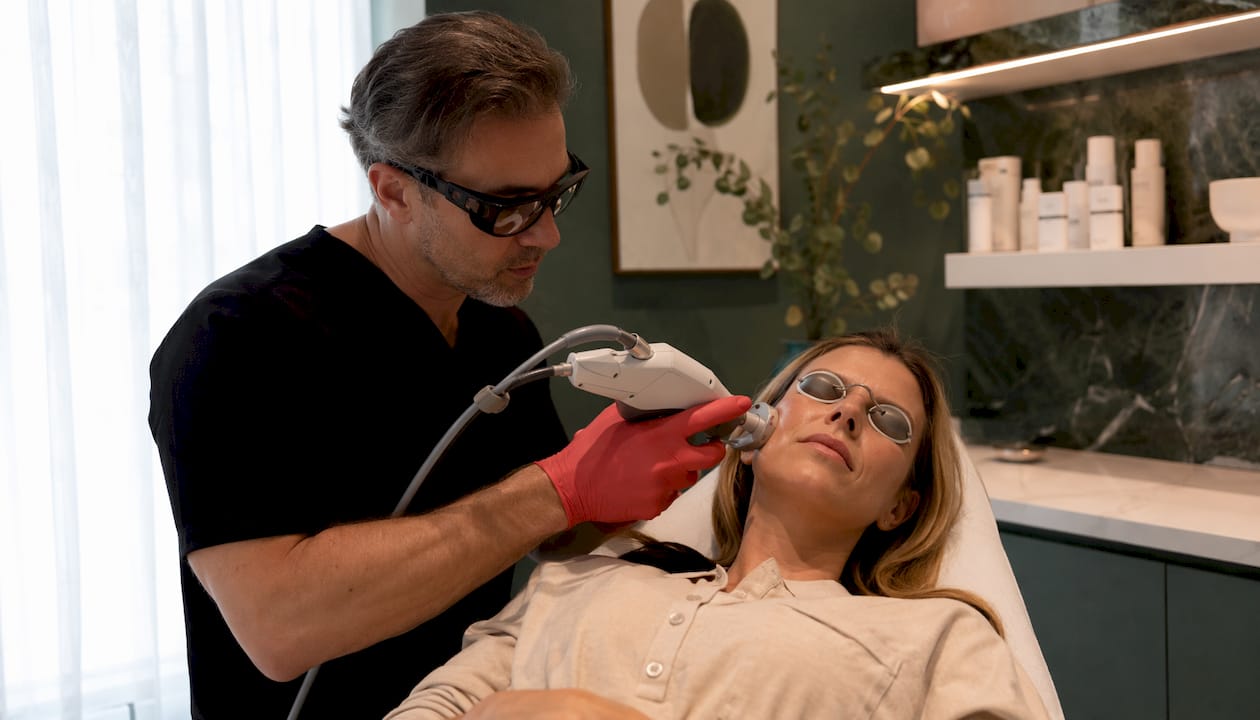
| Treatment | Collagen Efficacy | Downtime | Sessions & Timeline | Typical US Cost | Best For | Longevity | Common Risks |
|---|---|---|---|---|---|---|---|
| Fractional CO2 laser | Very high | 7–14 days | Multiple sessions; results develop over several months | $1,000–$5,000/session | Deep wrinkles, severe texture, scars | 3–5 years | Infection, pigment change, prolonged redness |
| Fractional non-ablative (Fraxel-class) | High | 2–5 days | Several sessions; results develop over several months | $800–$2,000/session | Moderate texture, fine lines, tone | 1–3 years | Swelling, temporary hyperpigmentation |
| RF microneedling (Potenza, Morpheus8) | High | 2–4 days | Several sessions; results develop over several months | $800–$4,000/session | Laxity, pore size, acne scars | 1–2 years | Redness, swelling, rare burns |
| Microneedling ± PRP | Moderate–High | 1–3 days | 3–6 sessions spaced 4–6 weeks apart; results develop over several months | $200–$700/session; PRP adds $200–$600 per session | Texture, fine lines, early laxity | 6–18 months | Bruising, infection risk |
| HIFU / Ultherapy (in-clinic) | Moderate–High | Minimal | One or two sessions per year; results develop over several months | $1,500–$4,500/session | Mild-moderate laxity, brow/jaw lift | 1–2 years | Temporary numbness, tenderness |
| Sculptra (poly-L-lactic acid) | High (gradual) | Minimal–Mild | Several sessions; results develop gradually over several months | $800–$2,000/vial | Volume loss, deep folds, gradual lift | Up to ~2 years | Nodules, overcorrection |
| Topical retinoids + oral collagen | Low–Moderate | None | Daily; elasticity improvements typically emerge after consistent use for several months | $20–$200/month | Prevention, maintenance, fine lines | Ongoing with use | Irritation, sun sensitivity |
| LED / red light therapy | Low (adjunct) | None | 2–3x/week; gradual over months | $30–$200/session or device | Maintenance, adjunct to procedures | Ongoing with use | Minimal |
Quick takeaways:
- High-efficacy, high-downtime: fractional CO2 laser — best for severe texture and deep wrinkles
- Best balance of efficacy and recovery: RF microneedling — strong results with 2–4 days downtime
- Gradual, no-downtime collagen building: Sculptra and oral collagen peptides for volume and elasticity
- Best at-home maintenance: LED therapy and at-home HIFU devices for consistent, low-risk collagen support
What do fractional lasers actually do for collagen?
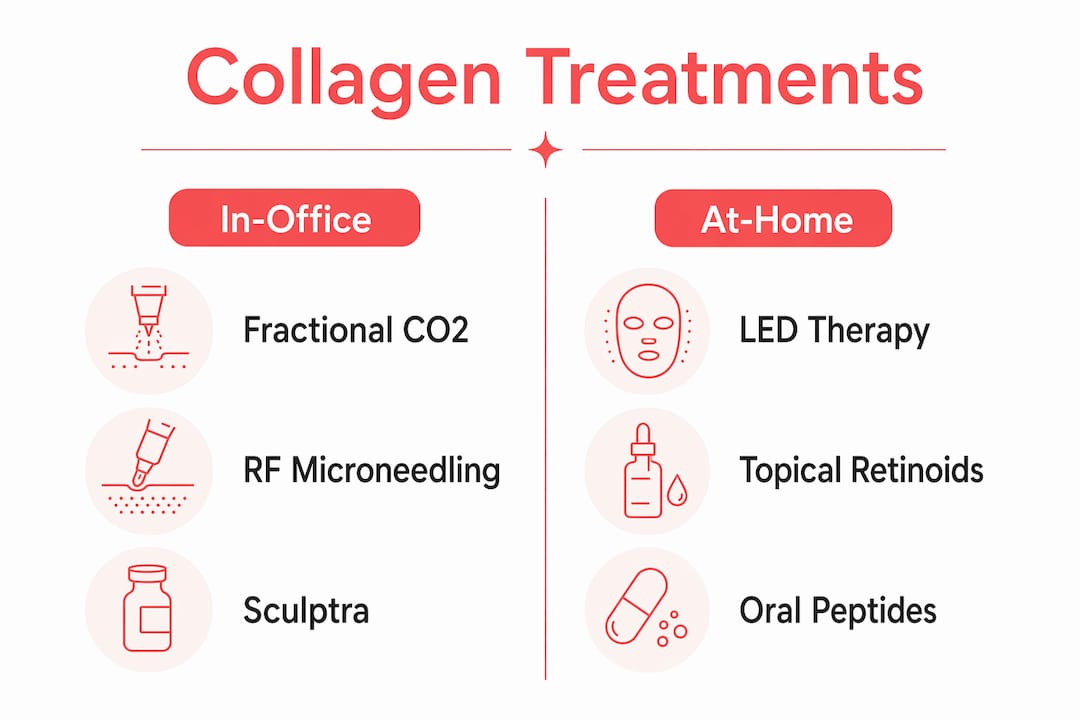
Fractional lasers work by delivering controlled columns of thermal energy into the skin, triggering a wound-healing response that drives new collagen synthesis and dermal remodeling. The key distinction is between ablative and non-ablative resurfacing.
Ablative (fractional CO2, e.g., UltraPulse) removes the outer skin layer within each treated column. The result is more dramatic remodeling, but recovery takes 7–14 days. Most people need 1–3 sessions, with visible improvement building over 3–6 months as new collagen matures. Results can last 3–5 years with good sun protection.
Non-ablative (Fraxel-class) heats the dermis without removing the surface, so downtime is shorter (2–5 days of redness and mild swelling). You typically need 3–5 sessions spaced 4–6 weeks apart. Results are meaningful but less dramatic than ablative resurfacing, and longevity runs 1–3 years.
Who benefits most from lasers:
- Significant photoaging, deep wrinkles, or acne scarring
- Skin types that tolerate ablative procedures (Fitzpatrick I–III for CO2; non-ablative is safer for darker skin tones with proper settings)
- Patients willing to commit to downtime and a multi-session protocol
Contraindications and safety notes:
- Active skin infection or open lesions
- Isotretinoin use within the past 6–12 months (impairs healing)
- Pregnancy
- History of keloid scarring
- Darker skin tones require an experienced, board-certified dermatologist to minimize hyperpigmentation risk
A board-certified dermatologist should evaluate your skin type, Fitzpatrick phototype, and medical history before any laser procedure. Risks include post-inflammatory hyperpigmentation, prolonged erythema, and, rarely, infection or scarring.
| Feature | Fractional CO2 (Ablative) | Fractional Non-Ablative |
|---|---|---|
| Tissue removal | Yes | No |
| Downtime | 7–14 days | 2–5 days |
| Sessions needed | 1–3 | 3–5 |
| Collagen stimulation | Very high | High |
| Best skin types | Fitzpatrick I–III | I–IV (with care) |
| Result longevity | 3–5 years | 1–3 years |
How does RF microneedling work, and who is it best for?
RF microneedling combines two proven collagen signals in one treatment: the micro-injury channels from fine needles and the radiofrequency heat delivered directly into the dermis. Together, they activate fibroblasts more aggressively than either approach alone, driving collagen and elastin remodeling at a controlled depth.
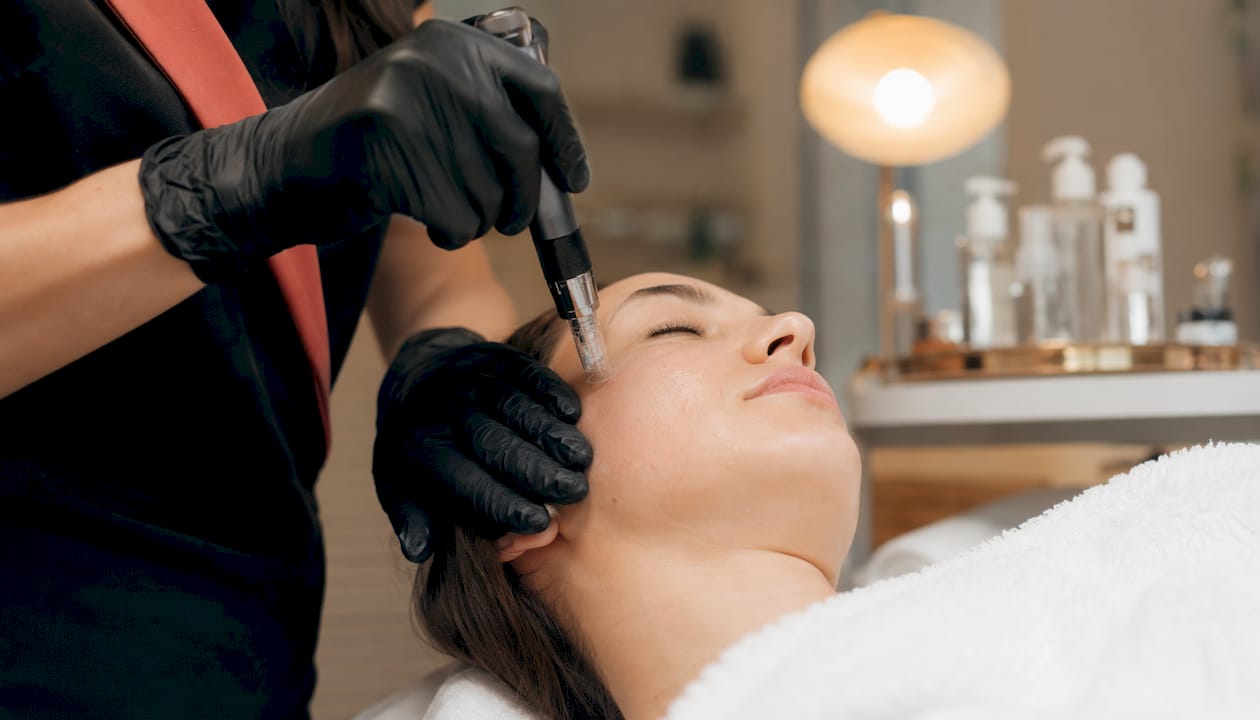
Devices like Potenza and Morpheus8 are FDA-cleared and widely used in U.S. dermatology practices. A standard course is 3–4 sessions spaced 4–6 weeks apart, with visible tightening and texture improvement typically appearing at 3–6 months as new collagen matures. Results generally hold for 1–2 years, with annual maintenance sessions recommended.
RF microneedling is particularly effective for:
- Mild-to-moderate skin laxity on the face, neck, and body
- Enlarged pores and uneven texture
- Acne scarring (especially atrophic scars)
- Early jowling and jawline definition
Pre- and post-treatment guidance:
- Avoid retinoids and exfoliating acids for 5–7 days before treatment
- Expect 2–4 days of redness, swelling, and pinpoint bleeding; avoid sun exposure during this window
- Resume gentle moisturizer and SPF 30+ immediately after; hold active ingredients (retinoids, vitamin C) for 5–7 days post-treatment
- Adding PRP to an RF microneedling session is a common combination strategy — the growth factors in PRP may accelerate tissue repair and enhance collagen output, though individual results vary
RF microneedling is generally safe for Fitzpatrick skin types I–VI when performed by a trained provider, making it one of the more versatile options for diverse skin tones compared to ablative lasers.
Does microneedling with PRP actually work?
Microneedling alone creates controlled micro-injuries that trigger the skin’s wound-healing cascade, stimulating fibroblasts to produce new collagen and elastin. Adding platelet-rich plasma (PRP) introduces concentrated growth factors drawn from your own blood, which may amplify the repair signal and accelerate collagen production.
A standard microneedling with PRP series uses 3–6 sessions spaced 4–6 weeks apart, with measurable texture and collagen improvements developing over several months. Most people see initial changes at 6–8 weeks, with peak results around 3–4 months after completing the series.
Clinical evidence note: Systematic reviews confirm that microneedling produces statistically significant improvements in skin texture, fine lines, and collagen density. PRP as an adjunct shows additive benefit in several controlled trials, particularly for acne scarring and skin laxity. Results vary by individual skin condition, needle depth, and provider technique.
Safety and contraindications:
- Not appropriate for people with active acne breakouts, open wounds, or skin infections in the treatment area
- Blood disorders, anticoagulant therapy, or platelet dysfunction are contraindications for PRP specifically
- Strict sterile technique is required to prevent infection — always verify your provider uses single-use, sterile needle cartridges
- Downtime is typically 1–3 days of redness and mild swelling; avoid makeup for 24 hours post-treatment
Microneedling without PRP is a lower-cost entry point with solid evidence for texture and fine-line improvement. PRP adds cost ($200–$600 more per session) and is most justified for acne scarring or when faster recovery is a priority.
In-clinic HIFU vs. at-home HIFU devices: what’s the real difference?
HIFU (High-Intensity Focused Ultrasound) works by focusing ultrasound energy at precise depths below the skin surface, creating thermal coagulation points that trigger collagen synthesis and tissue contraction. In-clinic systems like Ultherapy target the SMAS layer (the same tissue addressed in surgical facelifts) at depths of 3.0–4.5mm, producing measurable lifting of the brow, jawline, and neck.
Clinical HIFU devices deliver significantly higher energy levels and reach deeper tissue layers than consumer devices, which translates to stronger tightening results from a single session. In-clinic Ultherapy typically requires 1–2 sessions per year, with results appearing gradually over 2–6 months as collagen remodels. Cost runs $1,500–$4,500 per session.
At-home HIFU devices, including the Sonedaskincare VividLift™, operate at lower energy levels appropriate for safe consumer use. They are designed for consistent maintenance, early-stage laxity support, and adjunct use between clinic appointments rather than as a replacement for clinical-depth remodeling. Used regularly per protocol, they deliver gradual collagen support and skin-lifting benefits that compound over time.
Who should avoid HIFU (both in-clinic and at-home):
- Active skin infections or open lesions in the treatment area
- Metal implants or pacemakers near the treatment zone
- Pregnancy
- Severe cystic acne or active inflammatory skin conditions
- Recent dermal fillers in the target area (consult your provider on timing)
Common side effects from in-clinic HIFU include temporary numbness, tenderness, and mild swelling, which typically resolve within days to weeks. At-home devices at lower energy settings carry a lower side-effect profile, though consistent protocol adherence matters for both safety and results.
Sculptra vs. hyaluronic acid fillers: which actually builds collagen?
Sculptra (poly-L-lactic acid, or PLLA) is a biostimulatory injectable, not a filler. Rather than adding immediate volume, it works by triggering your skin’s own fibroblasts to produce new collagen over several months. The result is a gradual, natural-looking restoration of facial volume and firmness that builds progressively.
Hyaluronic acid (HA) fillers like Juvederm and Restylane add immediate volume by attracting water molecules into the tissue. They are excellent for precise contouring, lip augmentation, and quick correction of hollows, but they do not stimulate new collagen. HA fillers typically last 6–18 months before reabsorbing.
Sculptra treatment course and longevity:
- Typically 2–4 sessions spaced 4–6 weeks apart
- Visible collagen restoration builds over 3–6 months
- Results last up to approximately 2 years, making it one of the longer-lasting injectable options
- Best for diffuse volume loss, deep nasolabial folds, and gradual facial rejuvenation rather than spot correction
Safety considerations:
- Sculptra requires an experienced, board-certified injector. Improper dilution or injection technique increases the risk of subcutaneous nodules, which can be difficult to treat.
- Overcorrection is possible when too much product is placed in a single session.
- Avoid if you have a history of keloid formation or autoimmune conditions affecting connective tissue.
- Prefer biostimulatory injectables when your primary goal is gradual, natural-looking collagen restoration. Choose HA fillers when you need immediate, precise volume correction or want a reversible option.
What topicals and supplements actually support collagen?
Prescription retinoids (tretinoin)
Tretinoin is the topical clinical gold standard for collagen stimulation. It works by binding to retinoid receptors in fibroblasts, directly signaling new collagen synthesis while also inhibiting the matrix metalloproteinases (MMPs) that break collagen down. Visible improvement in fine lines and skin texture typically appears after 3–6 months of consistent use. Start with a low concentration (0.025%) every other night to minimize irritation, and always follow with SPF 30+ in the morning.
Vitamin C and peptides
Vitamin C (L-ascorbic acid) is a required cofactor in collagen synthesis. Topically, it also neutralizes free radicals that degrade existing collagen. Look for stabilized formulations at 10–20% concentration. Peptides such as palmitoyl tripeptide-1 and palmitoyl tetrapeptide-7 signal fibroblasts to produce collagen and are well-tolerated as part of a daily serum routine. For a deeper look at nutrient-rich topical support, pairing antioxidants with hydrating actives strengthens the skin barrier alongside collagen support.
Broad-spectrum sunscreen (SPF 30+)
UV exposure activates MMPs that degrade collagen faster than any other environmental factor. Daily SPF 30+ is not optional if you are investing in any collagen-stimulating treatment. It preserves the new collagen you are working to build.
Oral collagen peptides
Randomized trials and reviews show that oral collagen peptide supplementation improves skin elasticity and hydration with consistent intake, with measurable changes typically observed after approximately 90 days. Hydrolyzed collagen peptides (types I and III) are the best-studied forms.
Realistic expectation: Oral collagen peptides support hydration and elasticity over time. They are not a rapid anti-wrinkle fix. Ongoing use sustains the measurable improvements seen in clinical trials — stopping supplementation allows benefits to fade.
Pair oral collagen with vitamin C intake, since ascorbic acid is required for collagen synthesis at the cellular level. For natural hydration strategies that complement your supplement routine, humectant-rich topicals help lock in the hydration benefits oral collagen supports.
How does LED / red light therapy fit into a collagen plan?
Red and near-infrared light (wavelengths roughly 630–850nm) penetrate the skin and are absorbed by mitochondria in fibroblasts, stimulating cellular energy production and collagen signaling. The mechanism is photobiomodulation: light energy triggers a repair response without thermal damage, making it one of the lowest-risk options available.
LED therapy works best as an adjunct or maintenance tool rather than a standalone collagen treatment. Paired with microneedling or laser procedures, it can reduce inflammation and support faster recovery while adding a collagen-signaling boost. Standalone, it produces gradual improvements in skin tone, texture, and firmness with consistent use over months.
Practical guidance:
- At-home LED panels and masks designed for facial use typically require 2–3 sessions per week, 10–20 minutes per session, for consistent results
- Improvements are gradual; expect 8–12 weeks of regular use before visible changes in texture or firmness
- LED is safe for all skin types and tones, with no meaningful downtime
- Professional in-office LED sessions use higher-intensity devices and may produce faster initial results, but at-home devices used consistently can deliver meaningful cumulative benefit
Microcurrent, LED, and peptide mask treatments at spas provide immediate lift and hydration, but cumulative collagen benefits require repeated maintenance sessions. Think of LED as a daily supplement for your skin, not a one-time procedure.
At-home energy devices vs. in-office procedures: what can you realistically expect?
At-home devices and in-office procedures are not interchangeable. They serve different roles in a collagen plan, and understanding that distinction saves both money and disappointment.
In-office procedures deliver energy at clinical depths and intensities that consumer devices cannot legally or safely replicate. A single fractional CO2 session or Ultherapy treatment triggers a level of dermal remodeling that takes months to develop and years to fade. At-home devices operate at lower energy levels, which means results are more gradual and require consistent, long-term use to accumulate.
Where at-home devices genuinely deliver:
- Maintenance between in-office series (extending results and reducing how often you need clinic treatments)
- Early-stage laxity and prevention in your 20s and 30s before significant collagen loss has occurred
- Daily or weekly collagen signaling that compounds over months with consistent protocol adherence
- Adjunct use alongside topical actives (sonophoresis, for example, enhances serum absorption into the skin)
Where clinic care is the right call:
- Significant laxity, deep wrinkles, or acne scarring that requires deep dermal remodeling
- Volume loss that benefits from biostimulatory injectables
- Any condition where a board-certified dermatologist’s assessment is needed before treatment
Pro Tip: When evaluating any at-home device, ask for the raw energy output specifications (in millijoules or watts) and look for peer-reviewed clinical data on that device class, not just before-and-after photos. Devices with published clinical data and transparent specs — like those in the VividLift Protocol Guide — give you a verifiable basis for expectations.
The most effective approach combines a clinical series (laser, RF microneedling, or HIFU) with consistent at-home maintenance using a quality device and a prescription retinoid. That combination outperforms either approach used in isolation.
How do you choose the right collagen-stimulating treatment?
Start with your primary concern, your downtime tolerance, and your budget. The right treatment is the one you can commit to completing, not the most aggressive option available.
Decision checklist:
- Identify your primary concern: Texture and scarring point toward fractional lasers or RF microneedling. Laxity and volume loss favor HIFU, Sculptra, or RF microneedling. Fine lines and prevention are well-served by retinoids, oral collagen, and at-home devices. Maintenance and early intervention suit LED and at-home HIFU.
- Assess your downtime tolerance: If you cannot take a week off, ablative CO2 laser is not the right starting point. RF microneedling or non-ablative fractional laser with 2–4 days of recovery may be a better fit.
- Set a realistic budget: In-office procedures require a series, not a single session. Budget for the full course, not just one appointment.
- Verify provider credentials: For any injectable, laser, or RF procedure, confirm your provider is a board-certified dermatologist or plastic surgeon, or a licensed provider working under physician supervision.
Questions to ask your provider:
- What device or system do you use, and is it FDA-cleared for this indication?
- How many sessions do you recommend for my specific concern, and what is the realistic timeline to results?
- What are the risks for my skin type and Fitzpatrick phototype?
- Can I see before-and-after documentation from patients with similar concerns?
- What aftercare protocol do you recommend, and when can I resume my retinoid?
Red flags to watch for:
- Guarantees of specific results or dramatic improvement after a single session
- Pressure to purchase large packages upfront before seeing initial results
- No discussion of contraindications or skin-type assessment before treatment
- Lack of published device data or FDA clearance documentation
For at-home devices, the same principle applies: look for clinical data, transparent specs, and a clear protocol. The Sonedaskincare how-to guide for collagen stimulation covers both home and professional methods with evidence-backed context.
What should you expect: timelines, sessions, and aftercare?
| Treatment | Sessions Required | When to Expect Visible Change | Result Longevity |
|---|---|---|---|
| Fractional CO2 laser | 1–3 | 3–6 months | 3–5 years |
| Fractional non-ablative | 3–5 | 3–6 months | 1–3 years |
| RF microneedling | 3–4 | 3–6 months | 1–2 years |
| Microneedling ± PRP | 3–6 | Initial improvements at 6–8 weeks; peak results at 3–4 months after completing the series | 6–18 months |
| In-clinic HIFU | 1–2/year | 2–6 months | 1–2 years |
| Sculptra | 2–4 | 3–6 months | Up to ~2 years |
| LED / at-home HIFU | Ongoing | 8–12 weeks | Ongoing with use |
Aftercare to protect and maximize new collagen:
- Apply broad-spectrum SPF 30+ every morning without exception, starting the day after any procedure
- Hold retinoids and exfoliating acids (AHAs, BHAs) for at least 5–7 days post-procedure, or as directed by your provider
- Use a gentle, fragrance-free moisturizer during the recovery window to support barrier repair
- Avoid heat exposure (saunas, hot yoga, steam rooms) for 48–72 hours after any energy-based treatment
- Resume vitamin C serum after 5–7 days; it supports new collagen synthesis during the remodeling phase
- Contact your provider if you experience prolonged redness beyond the expected window, signs of infection (increasing warmth, pus, fever), or unexpected pigment changes
On combining treatments safely: Staged approaches work better than stacking multiple aggressive treatments simultaneously. A common protocol is a clinical series (e.g., 3 sessions of RF microneedling) followed by at-home maintenance with LED and a HIFU device, with a retinoid as the daily foundation. Space aggressive procedures at least 4–6 weeks apart, and always confirm combination plans with your provider.
What do collagen-boosting treatments cost in the U.S.?
Costs vary significantly by procedure type, provider credentials, device brand, and geographic region. Major U.S. metro areas (New York, Los Angeles, Miami) typically run 30–50% higher than national averages.
Typical U.S. cost ranges by category:
- Fractional CO2 laser: $1,000–$5,000 per session; most people need 1–3 sessions
- Fractional non-ablative laser: $800–$2,000 per session; 3–5 sessions typical
- RF microneedling (Potenza, Morpheus8): $800–$4,000 per session; 3–4 sessions typical
- Microneedling alone: $200–$700 per session; PRP adds $200–$600 per session
- In-clinic HIFU (Ultherapy): $1,500–$4,500 per full-face session
- Sculptra: $800–$2,000 per vial; 2–4 vials typical per course
- Prescription tretinoin: $20–$100/month (generic); higher with brand formulations
- Oral collagen peptides: $30–$80/month for quality hydrolyzed formulations
- At-home HIFU + LED devices: One-time investment, typically $200–$800 for quality consumer devices
What drives the price difference:
- Provider credentials: Board-certified dermatologists and plastic surgeons charge more than medical spas or non-physician providers, and the difference in safety and outcomes often justifies it.
- Device brand: FDA-cleared, name-brand systems (Morpheus8, Ultherapy, UltraPulse) cost more to operate than off-brand equivalents.
- Single session vs. package: Many practices offer package pricing for a series, which reduces per-session cost by 10–20%.
- Anesthesia: Ablative CO2 and some RF microneedling sessions require topical or local anesthesia, adding to the total.
Collagen-stimulating procedures are almost universally considered cosmetic and are not covered by health insurance. Budget for the full recommended series when comparing options, not just a single session price.
Key Takeaways
Collagen loss of approximately 1% per year after age 20 makes both active stimulation and daily preservation essential parts of any effective anti-aging skin plan.
| Point | Details |
|---|---|
| Highest-efficacy options | Fractional CO2 laser, RF microneedling, and Sculptra deliver the strongest collagen stimulation for significant laxity, texture, and volume loss. |
| Daily preservation is non-negotiable | Prescription tretinoin and SPF 30+ prevent collagen breakdown and support new synthesis every day, regardless of which procedures you choose. |
| Oral collagen takes time | Clinical studies show elasticity and hydration improvements after approximately 90 days of consistent oral collagen peptide intake. |
| Combine clinic and home for best results | A clinical series followed by consistent at-home maintenance with LED and HIFU devices outperforms either approach used alone. |
| Sonedaskincare VividLift™ | Sonedaskincare’s at-home HIFU + sonophoresis device is a clinically designed option for maintenance, early laxity, and adjunct use between in-office procedures. |
The honest truth about collagen treatments most guides skip
Most collagen treatment guides are organized around what sounds impressive rather than what is practical. The result is that readers come away thinking they need the most aggressive procedure available, when the evidence actually points to a different conclusion: consistency beats intensity for most people.
A single fractional CO2 session is genuinely powerful, but it requires real downtime, a real budget, and a real commitment to aftercare. Skip the SPF for a few months afterward and you will undo a meaningful portion of the result. Meanwhile, someone using tretinoin every night, wearing SPF 30+ daily, and running a quality at-home HIFU device three times a week will accumulate collagen support that compounds quietly over years.
The staged combination approach is what experienced clinicians actually recommend: a clinical series to create a foundation of deep remodeling, followed by consistent at-home maintenance to extend and preserve it. That is not a compromise. It is the most evidence-aligned strategy available, and it is far more sustainable than chasing single-session miracles.
What I would tell anyone starting this process: get one board-certified dermatologist consultation before spending money on any procedure. A qualified assessment of your Fitzpatrick type, skin condition, and realistic goals will save you from both under-treating and over-treating. Then build a plan that includes a daily retinoid, daily SPF, and a maintenance device you will actually use consistently. The treatments that work are the ones you commit to.
The Sonedaskincare VividLift™: professional-grade at-home HIFU for maintenance and early intervention
If in-clinic procedures are your foundation, at-home maintenance is what makes those results last. That is exactly where the Sonedaskincare VividLift™ 2-in-1 HIFU + Sonophoresis device fits.

The VividLift™ combines focused ultrasound for collagen stimulation and skin lifting with advanced sonophoresis technology that drives active ingredients deeper into the skin for measurably better absorption. It is designed for people who want professional-grade collagen support at home: between clinic appointments, as an early-intervention tool in their 30s, or as a standalone maintenance protocol. Clinical results show a 175% increase in skin hydration with consistent use. The device is tested by the Korea Institute of Dermatological Sciences and backed by a 100% money-back guarantee.
This is not a spa toy. It is a professional-technology device built for real, consistent results. Ready to add it to your collagen plan? Explore the VividLift™ and see the full protocol, specs, and offer details. If you want to review the full device technology and treatment rationale before committing, that is there too.
Authoritative sources and further reading
- Collagen Supplements for Aging and Wrinkles — PMC/NIH: Systematic review covering oral collagen peptide evidence, microneedling with PRP session protocols, and collagen improvement timelines. The most directly relevant clinical source in this article.
- PMC Article PMC8824545 — NIH: Peer-reviewed research on skin aging mechanisms and collagen remodeling; useful for understanding the physiological basis of treatment choices.
- NIH National Library of Medicine — PubMed: Primary literature search portal for dermatology clinical trials; use to verify device-specific and procedure-specific evidence.
- NIH Office of Dietary Supplements — Vitamin C: Authoritative fact sheet on vitamin C’s role in collagen synthesis; relevant for topical and dietary supplement guidance.
- PMC Article PMC10296835 — NIH: Research on skin treatment outcomes and collagen stimulation; supports evidence-based claims in the laser and RF microneedling sections.
- Sculptra USA: Official product and regulatory information for Sculptra (poly-L-lactic acid); source for collagen loss rate data and biostimulatory injectable guidance.
- Vogue: How to Increase Collagen and Boost Elasticity: Accessible expert-reviewed overview of topical and procedural collagen strategies; useful for retinoid and SPF guidance context.
- Sonedaskincare — VividLift™ HIFU + Sono Device: Primary product page for Sonedaskincare’s at-home HIFU + sonophoresis device; full specs, protocol, and clinical data.
- Sonedaskincare — All About HIFU for Skincare: Educational explainer on HIFU technology, clinical rationale, and at-home device use cases.
- Sonedaskincare — Best Face Lifting Devices: Expert-reviewed guide to at-home lifting devices; useful for comparing consumer HIFU and LED options.