HIFU for Jawline: Non-Surgical Tightening Guide

HIFU (High-Intensity Focused Ultrasound) is one of the most clinically supported non-surgical options for tightening and defining the jawline. If you have mild to moderate skin laxity, meaning early jowling, a softening jaw edge, or a developing double chin, HIFU can deliver a measurable lift by stimulating your body’s own collagen. Results are gradual, not instant, and they are real.
The short verdict:
- HIFU works well for mild to moderate laxity: early jowls, a softened jawline, and submental fullness (double chin).
- It is less effective for severe sagging, significant volume loss, or excess fat deposits. Those cases may need a surgical consult or a combination approach.
- Your clearest next step: book a face-to-face assessment with a qualified clinician, or if you prefer at-home care, evaluate the Soneda VividLift as a clinically designed at-home option.
Table of Contents
- How HIFU works to tighten your jawline
- Who gets the best results and who should avoid it
- What results look like and when they appear
- What happens during a session and how to recover
- Common side effects, rare complications, and safety tips
- Typical price ranges and how often you will need treatment
- How to decide between clinic treatment and an at-home device
- Clinical evidence and Soneda VividLift performance data
- Key Takeaways
- Why at-home HIFU deserves more credit than it gets
- The Soneda VividLift: a clinical-grade at-home option
- Authoritative sources and further reading
How HIFU works to tighten your jawline
HIFU delivers focused ultrasound energy to precise depths beneath the skin surface without cutting or injecting anything. The energy creates controlled thermal micro-injuries at targeted tissue layers. Your body responds by triggering a collagen and elastin remodeling process, and that is what produces the lift.
What makes HIFU particularly effective for the jawline is its ability to reach the SMAS layer (superficial musculoaponeurotic system). The SMAS is the same fibromuscular layer that surgeons tighten during a facelift. When HIFU energy reaches this depth, the resulting tissue contraction and new collagen formation pull the jawline upward and inward, creating a crisper edge over the following weeks. Targeting the SMAS layer is what separates effective jawline HIFU from superficial skin-only treatments.
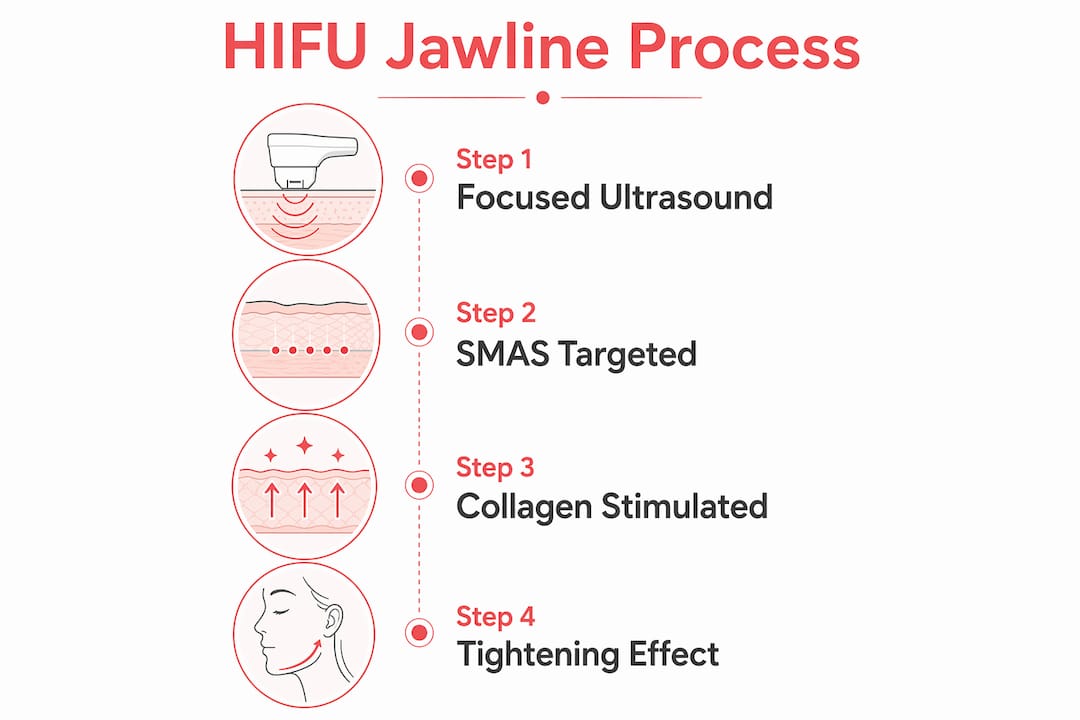
For the double chin area, HIFU also works at the subcutaneous fat layer, where it can reduce submental fullness while simultaneously tightening the overlying skin. That dual action, fat reduction plus skin tightening, is why double chin tightening with HIFU tends to produce more satisfying results than fat-reduction treatments alone.
What a typical session involves:
- A practitioner applies ultrasound gel and maps the treatment zones along the jaw, jowl, and neck.
- The device delivers multiple passes at different depths (typically 1.5mm, 3.0mm, and 4.5mm for SMAS).
- Sessions run a variable duration depending on the treatment area.
- You will feel warmth, tingling, or brief sharp sensations as energy is delivered. Modern devices adjust settings to keep discomfort manageable.
- No anesthesia is required, and you can return to normal activities the same day.
Pro Tip: Ask your provider specifically which depths they are treating. A jawline protocol that skips the 4.5mm SMAS depth is unlikely to produce the definition you are looking for. Depth selection is as important as the device brand.
Clinical evaluations show significant improvement at 3 and 6 months across seven facial areas, with the jawline among the highest-rated zones for both physician and patient satisfaction.
Who gets the best results and who should avoid it
HIFU is not a one-size-fits-all treatment. Candidacy depends on your current skin condition, your goals, and your overall health.
You are likely a good candidate if:
- You are in your mid-30s to mid-60s with mild to moderate skin laxity.
- You have early jowling, a softening jaw edge, or mild submental fullness.
- Your skin has reasonable elasticity (it can respond to collagen stimulation).
- You want gradual, natural-looking results rather than immediate volume.
- You are willing to wait several weeks for peak results.
HIFU will likely underdeliver if:
- You have severe skin sagging or significant excess skin that needs surgical removal.
- You have major fat deposits under the chin. HIFU can reduce modest submental fullness, but it is not a substitute for liposuction or surgical fat removal when deposits are large.
- Your skin is very thin or you have lost significant facial volume. In those cases, a collagen-stimulating treatment alone may not restore the structure you are looking for.
Contraindications to discuss with your provider:
- Pregnancy or breastfeeding
- Active skin infections, open wounds, or cystic acne in the treatment area
- Implanted electronic devices (pacemakers, cochlear implants)
- Metal implants or fillers in the treatment zone
- History of keloid scarring
- Active autoimmune conditions affecting the skin
For borderline candidates, combining HIFU with a volume-restoring treatment (such as dermal filler) is a well-established approach. Practitioners recommend HIFU for collagen-driven lifting and fillers for structural volume, used together when both laxity and volume loss are present.
What results look like and when they appear
Patience is part of the process. HIFU does not produce the same-day result that filler does. The mechanism is biological, and biology takes time.
Typical timeline:
- Immediately after treatment: Some people notice a subtle tightening or firmness. This is partly tissue response and partly transient swelling. Do not judge results here.
- 4–6 weeks: Initial collagen remodeling becomes visible. The jaw edge may look slightly crisper, and submental fullness can begin to reduce.
- 8–12 weeks: This is when most people see the clearest lift and definition. Collagen production peaks in this window.
- Up to 12–18 months: Results can last 12–18 months depending on your age, skin quality, and lifestyle. Younger skin with good elasticity tends to hold results longer.
What you can realistically expect depends on your starting point. Mild laxity responds with a noticeably sharper jaw edge and reduced jowling. Moderate laxity typically shows meaningful improvement, though not a surgical-level result. Borderline candidates may see modest tightening that still makes a visible difference in photos and in the mirror.
Lifestyle factors matter too. Sun protection, consistent hydration, and avoiding rapid weight fluctuation all help preserve your results. Collagen-supporting skincare routines can extend the maintenance window.

What happens during a session and how to recover
Before your appointment
- Complete a full consultation with your provider, including a medical history review and contraindication screening.
- Arrive with clean skin, no makeup, and no active skincare products on the treatment area.
- Your provider will apply ultrasound gel and mark the treatment zones.
During the session
- The device is placed against the skin and moved in passes along the jaw, jowl, and neck.
- You will feel warmth and intermittent sharp or tingling sensations as the energy pulses. This is normal and expected.
- Energy settings are adjusted based on your comfort and the tissue response. Modern HIFU comfort protocols prioritize maintaining efficacy while reducing pain.
- A full face and neck session typically takes 60–90 minutes. A jawline-only session can be completed in 30–45 minutes.
Immediate aftercare
- Redness and mild swelling are common and usually resolve within a few hours to a couple of days.
- Avoid heat (saunas, hot showers, intense exercise) for 24–48 hours after treatment.
- Skip active skincare (retinoids, acids) for 48 hours post-treatment.
- Apply a gentle moisturizer and SPF 30 or higher the following morning.
- Resume normal activities the same day or the next morning. There is no required downtime.
Contact your provider if you experience prolonged numbness, blistering, or pain that worsens after 48 hours.
Common side effects, rare complications, and safety tips
Most people tolerate HIFU well. The side effect profile is mild compared with surgical alternatives.
Common and transient (resolve within days to two weeks):
- Redness and mild swelling at the treatment site
- Tingling or warmth during and immediately after treatment
- Temporary numbness or tenderness along the jaw
- Light bruising, particularly in the submental area
Clinical evidence confirms that the majority of adverse effects from HIFU facial treatments are mild and transient, with most resolving within a few days to two weeks. Serious complications are rare when treatment is performed by a trained practitioner using appropriate device settings and proper patient screening.
Less common but worth knowing:
- Nerve irritation producing temporary tingling or altered sensation along the jaw or ear (usually resolves within weeks)
- Superficial burns if energy settings are too high or gel coverage is inadequate
- Paradoxical fat changes in rare cases with repeated high-energy treatments
Practical safety tips:
- Choose a clinic using a medical-grade device with documented depth settings.
- Confirm your provider has specific training in HIFU facial protocols, not just general aesthetics.
- Insist on a full contraindication screening before treatment begins.
- If a clinic cannot tell you the device model, the number of shots delivered, or the depths used, that is a red flag.
Seek medical attention if you experience worsening pain after 48 hours, visible skin damage, or any neurological symptoms that do not resolve within a few days.
Typical price ranges and how often you will need treatment
Clinic HIFU pricing in the U.S. varies significantly based on the device brand, the provider’s credentials, the geographic market, and the number of treatment lines delivered.
Typical U.S. price ranges:
- Jawline and lower face only: roughly $500–$1,500 per session
- Full face and neck: typically $1,500–$3,500 per session
- Double chin targeted treatment: often priced separately at $500–$1,000
These are general market ranges. High-demand urban markets (New York, Los Angeles, Miami) tend to sit at the upper end. Multi-session packages usually reduce the per-session cost by 15–25%.
Maintenance schedule:
- Most people need one session per year to maintain results once the initial treatment takes effect.
- Those with faster collagen turnover or more advanced laxity may benefit from a follow-up at 9–12 months.
- Combining HIFU with a collagen-support skincare routine (such as the anti-aging collagen sequence from Sonedaskincare) can extend the interval between clinic visits.
Clinic vs. at-home cost comparison:
- A single clinic session costs more upfront than most at-home devices.
- An at-home device is a one-time investment that supports ongoing maintenance between clinic visits or as a standalone option for mild laxity.
- For budget-conscious users with mild concerns, an at-home HIFU device can deliver meaningful results at a fraction of the annual clinic cost.
How to decide between clinic treatment and an at-home device
The right choice depends on the severity of your laxity, your timeline expectations, your budget, and how much you value convenience.
Decision criteria:
- Severity of laxity: Moderate to significant jowling or sagging responds better to clinic-grade HIFU, which delivers higher energy at deeper tissue depths. Mild laxity and maintenance are well-suited to at-home devices.
- Speed of results: Clinic treatments typically produce faster, more pronounced results. At-home devices work more gradually.
- Comfort tolerance: Clinic HIFU is more intense. At-home devices operate at lower energy levels, making them more comfortable for regular use.
- Budget: Clinic sessions are a significant recurring cost. An at-home device is a one-time investment.
- Convenience: At-home devices let you treat on your own schedule, which matters for consistent maintenance.
Questions to ask a clinic:
- What device do you use, and what depths does it treat?
- How many transducer lines will you deliver in my session?
- What is your practitioner’s specific training in HIFU facial protocols?
- Can I see before-and-after photos from patients with similar laxity to mine?
- What is your adverse event reporting process?
Checklist for evaluating an at-home HIFU device:
- Does the device have documented clinical data supporting its claims?
- Does it offer multiple depth settings relevant to facial tissue?
- Are safety features (auto-shutoff, skin contact sensors) included?
- Is there transparent information about energy levels and treatment protocols?
- Does the brand provide clear guidance on who should not use the device?
Red flags to avoid:
- A clinic that cannot name the device model or the depths used
- Promises of “surgical-level” results from a single session
- No medical assessment or contraindication screening before treatment
- At-home devices with no documented testing or clinical backing
Clinical evidence and Soneda VividLift performance data
The clinical case for HIFU jawline tightening is well-established. Peer-reviewed research consistently shows measurable improvement in facial laxity, with the jawline among the most responsive treatment areas.
A published clinical evaluation found significant improvement across seven facial areas at 3 months, maintained through 6 months, with the jawline, cheek, and perioral zones showing the highest physician and patient satisfaction scores. A separate systematic review supports HIFU’s safety and efficacy for facial skin tightening, with peak improvements typically appearing around the 3-month mark.
SMAS targeting is the key differentiator. Medical-grade HIFU devices that reach the 4.5mm depth can engage the SMAS layer directly. Lower-energy devices that treat only the dermis and superficial subcutaneous tissue produce more limited results for jawline definition. When evaluating any device, confirm it reaches the tissue depths that matter for your concern.
For the double chin specifically, HIFU works by disrupting submental fat cells and simultaneously stimulating collagen to prevent loose skin as the fat reduces. That combined mechanism is why non-surgical jawline tightening with HIFU produces more complete results than fat-reduction injections alone for many people.
Evidence and device data comparison:
| Metric | Clinical HIFU Evidence | Soneda VividLift (Internal Data) |
|---|---|---|
| Collagen stimulation | Confirmed via histology in peer-reviewed studies | HIFU + sonophoresis combination; collagen-stimulating mechanism |
| Patient/user satisfaction | High satisfaction at 3–6 months in clinical trials | 100% user satisfaction in internal testing |
| Skin hydration improvement | Not the primary clinical endpoint | 175% increase in skin hydration (internal data) |
| Result duration | 12–18 months with maintenance | Ongoing with consistent use |
| Target tissue | Dermis, subcutaneous, SMAS (clinic-grade) | Dermis and subcutaneous; designed for at-home safety profile |
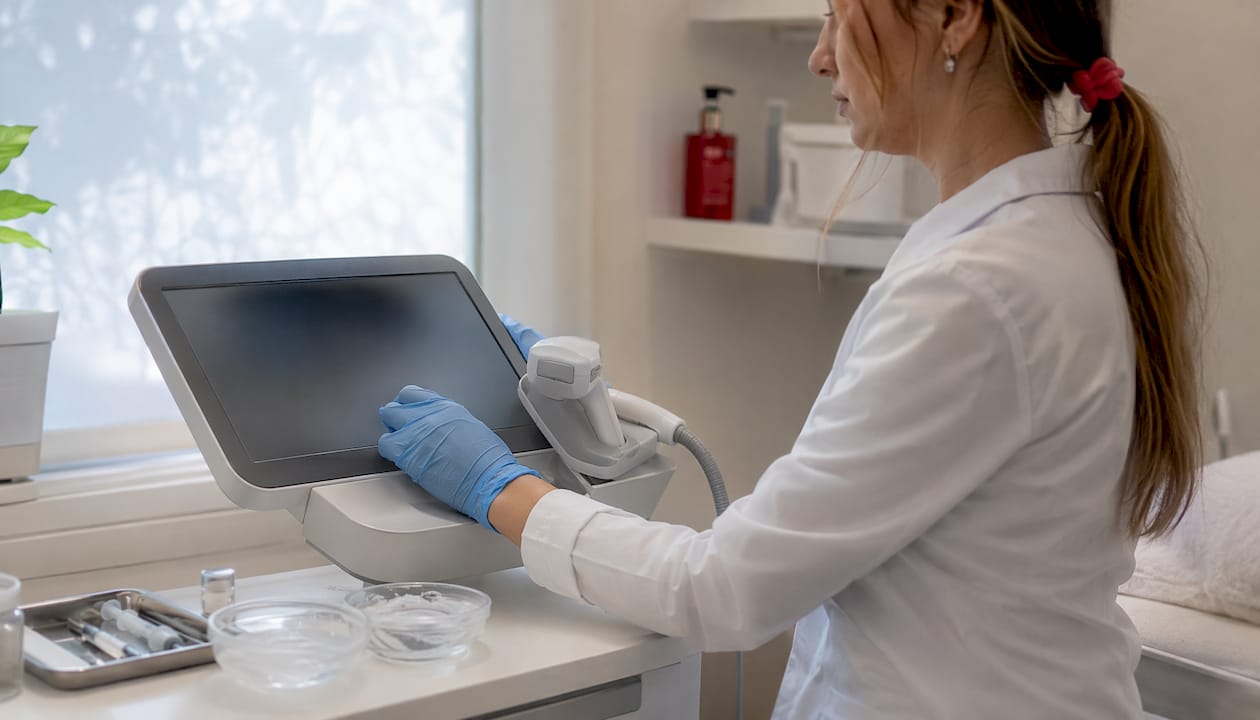
The Soneda VividLift combines HIFU with sonophoresis, a technology that uses ultrasound waves to drive active ingredients deeper into the skin. That dual-modality approach supports both structural lifting and improved hydration, which clinic-only HIFU does not address. Learn more about how the device works and the science behind each modality.
Key Takeaways
HIFU is a clinically supported, non-surgical option for jawline tightening that works best for mild to moderate laxity, with results peaking at 8–12 weeks and lasting up to 12–18 months.
| Point | Details |
|---|---|
| Best candidates | Adults with mild to moderate laxity see the clearest results; severe sagging may need a surgical consult. |
| Results timeline | Initial changes appear at 4–6 weeks; peak lift and definition arrive at 8–12 weeks post-treatment. |
| Result duration | Effects typically last 12–18 months; maintenance sessions or at-home devices extend the window. |
| Side effects | Most are mild and transient (redness, swelling, tingling) and resolve within days to two weeks. |
| Sonedaskincare VividLift | The VividLift 2-in-1 HIFU+Sono device is a clinically designed at-home option for mild laxity, maintenance, and cost-conscious users, with 100% user satisfaction in internal testing. |
Why at-home HIFU deserves more credit than it gets
The standard advice is simple: for real results, go to a clinic. That is not wrong, but it is incomplete. Clinic HIFU is the right call for moderate to significant laxity, and no at-home device replicates the energy depth of a medical-grade machine. That is a real limitation, and you should know it going in.
What gets overlooked is the maintenance gap. Most people who see good results from a clinic session do nothing for 12 months, then wonder why their results have faded. Collagen remodeling is an ongoing biological process. Consistent, lower-energy stimulation between clinic visits, or as a standalone approach for mild concerns, is a legitimate and practical strategy.
At-home HIFU devices are not a shortcut to surgical results. They are a tool for people who want to stay ahead of laxity rather than catch up to it. For someone in their late 30s or 40s noticing early softening along the jaw, a well-designed at-home device used consistently is more valuable than one clinic session every 18 months with nothing in between.
The honest limitation: if your laxity is already moderate to significant, start with a clinic assessment. Use an at-home device to maintain what the clinic achieves, not to replace it.
The Soneda VividLift: a clinical-grade at-home option
If you prefer to address mild jawline laxity or maintain clinic results on your own schedule, the Soneda VividLift is built for exactly that.
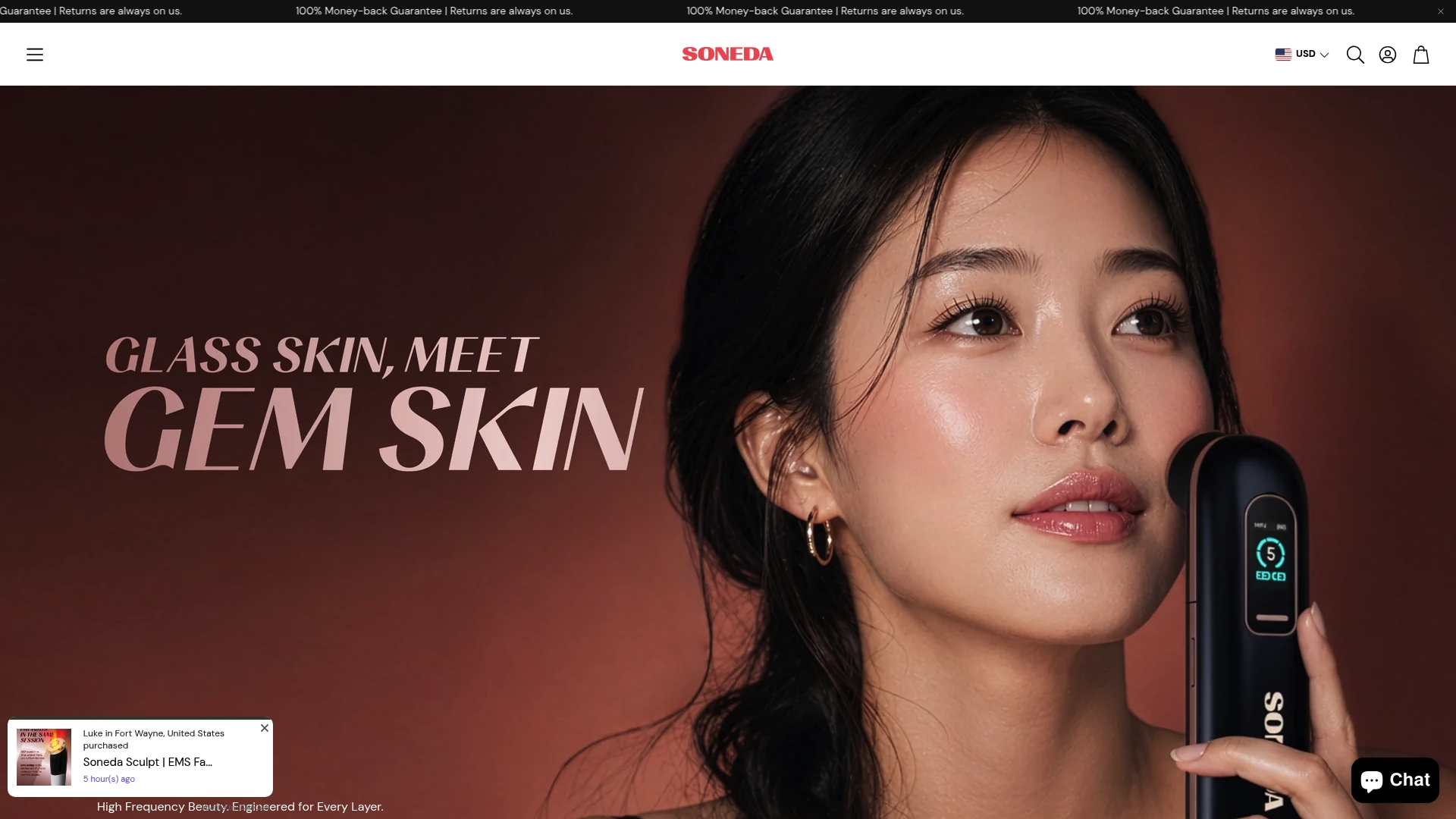
The VividLift is a 2-in-1 HIFU+Sono device that combines High-Intensity Focused Ultrasound with advanced sonophoresis. HIFU stimulates collagen production and firms the skin. Sonophoresis drives active ingredients deeper for a 175% improvement in skin hydration in internal testing. The result is a device that addresses both structure and hydration in a single session.
It is best suited for adults with mild to moderate laxity who want a consistent at-home routine, those maintaining results between clinic visits, and anyone who prefers professional-grade technology without the clinic price tag. The VividLift is tested by the Korea Institute of Dermatological Sciences and carries a 100% Money-back Guarantee.
If your laxity is significant or you have any of the contraindications listed above, start with a clinical consultation first. For everyone else, shop the VividLift or explore the bundle offer for the best value.
Authoritative sources and further reading
- HIFU for Seven Facial Areas, PMC: Peer-reviewed clinical evaluation showing significant jawline improvement at 3 and 6 months. Supports efficacy timelines and candidate selection.
- HIFU Jawline and Neck Results, Clinica Cosmetics: Practitioner guidance on SMAS targeting, realistic expectations, and candidacy rules.
- HIFU for Jawline Contouring vs. Fillers, Continental Hospitals: Clinical perspective on when HIFU alone is sufficient and when combination therapy is advised.
- HIFU Sensations and Side Effects, Springer: Clinical article on comfort protocols and transient adverse effects.
- What Is HIFU, Women’s Health: Consumer-facing overview of HIFU timelines and result duration (12–18 months).
- HIFU for Double Chin, Hampstead Aesthetics: Clinical summary of combined fat reduction and skin tightening for submental fullness.
- All About HIFU, Sonedaskincare: Soneda device performance metrics, including hydration improvement and user satisfaction data.
- Mayo Clinic: High-Intensity Focused Ultrasound: Authoritative overview of HIFU applications including facial and jawline use.