Lip Lines at Home: A Routine That Softens Them

You can soften the look of lip lines at home, but you can’t erase them for good. The best results come from a steady routine: daily sun protection, hydration, gentle exfoliation, a well-chosen antioxidant or retinoid, and firming care for the skin around the mouth. Our VividLift device is built for that last step: lifting, firming and hydrating the face, so the routine works on the structure of your skin as well as its surface.
TL;DR
- Lip lines come from collagen and elastin loss, repeated lip movement, sun damage and smoking. They can be reduced, not permanently removed.
- Start with daily SPF 30+ on the skin around your mouth, an SPF 30+ lip balm, and a hydrating lip serum or balm.
- Add vitamin C in the morning and a retinoid in the evening, introduced slowly because the area is thin and easily irritated.
- Support collagen and hydration with a clinical-grade at-home device such as VividLift, used as directed.
- See a dermatologist if lines change quickly, look uneven, or become scaly or uncomfortable.
Table of Contents
- What causes lines around the lips
- What realistic results look like
- Step 1: Sun protection, every day
- Step 2: Exfoliate gently, then hydrate
- Step 3: Add an antioxidant and a retinoid
- Step 4: Support collagen and hydration with a device
- Using devices safely
- Lifestyle habits that protect your lips
- What about facial exercises and massage?
- A sample 8-week plan
- When to see a dermatologist
- Our view on lip lines at home
- Bring clinical-grade care home
- FAQ
- Sources
What causes lines around the lips
Vertical lines above and below the mouth have several causes that stack up over the years. According to the Cleveland Clinic, they result from age-related loss of collagen and elastin, repetitive lip movements, smoking and sun damage. The same source notes that lip lines can’t be permanently removed, but treatments can reduce them or improve them temporarily.
That explains why the lip area wrinkles earlier than many other places. The skin there is thin. The muscle around the mouth is active all day: talking, eating, smiling, sipping. Dermatologists often describe the perioral area as hard to treat because it combines thin skin, constant movement and a tendency to react to strong actives such as retinoids, as North Biomedical points out.
So a good home plan has three jobs:
- Protect the skin you have, so lines don’t deepen faster.
- Hydrate the surface, because dry skin makes fine lines look sharper.
- Rebuild support, meaning collagen, firmness and elasticity, which is where lines are ultimately formed.
Most routines handle the first two. The third is where a device earns its place.
What realistic results look like
Set expectations before you start. Allure reports that lip lines can’t be permanently erased, but treatments can soften their appearance. Fine, shallow lines respond best to consistent care. Deeper lines, especially ones that remain when your face is relaxed, take longer and show change more gradually.
Timelines matter too. A dermatologist quoted by Medical News Today says that with a multi-step approach, results can take about 6 months to show, and discoloration may take about 3 months to improve. Treat any lip routine as a season-long commitment, and judge it with the same photo, in the same light, once a month.
Step 1: Sun protection, every day
This step does the most for the least effort. The Cleveland Clinic recommends daily SPF 30 sunscreen and lip balm. Good Housekeeping adds specifics: apply a broad-spectrum face sunscreen with SPF 30 or higher around the lips every day, plus an SPF 30+ lip balm when you’re outdoors, to avoid sunburned lips and premature signs of aging.
Where it goes wrong: people stop their sunscreen at the upper lip edge. Bring it right to the border, and reapply after meals and drinks, because the mouth area is wiped clean many times a day.

Step 2: Exfoliate gently, then hydrate
Smooth, hydrated lips make the lines around them look softer. Good Housekeeping cites a dermatologist who suggests exfoliating with a clean toothbrush, a damp washcloth, or a small amount of coconut or olive oil mixed with sugar. Follow with a thick layer of a hydrating lip balm or serum containing hyaluronic acid, peptides and ceramides, applied morning, evening and throughout the day as needed.

A second dermatologist, quoted by InStyle, recommends pairing ingredients that attract water, such as hyaluronic acid and glycerin, with ingredients that hold moisture in, such as ceramides, squalane and shea butter.
Where it goes wrong: scrubbing too hard or too often. Keep pressure light and stop if the skin looks red or feels tender.
Plant oils are another popular spot treatment. Healthline lists castor, coconut, grapeseed, olive and sunflower oils applied twice daily, and says diluted essential oils belong on the skin around the mouth, never directly on the lips.
Step 3: Add an antioxidant and a retinoid
The Cleveland Clinic recommends a daily antioxidant such as topical vitamin C. MedlinePlus lists tretinoin (Retin-A) among the treatments a dermatologist can discuss for wrinkles, which tells you retinoids sit at the stronger end of the home-care spectrum.
A simple, sensible split:
- Morning: gentle cleanser, vitamin C, moisturizer, broad-spectrum SPF 30+.
- Evening: gentle cleanser, a retinol product, then a rich moisturizer.
Introduce the retinol two nights a week and build up. The skin around the mouth is thin, so use a pea-sized amount for the whole face and keep it just outside the lip border at first. If you want a retinol option that is formulated for visible lines, our IOPE line-filling retinol trio is a good fit for the evening step.
If your skin barrier feels stressed from retinol, exfoliation or weather, our barrier reset and microbiome recovery protocol is designed for that reset phase.
Step 4: Support collagen and hydration with a device
Creams work on the surface. Lines form because the support underneath thins, so a routine that adds collagen-focused care covers more of the problem. This is what we built VividLift for.
VividLift is a 2-in-1 device that combines High-Intensity Focused Ultrasound (HIFU) with sonophoresis. It also offers EMS facial toning and multi-wavelength LED therapy. The technologies are designed to enhance collagen production, lift and firm the skin, improve hydration and help skin take in your serums. Its manufacturing takes place in South Korea, in a facility that also produces professional medspa equipment, and our clinical testing with the Korea Institute of Dermatological Sciences showed a 175% increase in skin hydration.
Hydration is the quality that matters most for fine lines around the mouth, because plumped, well-hydrated skin reads as smoother. Pairing your hyaluronic acid or peptide serum with sonophoresis is a natural fit, since the technology is designed to improve product absorption.
A few practical points:
- Use it on a clean face with the right serum. Follow the instructions for which areas to treat and how long to stay on each one.
- Keep your daily SPF. A device does not replace sun protection.
- Be consistent. Collagen-focused care builds over weeks, which is why photos taken monthly are more reliable than the mirror.
We cover cost, realistic timelines and safe use in more depth in our guide to at-home HIFU and sonophoresis devices.
Using devices safely
Any energy-based device deserves respect. A 2025 review in Frontiers in Digital Health notes that misuse of at-home aesthetic devices carries risks including burns, blisters and post-inflammatory hyperpigmentation, particularly for people with darker skin tones. The same review observes that structured guidance on device selection, realistic expectations and correct use can improve adherence and outcomes.
Put that into practice:
- Read the manual first and follow the settings and treatment times it gives.
- Use the conductive product it calls for, and never use the device on dry skin.
- Keep moving. Don’t hold a device in one spot.
- Stop if skin turns painful, blistered or unusually red, and talk to a dermatologist.
- Take extra care with LED if you’re prone to dark marks. Our guide to using LED safely around hyperpigmentation risk explains how.
- Don’t layer strong actives on treatment days if your skin is sensitive. Introduce one change at a time.
Light-based care is a broad field, and if you want to read about how red light is used for wellness, this overview of photobiomodulation benefits and dosage explains the dosing idea behind it. For our own device, always follow our instructions on safe use. Our safety section on at-home HIFU devices goes through it step by step.
Lifestyle habits that protect your lips
The Cleveland Clinic’s list of daily habits is practical and sourced: stay hydrated, limit caffeine and alcohol, eat nutrient-rich foods, get quality sleep, manage stress, and quit smoking. Smoking is the habit with the clearest link to deeper lip lines, since it combines repetitive pursing with skin damage. If you smoke, stopping does more for your lip lines than any product.
A few smaller changes help as well:
- Sip from a glass instead of a straw when you can, to cut down on repeated pursing.
- Keep your lip balm at your desk and in your bag, so reapplying takes no effort.
- Sleep on your back when possible, so your face isn’t pressed into the pillow for hours.
The Good Housekeeping article reminds readers that lip lines are a natural part of anatomy and can’t be stopped completely. The goal is slower progression and a smoother look, not a face with no lines.
What about facial exercises and massage?
Lip exercises come up often in this search. The honest picture: one dermatologist’s review describes the evidence as not conclusive, and notes that excessive or improper exercises might contribute to expression lines. Puckering again and again is the movement that creates lip lines in the first place, so skip anything that has you pursing your lips on purpose. A light, upward massage with your fingertips while you apply serum is a comfortable way to use the time, with no strain on the muscle.
A sample 8-week plan
| Weeks | Morning | Evening | Weekly extras |
|---|---|---|---|
| 1-2 | Cleanser, vitamin C, SPF 30+, SPF lip balm | Cleanser, hydrating serum, rich moisturizer, lip balm | Gentle lip exfoliation 2 times |
| 3-4 | Same | Add retinol 2 nights a week, just outside the lip border | Start device sessions as directed |
| 5-8 | Same | Retinol 3 nights a week if skin is calm | Device sessions as directed, monthly photo |
If your skin gets dry, tight or flaky at any point, drop back a step. Irritation makes lines look worse, so a slower plan wins.
When to see a dermatologist
Home care is for ordinary, gradual lines. MedlinePlus says wrinkles are not usually a cause for concern unless they appear at an early age, and advises talking to a health care provider if skin is wrinkling faster than normal for your age or if you’d like to consider cosmetic treatments. A dermatologist or plastic surgeon can discuss options including tretinoin, alpha-hydroxy acid creams, chemical peels, lasers, Botox and injected fillers.
Book a visit if you notice:
- Lines that change suddenly or quickly.
- Lines that look asymmetric.
- Unusual texture changes, scaling, irritation or discomfort on the lips or around them.
Those are signs to have the area looked at, not to manage with products.
Our view on lip lines at home
Most people come to us after trying lip balms, scrubs and serums and still seeing the same lines. The surface needs care, and so does the support underneath it. That is why we make clinical-grade technology for home use.
VividLift pairs HIFU with sonophoresis, EMS toning and LED in one device, made in South Korea in a facility that also produces professional medspa equipment. Our clinical testing in Korea showed a 175% increase in skin hydration, and hydration is where fine lines soften first.
Our advice is simple: protect with SPF every day, hydrate every day, and add device care on a regular schedule. Consistency matters more than any single product.
Customer
Bring clinical-grade care home
If you want the firming and hydration step in your routine, VividLift is priced at $1,399 as a one-off purchase, with payment plan options available. It brings HIFU, sonophoresis, EMS toning and LED together in one device, built for the kind of results that usually call for costly spa treatments.
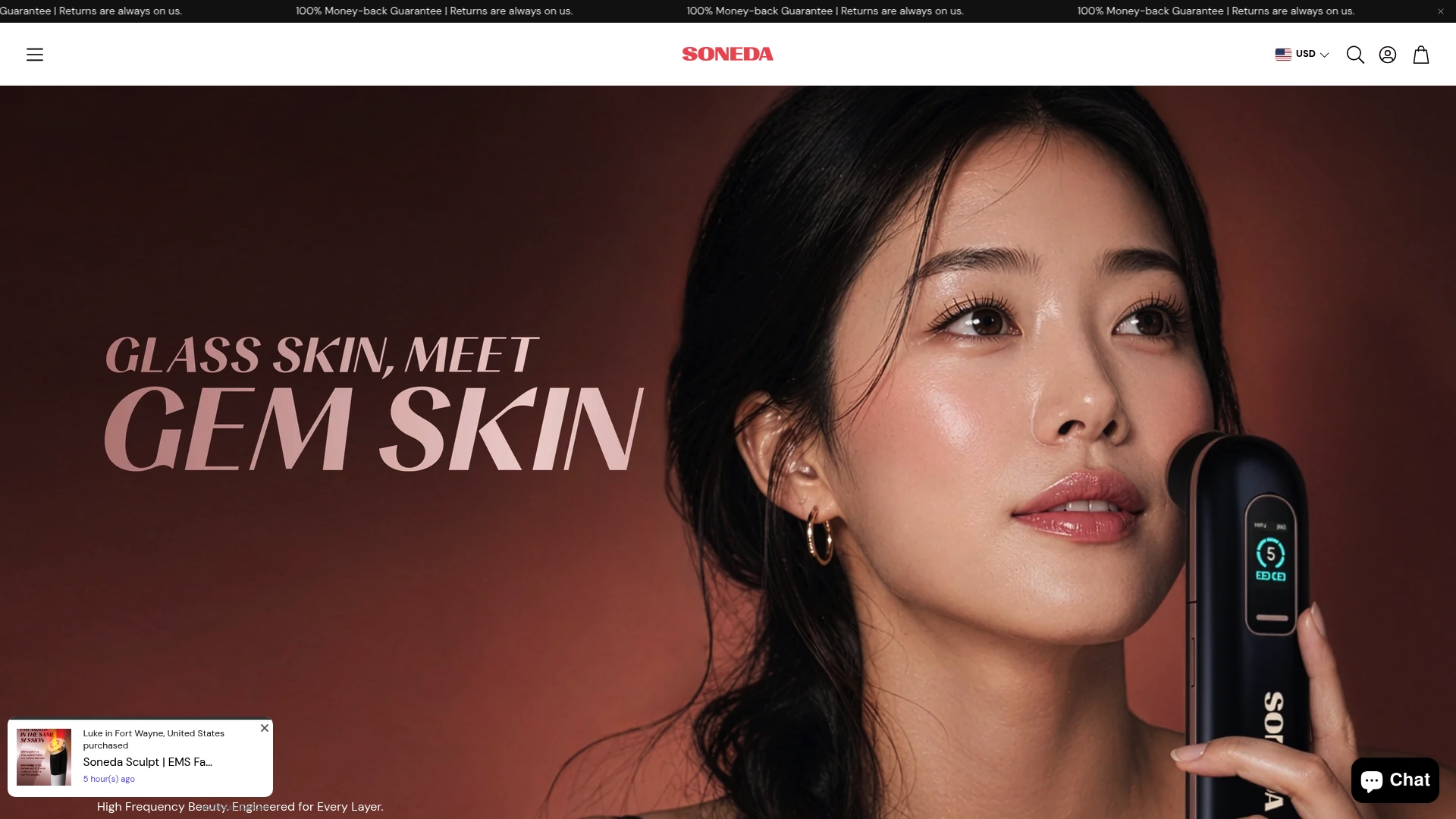
Pair it with a sunscreen, a hydrating serum and an evening retinol, and you have a full home routine for the skin around your mouth.
FAQ
How do I get rid of lip lines at home?
You can’t remove them permanently, but you can soften them. Use SPF 30+ every day, hydrate with hyaluronic acid and ceramides, add vitamin C and a retinoid, and support collagen with a device used as directed. Expect gradual change over months.
How do I treat upper lip lines at home?
Build the routine in order: sunscreen to the lip border, a hydrating serum, gentle exfoliation a couple of times a week, and a retinol introduced slowly. Add collagen-focused device care for firmness. Stop any step that causes stinging or peeling.
Can I use a facial device near my lips?
Follow the instructions for your device on which areas to treat, how long, and which product to use. Misuse of home devices can cause burns, blisters and dark marks, so don’t hold it in one spot, and stop if skin becomes painful or blistered.
How long until I see a difference?
Hydration can make skin look smoother within days. Changes in lines take longer: a dermatologist quoted by Medical News Today says multi-step approaches can take about 6 months to show. Take a monthly photo to track progress.
Are oils and homemade remedies enough?
They can add comfort and moisture, and Healthline lists plant oils as spot treatments around the mouth. For firmness and collagen support, combine them with daily SPF, active ingredients and device care.
Sources
- Cleveland Clinic: Lip Lines
- Good Housekeeping: 5 Ways to Reduce Lip Wrinkles
- InStyle: Lip filler alternatives
- Healthline: Wrinkles Around Mouth
- Allure: Best treatments for lip lines
- Medical News Today: Smoker’s lips
- Frontiers in Digital Health: Bridging clinic to home
- North Biomedical: Wrinkles Around the Mouth
- Dr. Raechele Cleere: Do Facial Exercises Work?
- MedlinePlus: Wrinkles