How to Reduce Skin Sagging After Weight Loss in 2026

Reducing skin sagging after weight loss comes down to three things: preserving muscle during your weight loss, supporting collagen production throughout the process, and choosing the right treatment for your level of laxity. Non-surgical methods like radiofrequency and High-Intensity Focused Ultrasound (HIFU) produce real improvements for mild to moderate looseness, with skin tightening results lasting up to one year per treatment cycle. Severe sagging, the kind that folds or chafes, requires surgery. Here is what the evidence says works at every stage.
The core strategy at a glance:
- Start resistance training immediately. Preserving lean muscle reduces the volume your skin must shrink over, improving skin laxity appearance significantly compared to cardio-only weight loss.
- Hit your protein target. Aim for a sufficient daily protein intake to support both muscle retention and collagen synthesis.
- Lose weight gradually. Patients losing weight at a gradual, controlled pace consistently show better skin retraction than those who lose the same total weight faster.
- Time non-surgical treatments wisely. Begin radiofrequency or HIFU sessions during the weight stabilization phase for the best collagen response.
- Be patient with natural remodeling. Skin can take a significant amount of time after weight stabilization to reach its maximum natural retraction.
- Reserve surgery for severe cases. Abdominoplasty and body lifts are the only reliable fix for significant hanging skin that affects hygiene or mobility.
Table of Contents
- Why does skin sag after weight loss?
- How much weight you lose, and how fast, shapes your outcome
- How to prevent loose skin while you are still losing weight
- What non-surgical treatments actually do for loose skin
- When surgery is the right answer
- What dermatologists recommend you do, and when
- At-home devices that support collagen and skin firmness
- Sonedaskincare’s VividLift™ is built for exactly this stage
- Key Takeaways
Why does skin sag after weight loss?
Skin sagging after weight loss is a structural problem, not a surface one. Your skin expanded over years to accommodate fat and muscle volume beneath it. When that volume disappears, the skin does not automatically snap back, because the internal scaffolding that once held it taut has been compromised.
Two proteins do most of the structural work: collagen, which provides firmness and tensile strength, and elastin, which allows the skin to stretch and recoil. Rapid or large-scale weight loss damages both. Fat cells that once filled the dermis from below are gone, and the collagen and elastin fibers that surrounded them are left stretched, fragmented, and reduced in density. Aging accelerates this, since collagen production declines naturally with age, and cumulative sun exposure degrades existing fibers further.
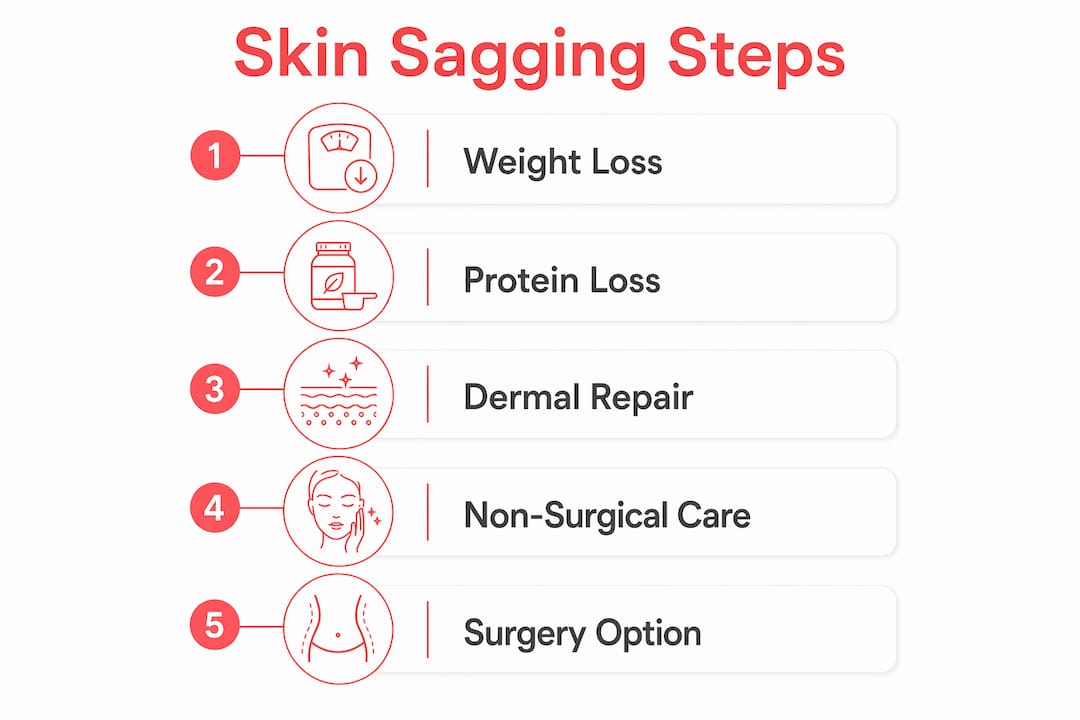
Dermal remodeling, the body’s own repair process, does continue after weight stabilization. Fibroblasts gradually lay down new collagen and reorganize existing fibers. The timeline for this natural process runs 12 to 24 months, which is why dermatologists consistently advise waiting before pursuing surgical correction. The skin you have at month six is not the skin you will have at month eighteen.
How much weight you lose, and how fast, shapes your outcome
The total amount of weight lost is the biggest predictor of loose skin severity. Larger weight losses are associated with a higher likelihood of visible sagging, particularly around the abdomen, upper arms, thighs, and chest. This is especially true for those who carried excess weight for many years, since prolonged stretching degrades the skin’s ability to retract.
Speed matters just as much as total loss. Rapid weight loss, whether from crash dieting or GLP-1 medications like Ozempic and Wegovy used without a muscle-preservation plan, does not give the dermis time to adapt. The skin loses its structural support faster than fibroblasts can compensate. Gradual loss, by contrast, allows partial remodeling to occur in parallel with fat reduction.
Several individual factors further shape how much sagging you experience:
- Age. Collagen production slows with age, so older adults retract less skin naturally after weight loss.
- Genetics. Baseline skin thickness and elasticity are partly inherited, which explains why two people with identical weight loss can have very different outcomes.
- Duration of obesity. The longer skin has been stretched, the more fiber damage accumulates.
- Baseline skin quality. Prior sun damage, smoking history, and hydration habits all affect how well skin responds to weight loss.
- Muscle mass. People who retain more lean muscle during weight loss have less distance for skin to retract, which visually reduces laxity even before any treatment.
How to prevent loose skin while you are still losing weight
Prevention is far more effective than correction. The strategies below work best when started from day one of your weight loss, not after you reach your goal weight.
- Lose weight at a controlled rate. Target 0.5 to 1 pound per week. This pace gives fibroblasts time to remodel collagen alongside fat loss, improving retraction outcomes.
- Engage regularly in resistance training to preserve lean muscle mass. Resistance training preserves lean muscle mass, which keeps the skin’s underlying support structure intact. The 22% improvement in laxity scores seen with resistance training during weight loss comes from exactly this mechanism.
- Prioritize protein. Ensure adequate protein intake to supply amino acids needed for muscle protein synthesis and collagen production.
- Protect your skin from the sun. UV radiation degrades collagen and elastin directly. Daily SPF use and limiting peak-hour sun exposure preserves the skin’s structural integrity during weight loss.
- Stay hydrated. Well-hydrated skin maintains better elasticity and is more responsive to natural remodeling.
- Support collagen from within. Randomized controlled trials show that oral collagen supplements improve skin elasticity and hydration without reported side effects, making them a reasonable addition to a prevention plan.
Pro Tip: Starting resistance training and hitting your protein target from the very first week of weight loss gives you the best chance of minimizing loose skin. Waiting until you reach your goal weight to address muscle mass is the most common and most costly mistake.
What non-surgical treatments actually do for loose skin
Non-surgical skin tightening works by stimulating the body’s own collagen remodeling response, not by removing tissue. The three most clinically supported technologies are radiofrequency, ultrasound (including HIFU), and microneedling.
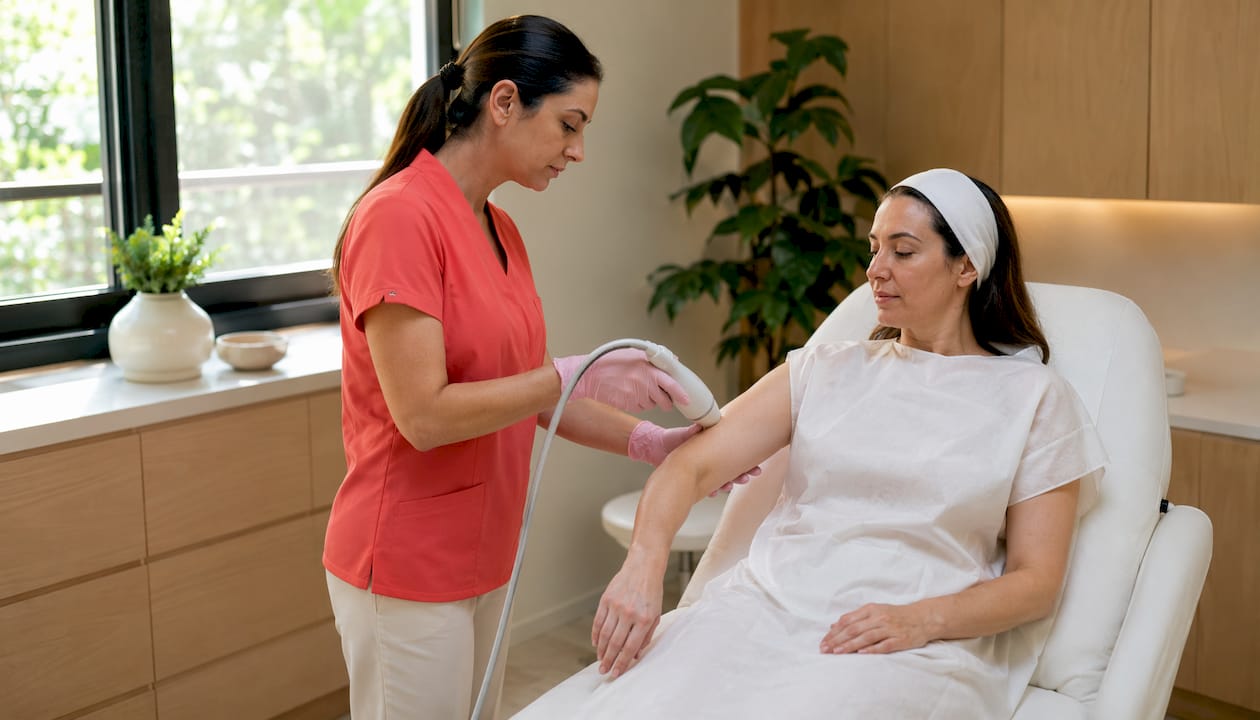
Radiofrequency delivers controlled heat energy into the dermis, triggering fibroblast activation and new collagen production. Results are gradual: 3 to 6 months after a treatment series is the typical window for meaningful improvement in skin firmness. Sessions usually run under one hour, with no downtime.
HIFU focuses ultrasound energy at precise depths below the skin surface, reaching layers that radiofrequency often cannot. This makes it particularly effective for the face, neck, and jawline, where deeper structural lifting is the goal. You can read more about how HIFU works and why depth targeting matters for collagen stimulation.
Microneedling creates controlled micro-injuries in the dermis, prompting a wound-healing response that produces new collagen and elastin. When combined with radiofrequency (RF microneedling), the thermal and mechanical stimulation work together for stronger results.
Realistic expectations matter here. Industry standards place the improvement range for non-surgical treatments at 10–25% in skin firmness and elasticity. That is a real, visible change for mild to moderate laxity, but it is not a substitute for surgery when skin is severely loose. These treatments work best on the face, neck, and areas with mild body laxity. They cannot remove excess skin.
| Treatment | Mechanism | Best for | Timeline |
|---|---|---|---|
| Radiofrequency | Dermal heat, collagen remodeling | Mild to moderate body laxity | 3–6 months post-series |
| HIFU | Focused ultrasound, deep lifting | Face, neck, jawline | 2–3 months post-treatment |
| Microneedling | Controlled micro-injury, collagen induction | Surface texture, mild laxity | 4–6 weeks per session |
| RF microneedling | Combined thermal and mechanical stimulation | Moderate laxity, body and face | 3–6 months post-series |
Topical retinoids, which increase cell turnover and support collagen synthesis, are a reasonable addition to any non-surgical plan. However, topical products alone cannot meaningfully tighten significantly lax skin. They support skin health; they do not replace procedural treatment.
Timing your non-surgical treatments during the weight stabilization phase, rather than during active loss, gives fibroblasts the most stable environment to respond. Starting too early, while weight is still dropping, can reduce the durability of results.
When surgery is the right answer
Surgery is the only reliable solution for severe, hanging skin that does not respond to natural remodeling or non-surgical treatment. Dermatologists and plastic surgeons generally recommend waiting 18 to 24 months after weight stabilization before operating, giving the body its full window for natural retraction first.
The most common procedures after major weight loss include:
- Abdominoplasty (tummy tuck). Removes excess abdominal skin and tightens the underlying muscle wall. The most frequently performed post-weight-loss procedure, particularly after bariatric surgery.
- Lower body lift. Addresses the abdomen, buttocks, hips, and outer thighs in a single circumferential procedure. Recommended when laxity affects the entire lower trunk.
- Arm lift (brachioplasty). Removes hanging skin from the upper arms, a common concern after large weight loss.
- Thigh lift. Targets the inner or outer thighs, where skin often folds and causes friction or hygiene issues.
- Breast lift or augmentation. Addresses volume loss and ptosis in the chest following weight loss.
- Face and neck lift. Corrects jowling, loose neck skin, and facial volume loss, particularly relevant for older adults who lose significant weight.
Surgery carries real risks, including scarring, infection, and extended recovery periods of several weeks. The trade-off is a dramatic, permanent result that no non-surgical method can replicate. For patients with skin that folds, chafes, or causes recurrent skin infections, surgery is not cosmetic. It is functional.
What dermatologists recommend you do, and when
The professional consensus on managing loose skin after weight loss is consistent across dermatology and plastic surgery: patience first, then a layered approach.
“The most effective outcomes come from combining muscle preservation during weight loss with non-surgical collagen stimulation during stabilization, and reserving surgery for patients with persistent severe laxity after the full natural remodeling period. No single intervention works in isolation.” — Clinical guidance synthesized from Scripps Health and the American Board of Cosmetic Surgery.
Dermatologists emphasize that the 12 to 24 month natural retraction window is not passive waiting. It is the period when lifestyle factors, including protein intake, resistance training, and skin protection, have the most leverage. Patients who maintain muscle mass and support collagen production during this window consistently show better outcomes before any procedure is introduced.
For mild to moderate laxity, non-surgical treatments are the recommended first line, and combining resistance training with these treatments can yield better results than either alone. That gap reflects how much lifestyle factors amplify procedural results.
For in-office professional options, collagen remodeling treatments and advanced laser resurfacing are among the procedural tools dermatologists use to address more persistent laxity before recommending surgery.
At-home devices that support collagen and skin firmness
Professional in-office treatments are not the only option for collagen stimulation. At-home devices have advanced significantly, and the best of them use the same core technologies as clinical equipment, just calibrated for safe, consistent home use.
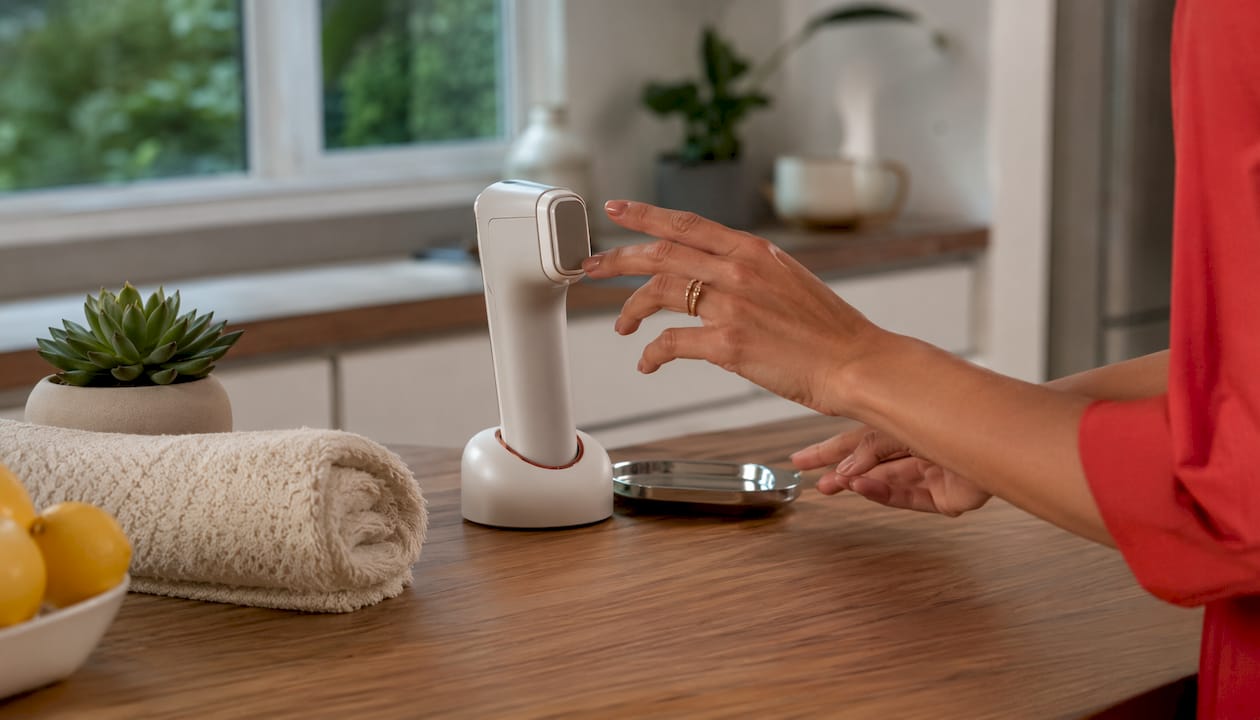
Sonedaskincare’s VividLift™ 2-in-1 HIFU + Sonophoresis device brings two clinically grounded technologies into a single at-home tool. The HIFU component delivers focused ultrasound energy to stimulate collagen production at depth, the same mechanism used in professional lifting treatments. Sonophoresis uses low-frequency ultrasound to drive active skincare ingredients deeper into the dermis than topical application alone can achieve, which directly supports hydration and skin barrier function.
Clinically Proven: The VividLift™ has demonstrated a 175% increase in skin hydration in clinical testing, with a 100% user satisfaction rate.
The practical advantage of an at-home device is consistency. Professional radiofrequency or HIFU sessions are typically spaced weeks apart due to cost and scheduling. A home device lets you maintain collagen stimulation between professional appointments, or as a standalone maintenance protocol during the 12 to 24 month natural remodeling window. Learning more about collagen production strategies can help you build a routine that compounds results over time.
Pro Tip: Use your at-home HIFU device consistently during the weight stabilization phase. Fibroblast activity is elevated during active skin remodeling, which means your collagen response to ultrasound stimulation is stronger during this window than it will be later.
Sonedaskincare’s VividLift™ is built for exactly this stage
If you have stabilized your weight and are now focused on firming and lifting, the VividLift™ 2-in-1 HIFU + Sono device from Sonedaskincare gives you clinical-grade collagen stimulation without the clinic price tag or the scheduling friction.

The VividLift™ combines HIFU and sonophoresis in one device, addressing both deep collagen remodeling and surface-level hydration. It is clinically tested, backed by a 100% satisfaction rate, and designed for people who want real results from their skincare routine, not just a product that feels good. For those coming off a significant weight loss, whether through diet, exercise, or GLP-1 medications like Ozempic or Wegovy, it fits directly into the stabilization-phase protocol that dermatologists recommend.
You can preorder the VividLift™ today and start building your collagen-support routine with a device that was designed to deliver professional results at home. A 100% money-back guarantee means there is no risk in trying it.
Key Takeaways
Reducing skin sagging after weight loss requires a layered approach: preserve muscle during loss, support collagen during stabilization, and choose treatments matched to your laxity severity.
| Point | Details |
|---|---|
| Muscle preservation is foundational | Resistance training during weight loss improves skin laxity appearance by about 22% by reducing the volume skin must retract over. |
| Gradual loss protects skin | Losing around 1 pound per week gives the dermis time to remodel alongside fat reduction, improving long-term retraction. |
| Non-surgical treatments have defined limits | Radiofrequency and HIFU improve firmness by 10–25%; they work for mild to moderate laxity but cannot remove excess skin. |
| Combined approaches outperform single ones | Pairing resistance training with radiofrequency can improve skin laxity by up to 34%, versus 18% from radiofrequency alone. |
| Sonedaskincare VividLift™ supports the stabilization phase | The at-home HIFU + Sonophoresis device delivers clinically proven collagen stimulation with a 175% increase in skin hydration. |