Skincare Routine for Aging Skin: The 2026 Guide

A skincare routine for aging skin is defined by four core steps: gentle cleansing, targeted active treatments, thorough moisturization, and daily broad-spectrum sunscreen. These four steps work together to support the skin barrier, stimulate collagen, and slow visible aging. Dermatological guidance for 2026 confirms that consistent daily habits outperform any single expensive product. If you are 35 or older, the choices you make now directly affect how your skin looks and functions a decade from now. The good news is that the best face care routine for mature skin does not require a shelf full of products.
What are the essential steps in a skincare routine for aging skin?
The four pillars of an effective mature skin routine are cleansing, treatment, moisturizing, and sun protection. Each step has a specific job, and skipping any one of them reduces the results of the others.
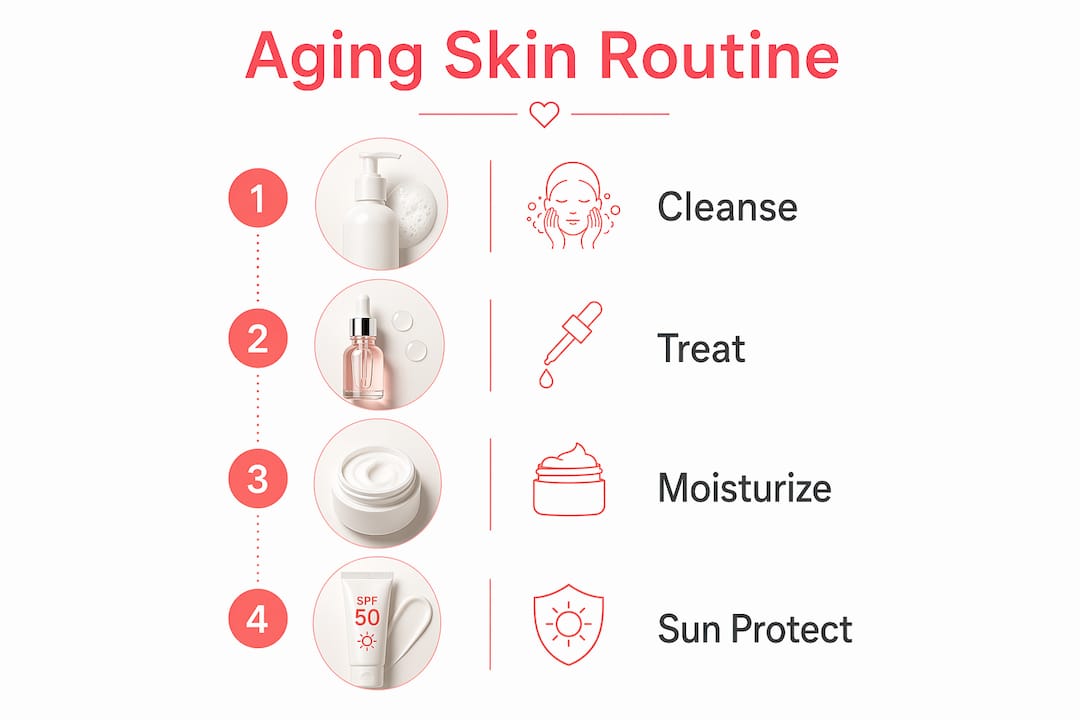
Cleansing
Mature skin loses lipids faster than younger skin. Over-washing strips those lipids and increases dryness. If your skin is not oily, you can skip the morning cleanser entirely and rinse with lukewarm water instead. At night, use a gentle, non-stripping cleanser to remove sunscreen, makeup, and pollutants. Fragrance-free formulas work best for skin that is already prone to sensitivity.
Targeted treatments
Estrogen decline after 30 triggers changes in collagen production, making early use of retinol and antioxidants critical. Retinol is the most clinically validated ingredient for reducing fine lines and stimulating cell turnover. Experts recommend starting retinol at 0.25–0.3% concentration, applied 2–3 nights per week, then increasing frequency gradually as your skin adjusts. Vitamin C is the right antioxidant for daytime use. It brightens uneven tone and protects against free radical damage.
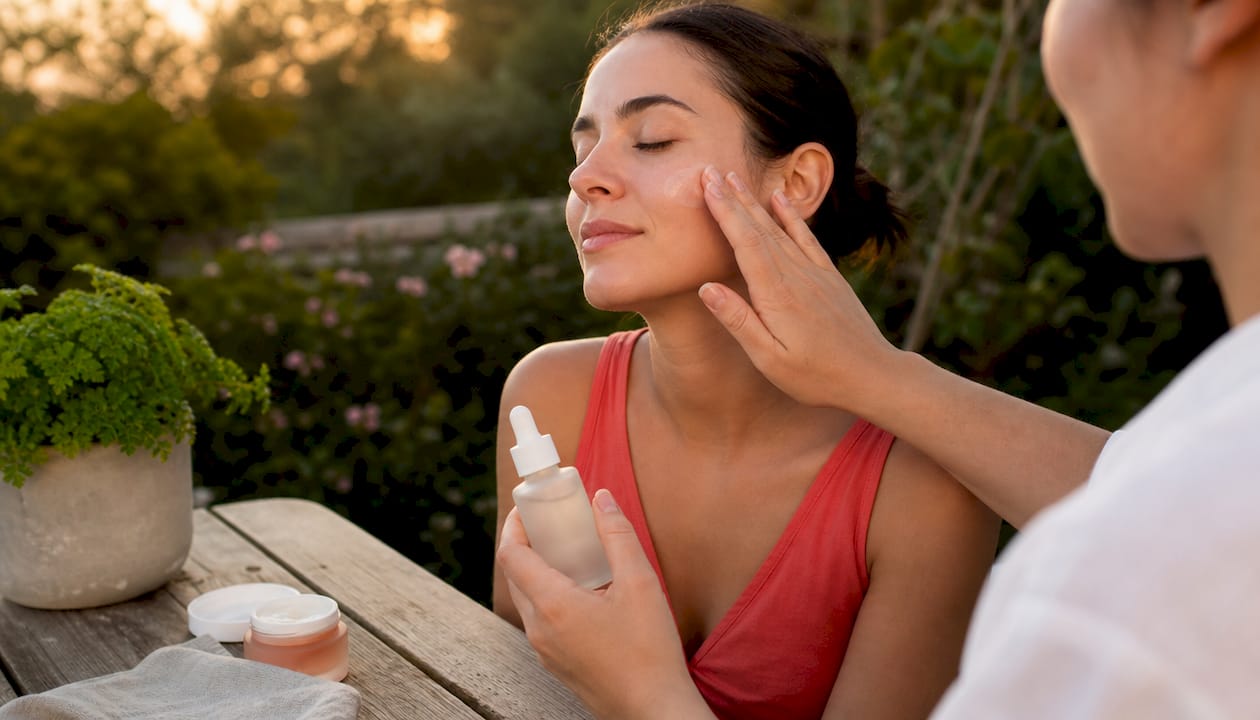
Moisturizing
By age 60, skin loses moisture retention at a rate that becomes visible. Moisturizers containing ceramides, glycerin, and hyaluronic acid improve suppleness within hours of application. Apply your moisturizer within three minutes of washing to lock in hydration before the skin surface dries. A hydrating serum like the Ovaco Timeslip EGF + PDRN Watermax Gel Serum layered under a cream gives mature dry skin an extra hydration boost.
Sun protection
Sunscreen preserves the efficacy of every other product in your routine by protecting collagen and skin thickness from UV damage. Use a broad-spectrum SPF 30–50 every morning, regardless of weather or season. This single step does more to prevent new wrinkles than almost any treatment product.
- Use a gentle, sulfate-free cleanser at night
- Apply vitamin C serum in the morning before SPF
- Use retinol at night, starting 2–3 times per week
- Apply moisturizer within 3 minutes of cleansing
- Finish your morning routine with SPF 30–50
Pro Tip: Apply your retinol on dry skin, not damp skin. Damp skin increases absorption and raises the risk of irritation, especially when you are first building tolerance.
How do you customize your routine for specific aging skin concerns?
A simple skincare routine for mature skin covers the basics. Customizing it for your specific concerns, whether that is wrinkles, dryness, or uneven tone, is what produces visible results.
Adapting by decade
Skin changes are not uniform. In your 30s, the priority is prevention. Introducing retinol and antioxidants early, before deep lines form, is far more effective than correcting damage later. In your 40s, collagen loss accelerates and skin may feel thinner. Peptides become a strong addition at this stage because they signal the skin to produce more collagen without the irritation risk of high-dose retinoids. By your 50s and beyond, barrier repair takes center stage. The focus shifts to ceramide-rich moisturizers and gentler exfoliation.
Targeting specific concerns
| Concern | Key Ingredient | Frequency |
|---|---|---|
| Fine lines and wrinkles | Retinol (0.25–0.3%) | 2–3 nights per week |
| Loss of firmness | Peptides | Daily, AM or PM |
| Uneven skin tone | Vitamin C | Every morning |
| Dryness and dehydration | Hyaluronic acid, ceramides | Twice daily |
| Dull texture | Lactic acid or glycolic acid | 1–2 times per week |
Exfoliation deserves special attention in a facial routine for mature skin. Gentle chemical exfoliants like lactic acid work better than physical scrubs, which can cause micro-tears in thinner skin. Once or twice weekly is enough. More frequent use disrupts the barrier and causes the inflammation you are trying to prevent.
- Cleanse (night only if skin is dry)
- Apply vitamin C serum in the morning
- Moisturize within 3 minutes
- Apply SPF 30–50 to finish your morning routine
- At night, apply retinol or peptide serum after cleansing
- Follow with a ceramide-rich moisturizer
Pro Tip: Layer products from thinnest to thickest consistency. Serums go on before creams, and oils go on last. This sequence lets each product absorb fully before the next one is applied.
The Sequence 4: Anti-Aging + Collagen Support protocol from Sonedaskincare maps out exactly how to layer peptides and retinoids for nighttime care, which takes the guesswork out of sequencing.
What mistakes are most common in a mature skin routine?
The most damaging mistake in a best skincare routine for mature skin is overloading with active ingredients. More actives do not mean faster results. They mean more inflammation, a compromised barrier, and skin that looks worse, not better.
- Over-cleansing: Washing twice daily with a foaming cleanser strips the lipid barrier. Mature skin does not produce enough oil to recover quickly.
- Mixing incompatible actives: Vitamin C and retinol layered together neutralize each other and irritate the skin. Use vitamin C in the morning and retinol at night, always on separate schedules.
- Skipping moisturizer after washing: Leaving skin bare for more than a few minutes after cleansing allows transepidermal water loss to accelerate.
- Skipping sunscreen on cloudy days: UV radiation penetrates cloud cover. Skipping SPF even once a week adds up to significant cumulative damage over months.
- Using hot water: Hot water and harsh detergents strip the skin barrier and worsen sensitivity. Lukewarm water and fragrance-free laundry products reduce irritation significantly.
“Prioritize barrier protection to prevent inflammation rather than aggressive correction in mature skin care. Hydration layered consistently outperforms piling on actives.” Oprah Daily, Mature Skin Nighttime Routine
Pro Tip: If your skin feels tight, red, or flaky after introducing a new active, drop back to once-weekly use and add an extra layer of moisturizer. Barrier repair always comes before treatment.
What tools and technologies can enhance an aging skin routine?
Topical products work at the surface. Non-invasive devices reach deeper layers of the skin, where collagen production actually happens. This is where technology adds real value to a best anti-aging skincare approach.
How HIFU supports collagen production
High-Intensity Focused Ultrasound, or HIFU, delivers focused energy to the deeper layers of the skin without breaking the surface. This energy triggers a wound-healing response that stimulates new collagen production. The result is firmer, lifted skin over several weeks of consistent use. Sonedaskincare’s VividLift™ 2-in-1 HIFU+Sono device brings this technology into at-home use, delivering the kind of collagen stimulation that previously required professional clinic visits.
How sonophoresis improves ingredient absorption
Sonophoresis uses ultrasound waves to temporarily open channels in the skin, allowing active ingredients to penetrate deeper than they can on their own. Applied after your serum or moisturizer, it increases the delivery of ceramides, peptides, and hyaluronic acid into the layers where they do the most work. Sonedaskincare reports a clinically measured 175% increase in skin hydration when sonophoresis is used as part of a regular routine.
| Technology | Primary Benefit | Best Used With |
|---|---|---|
| HIFU | Collagen stimulation, skin lifting | Peptide or retinol night routine |
| Sonophoresis | Enhanced ingredient absorption | Hydrating serums, ceramide creams |
Non-invasive HIFU devices complement topical care rather than replace it. The most effective approach combines consistent topical habits with periodic device use for deeper collagen support.
Key Takeaways
A consistent skincare routine for aging skin built on cleansing, targeted actives, barrier-focused moisturizing, and daily SPF delivers the most reliable long-term results.
| Point | Details |
|---|---|
| Four-step foundation | Cleanse, treat, moisturize, and apply SPF every day without exception. |
| Retinol timing matters | Start at 0.25–0.3% concentration, 2–3 nights per week, and increase gradually. |
| Separate your actives | Use vitamin C in the morning and retinol at night to avoid neutralization and irritation. |
| Barrier first | Prioritize ceramide-rich moisturizers over adding more active ingredients when skin feels stressed. |
| Technology amplifies results | HIFU and sonophoresis devices deepen collagen support beyond what topicals alone can achieve. |
Why simplicity wins in mature skincare
After years of watching people build and rebuild their routines, the pattern is clear. The people who see the best results are not the ones with the most products. They are the ones who show up with the same four or five steps every single day.
The temptation to add more is real. A new peptide serum, a second exfoliant, a brightening mask. Each one sounds reasonable on its own. Together, they create a routine that is too aggressive for skin that is already working hard to maintain its barrier. I have seen more cases of barrier damage caused by well-intentioned overloading than by neglect.
What actually works is choosing fewer products with higher-quality ingredients and using them consistently. Retinol three nights a week, every week, for six months produces far better results than rotating through five different actives. Hydration applied twice daily, every day, changes how skin looks and feels within weeks. Sunscreen every morning, no exceptions, is the single most protective habit you can build.
The other thing worth saying plainly: patience is not optional. Collagen remodeling takes 8–12 weeks to show up visibly. If you switch products every month because you are not seeing results, you will never see results. Pick your routine, commit to it, and give it time.
— Customer
Sonedaskincare’s VividLift™ device and your routine
Topical routines build the foundation. The VividLift™ 2-in-1 HIFU+Sono device from Sonedaskincare adds the deeper collagen stimulation that serums and creams cannot reach on their own.

The VividLift™ combines HIFU technology with sonophoresis in one at-home device. HIFU targets the deeper skin layers to trigger collagen production, while sonophoresis drives your serums and moisturizers deeper for measurably better absorption. Sonedaskincare backs this with a 100% Money-back Guarantee and clinically proven results. If you are ready to take your routine further, the VividLift™ HIFU device is the natural next step. You can also explore the full 2-in-1 HIFU+Sono device to see how it fits your current routine.
FAQ
What is the best skincare routine for mature skin?
The best skincare routine for mature skin includes a gentle cleanser, a vitamin C serum in the morning, retinol at night, a ceramide-rich moisturizer, and daily broad-spectrum SPF 30–50. Consistency with these five steps produces more visible results than any single premium product.
When should you start using retinol for aging skin?
Dermatologists recommend starting retinol in your 30s, beginning at a low concentration of 0.25–0.3% applied 2–3 nights per week. Starting early, before deep lines form, makes retinol significantly more effective as a preventive treatment.
Can you use vitamin C and retinol together?
Vitamin C and retinol should not be applied at the same time. Use vitamin C in the morning and retinol at night to prevent irritation and preserve the effectiveness of both ingredients.
How does HIFU complement a topical skincare routine?
HIFU delivers focused ultrasound energy to deeper skin layers, stimulating collagen production that topical products cannot reach. Used alongside a consistent topical routine, it adds measurable lifting and firming results over time.
Is it necessary to moisturize immediately after cleansing?
Applying moisturizer within three minutes of washing is the most effective way to lock in hydration. Waiting longer allows transepidermal water loss to accelerate, reducing the moisturizer’s ability to restore the skin barrier.